There’s always a frisson of excitement attached to the first time modelling somewhere new. The true joy, however, comes from being asked to return – even more so when it happens much sooner than could reasonably be hoped.
Such was the feeling when, a month after my debut at the Telegraph Hill Centre, I was asked by life drawing organiser Alexandra Unger if I might be available to model again. I was, and I did.
For six artists, plus Alex also drawing, I started with three dynamic two-minute poses. These formed a kind of sequence with my body shaped as if shielding and fleeing from a threat swooping in from my left.
These must have gone down reasonably well as I was asked to add a fourth before we progressed to longer poses. I began these with 10 minutes standing, my palms raised outwards at chest height.
Before the next pose Alex reminded me that on my previous visit I’d held a few poses in what she called a “Gothic” style: twisted or crossed limbs, spindly fingers, crooked joints. Since we were still in the shadow of Halloween she asked me to try something similar, but hunched closer to the floor.
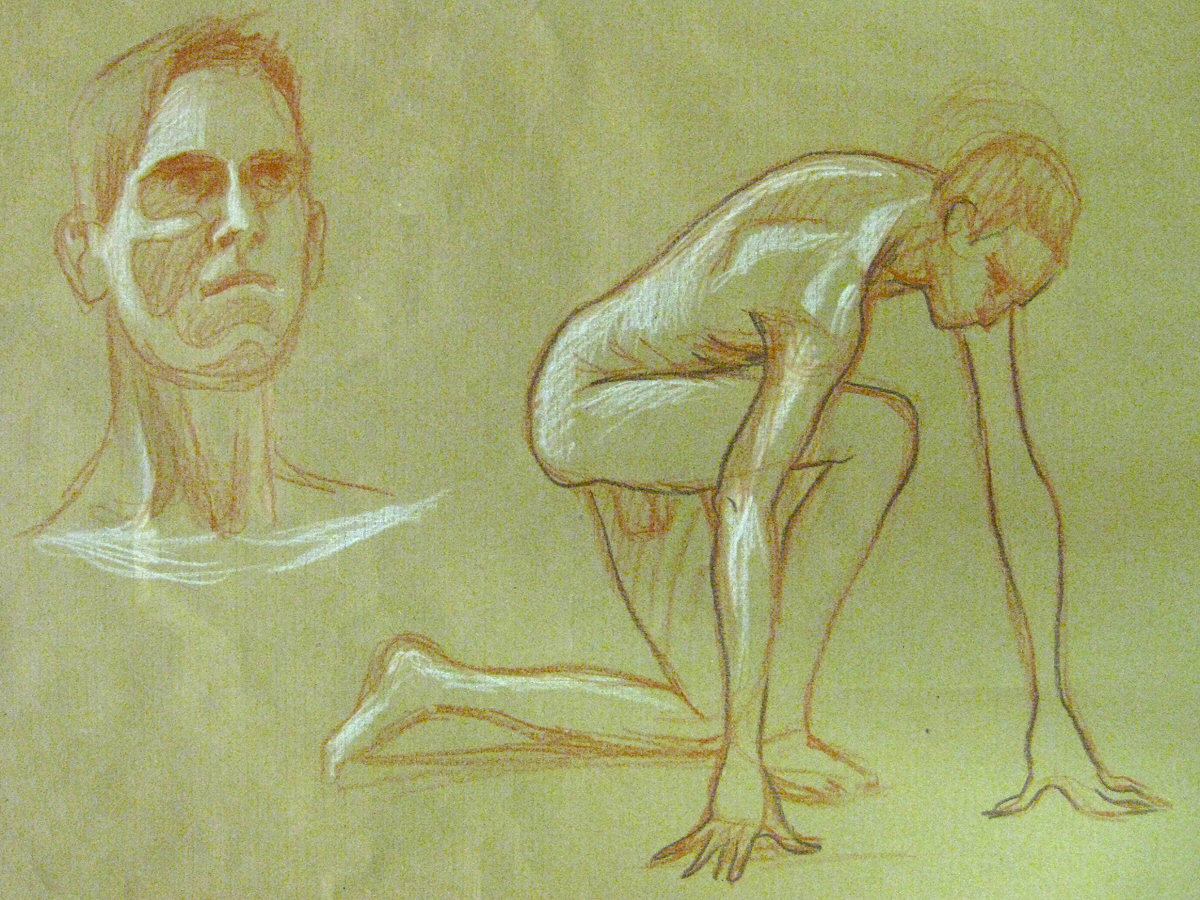
Thus for the next 10 minutes I was a kneeling, crouching, hand-splaying creature. For 10 minutes after that, I was on one knee, the other leg extended, forehead planted on the ground and arms outstretched: my fallen angel pose. Alex captured my best side.

I continued the Gothic theme after the tea-break. First a 15-minute variation on a pose from my previous visit, seated on the floor, one knee raised, both elbows on the knee, with forearms crossed and fingers arced. Quite a difficult one to hold.

Next a gnarly semi-recumbent 15 minutes as a skeleton emerging from its tomb, and finally a half-hour reclining backwards on a beanbag with a hot lamp casting shadows from my jagged limbs.

These weren’t necessarily the easiest poses I’ve ever maintained but their reward was in the staggeringly good art produced. All the artists seemed genuinely appreciative of my efforts and thanked me individually, which was quite lovely.
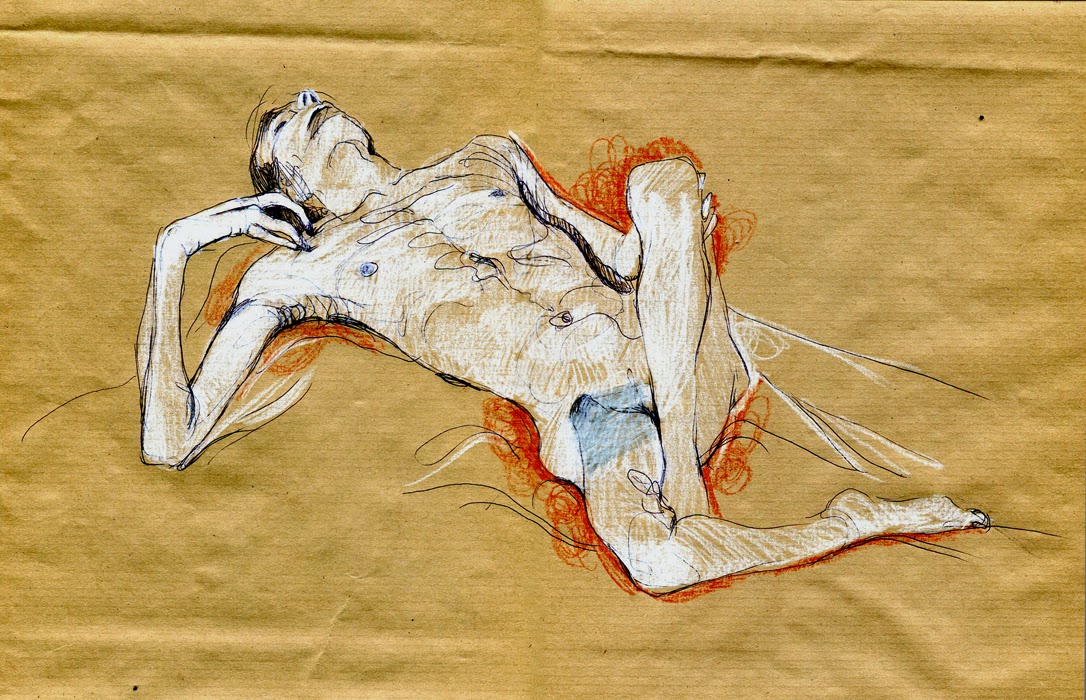
Once again I’d been serenaded by a well selected mood-setting soundtrack: The Lay Llamas and Solar Fields. I wonder to myself how much more “Gothic” I can become in my next poses – I hope I’ll return again some day to find out.
When I’m booked to model at a new venue, I can usually figure out its nature from the name – a gallery, a community hall or pub – but what might 47/49 be? I pondered this in ignorance as I strolled past the thousands of ceramic remembrance day poppies at the Tower of London, on my way from Fenchurch Street station.
A short walk south of Tower Bridge, I found it: what a remarkable building. Specifically it’s a Victorian warehouse with three floors of raw brick walls, wood beams and vertical iron girders. These days it serves as an event and workshop space for a contemporary arts organisation. For me, its ground floor would be my pose space for the evening.
I’d picked up the booking only the night before – no problem as its one of the easiest London life drawing groups for me to reach. I arrived in good time, changed out of my clothes, and placed my folded white sheet on the floor. At 7pm I disrobed completely and began my first pose for five artists.
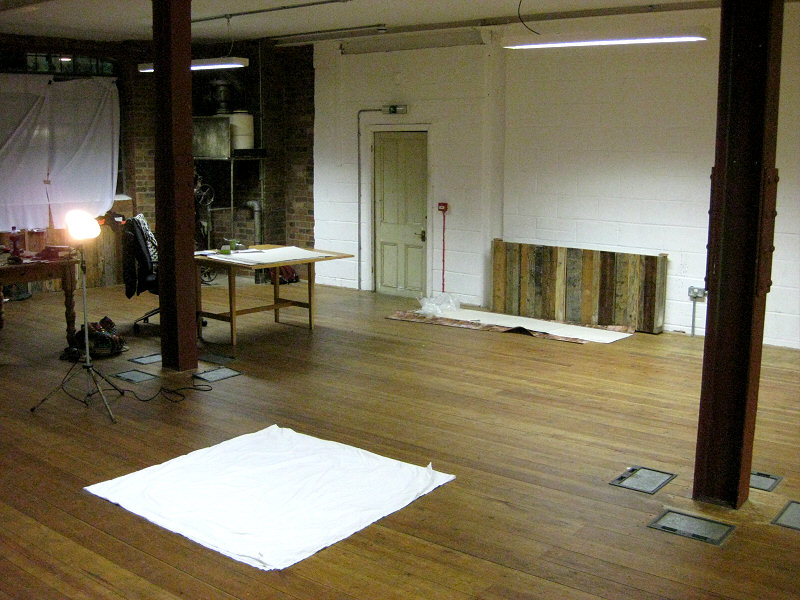
The sequence was four five-minute poses, followed by three 10-minute poses up to a break, and finally two 20-minute poses, with a finish at 9pm. Two more artists arrived during the short poses, making seven in total. There was more than enough space to accommodate 70.
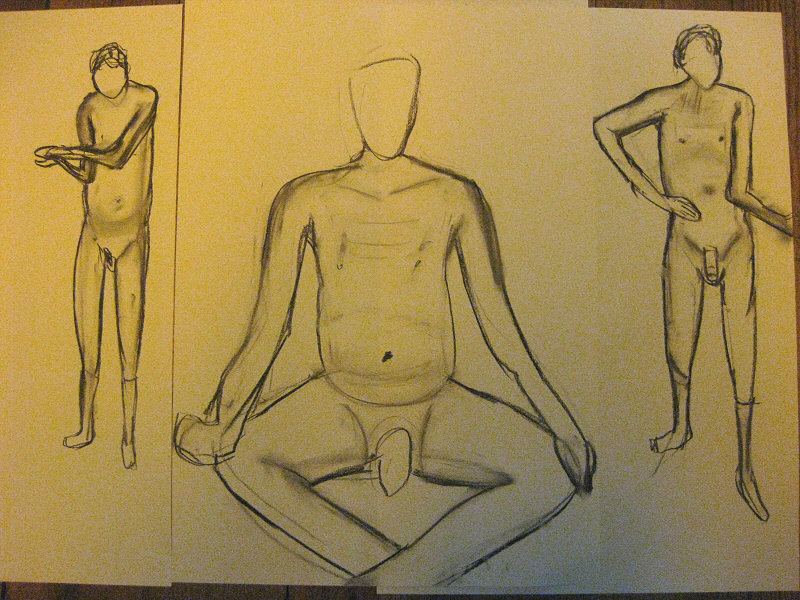
Another striking feature of the session was the silence whilst art was in progress. Not strictly enforced, nor an awkward silence, it just happened naturally. It wasn’t a group for tuition, there was no music playing, nor even any time calls except at the very end of each pose. Just stillness.
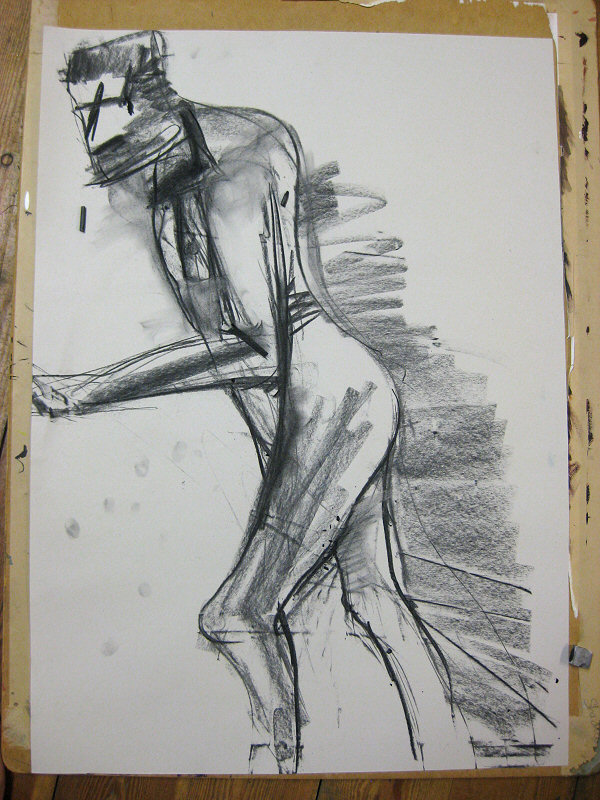
I’m often asked whether I meditate while modelling. Well, personally I don’t; I’m either too busy concentrating on the pose, or lost in the words of a tutor, or in music, or my own mental contrivances. If ever I were to give meditation a try, however, this would be a superb venue in which to practice.
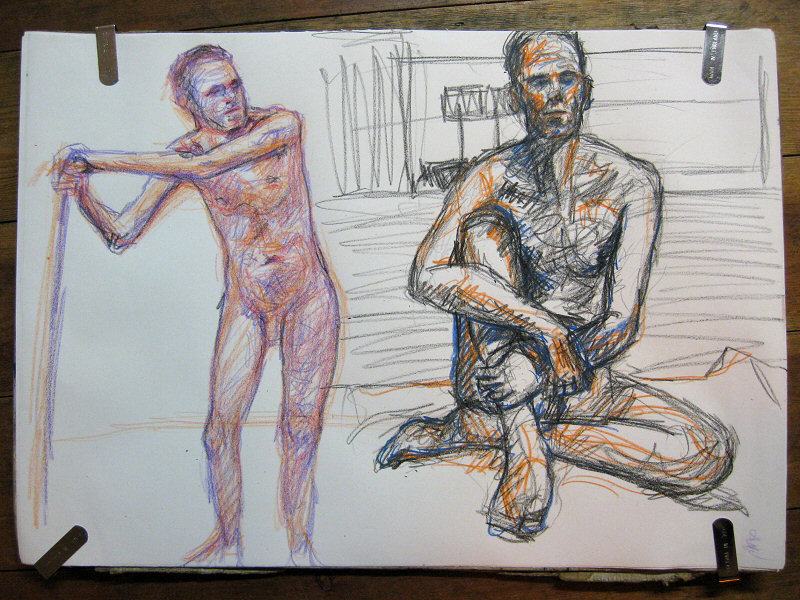
The evening was a great example of life art at its most pure. For my 20-minute poses I was invited to chose from a selection of props, and only hesitantly took up a broom on which to lean. It made my standing pose a shade more comfortable, but perhaps took something from the overall minimalism that I’d been quite warming to.
Here was creativity and space and peace… in the heart of London… on Guy Fawkes night. A new group, something a bit different. Life art continues to captivate me.
A single line. Lots of short curves. Straight lines. Shade and light. These would be the drawing techniques for artists to practice during my latest appearance as model at the A-side B-side Gallery.
There would be five artists in attendance and – as always – they would receive expert guidance from Catherine Hall. While setting up we chatted about the methodologies and pose sequences for the evening.
There is variety and freshness in Catherine’s sessions, yet there’s nothing haphazard or whimsical about her approach. Part of this evening’s work would take its inspiration from the drawings of sculptor Henry Moore; another part would exercise artistic talent revealed during the previous week.
Easels and boards were assembled, paper clipped into place, artists in position: we were ready. I spread my white sheet on the centre of the gallery floor, slipped off my gown and started with a three-minute pose.
Three-minutes, two-minutes, one-minute – practising single line drawing, short curves and straight lines only. We followed this with a run of three-minute poses, sometimes using a long edge of the charcoal, sometimes drawing shade for the first half and light for the second half.
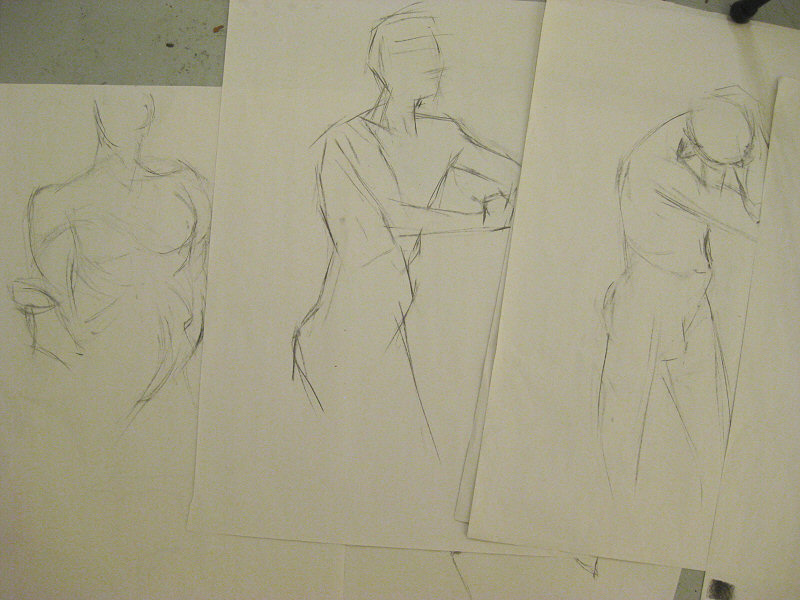


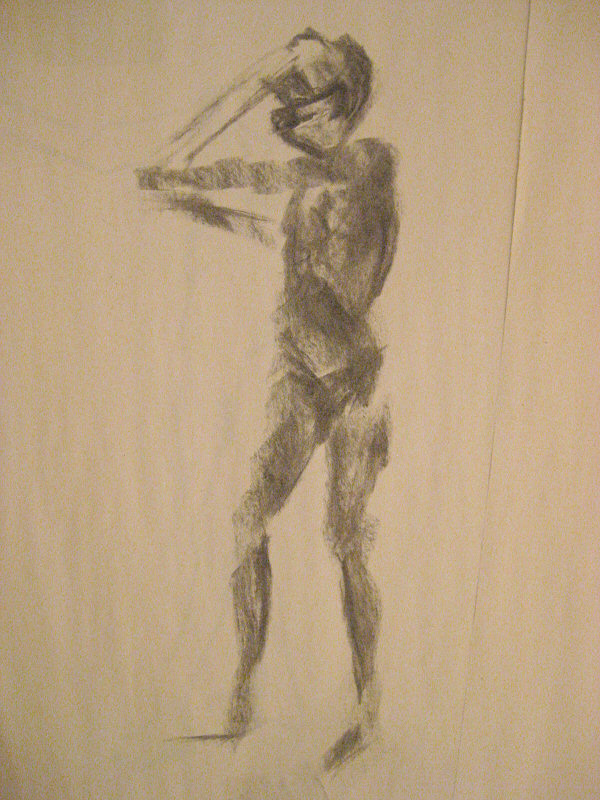


A 15-minute pose took us to the break. The artists would use their self-expression in trying any or all of the techniques. I was sitting on my sheet, feeling a little of the cold floor but otherwise warm and comfy. November’s chill remained outside.

A dynamic pose – one-minute dark, one-minute light – got us re-started. A five-minute pose provided more time to refine the skill; we finished with a 30-minute standing pose that could be drawn in any way the artists saw fit.
In my non-expert opinion, the collected works at the end were the strongest combined set I’d seen at the A-side B-side. Even a couple of artists who had seemed displeased with their own efforts before the break, pulled out all the stops to excel by the end.


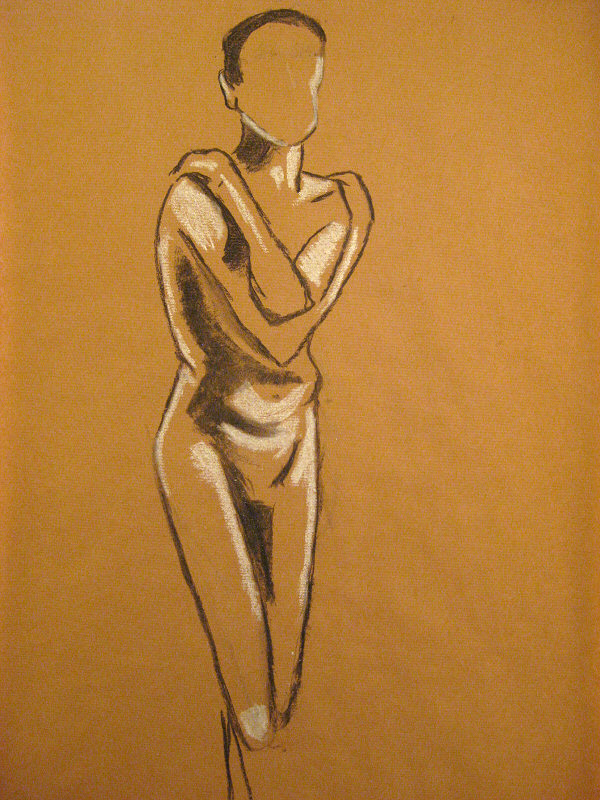

One artist who’d produced a fantastic drawing from the final long pose, told me it was only her second time at an art class. I felt this showed the essential talent was within her already, and had been brought out here through a combination of Catherine’s tips and advice, the comfortable creative environment, and a real personal commitment.
This, to me, is what informal life drawing groups should be all about. No pressure, but having that time, space and support to nurture and hone artistic skills; to develop and improve through practice; and hopefully take a lot of enjoyment from the process.
Babylon. A name redolent of wonder, opulence and gold. An ancient empire crumbled, stripped bare, its lands occupied by Egyptians, Greeks, Romans. Palaces reduced to rubble, people long gone; only their golden ghosts remain. And the name. Babylon.
On Sunday 7 September, Babylon came to the green and pleasant land of England. Three models and two photographers converged at an obscure roadside turn-off and hiked for half an hour through overgrown countryside to reach a secret location. Here our four to five-hour photo shoot would be: Babylon.
We came armed with more ideas than we had time to make real; more props than we could possibly use. Still, it’s better to be over prepared than under. In the shattered interior of this derelict site we began our transformations.
Photographers Natansky and Paolo unpacked their cameras and accessories, while I joined fellow models Louise and Nefretari in undressing. Louise put on her wispy white ankle-length “nude skirt” and started our poses with some graceful ethereal swirls.

Photographer: Natansky
Meanwhile Nefretari had slipped into a puffy white mini-skirt. Both put on white veils, while I remained nude save for a black long-nosed Venetian masque. Our first group shot would be an unlikely wedding scene with me as plague-priest blessing the union of two bare-breasted brides. And why not?

Photographer: Paolo Bridge
We remained in these costumes for atmospheric shots at various locations around the building: all together, or solo, or just the two brides.

Photographer: Paolo Bridge

Photographer: Paolo Bridge

Photographer: Natansky
Next came a Spanish interlude. Louise changed into a long dark skirt and took up her castanets to recreate the Pixies’ Surfer Rosa album cover. I joined her, pulling on my black jeans, and suddenly we were a passable approximation of flamenco dancers on a staircase. Nefretari, meanwhile, leaned elegantly against broken walls.

Photographer: Paolo Bridge
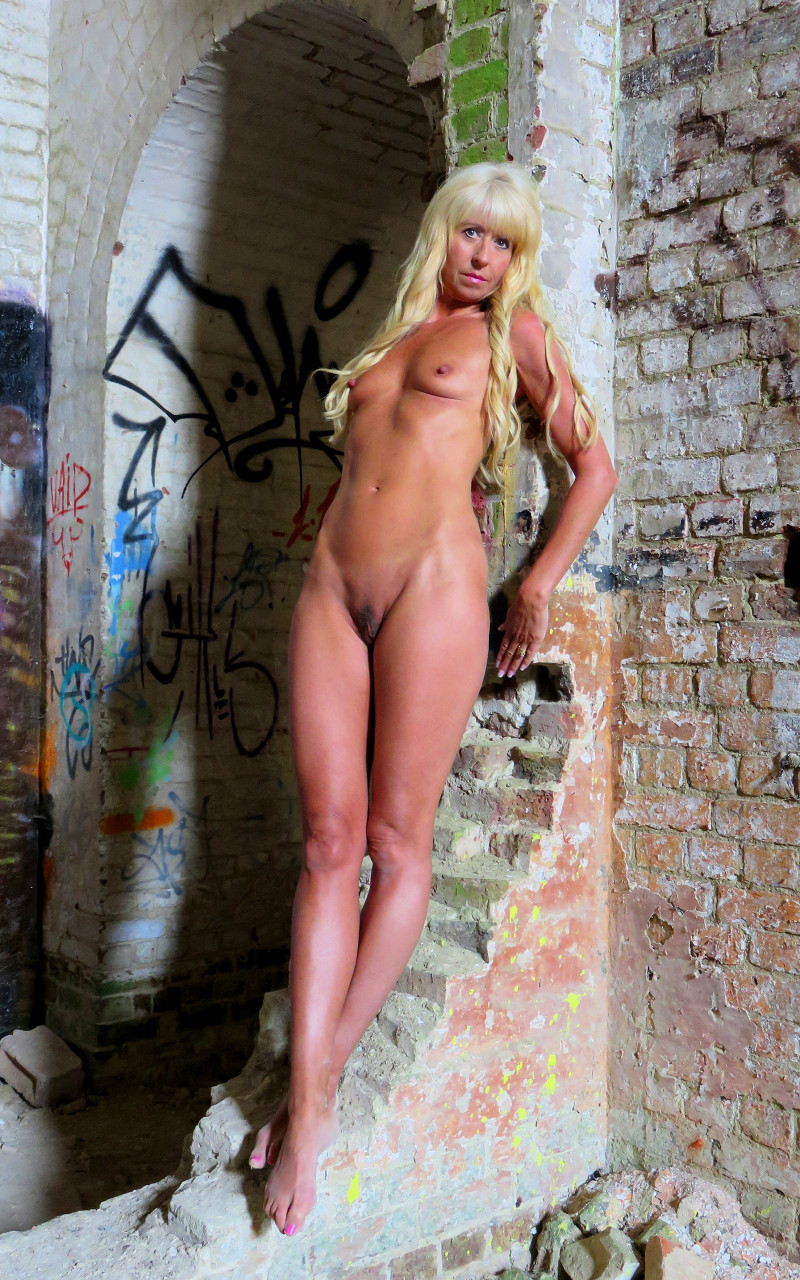
Photographer: Paolo Bridge
After this we switched to a Roman influence for two poses inspired by a tableau from Caravaggio’s Seven Acts of Mercy – Louise as Pero and me as Cimon. Pero was the merciful daughter who sustained Cimon, her father, in prison when the old man was sentenced to death by starvation. We shot this once with me leaning through a hole in a wall, and again with my face pressed against iron bars.

Photographer: Paolo Bridge
Poses continued apace. Louise stood on the ledge of a high-arched window. I joined her in a duo. Paolo and I also posed together in the same window.

Photographer: Natansky
Nefretari lay nude on her front across a pile of demolished bricks, then turned on her back with red rose petals scattered the length of her torso. Natansky photographed her from the only high vantage point available: my shoulders.
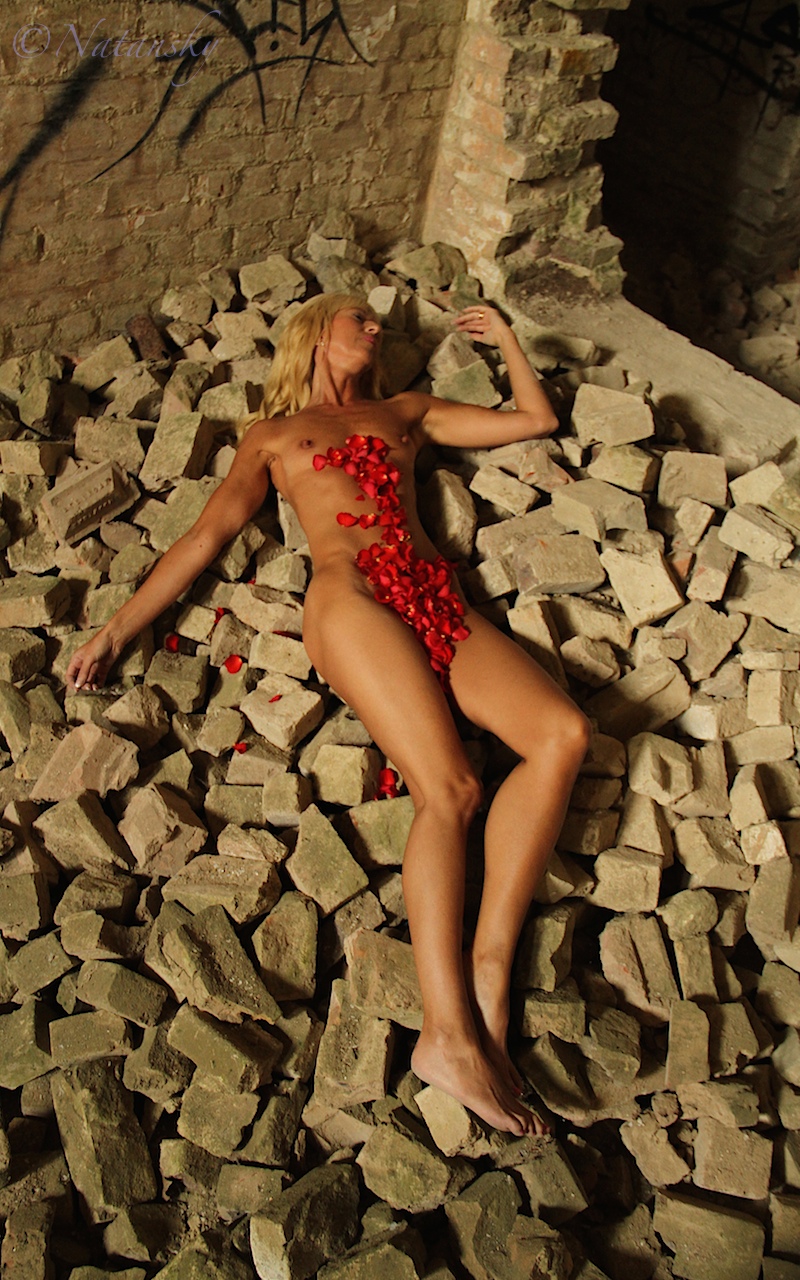
Photographer: Natansky

Photographer: Paolo Bridge
Time for one more pose before a break to enjoy Louise’s delicious home-made ginger cake. The three models were strewn naked over a high mound of rubble like so much discarded humanity. It was a magnificent concept and location, but we needed more bodies for maximum impact.

Photographer: Natansky
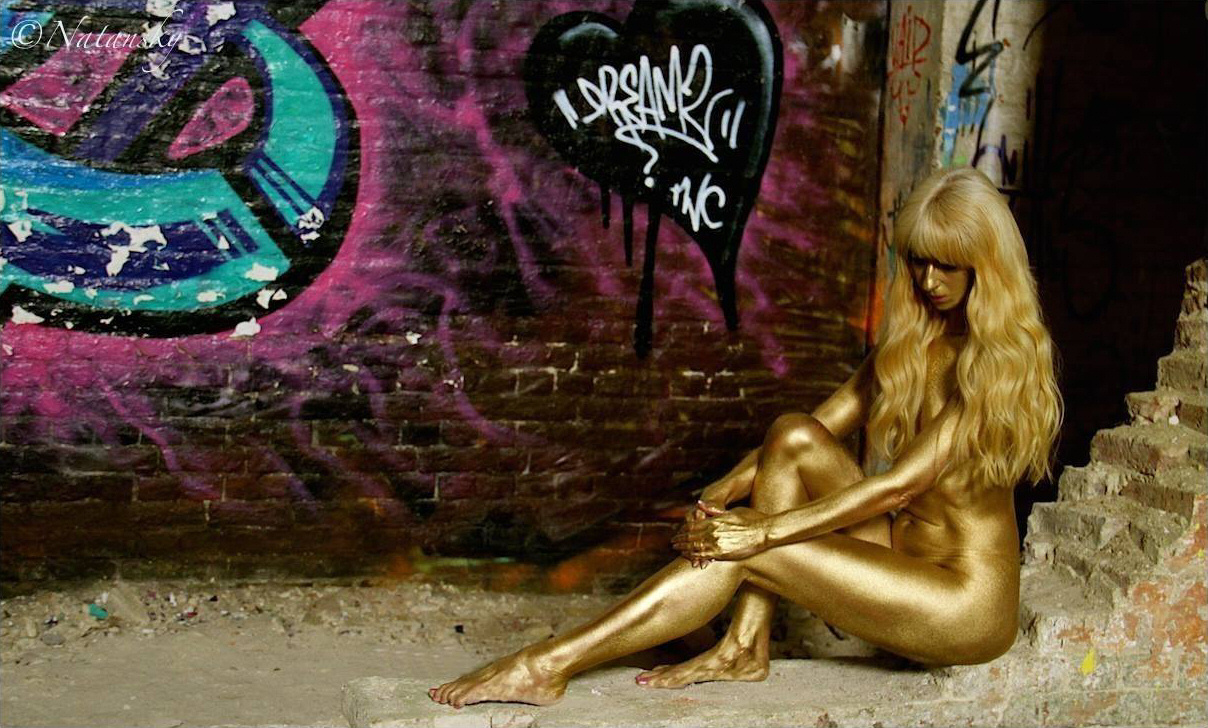
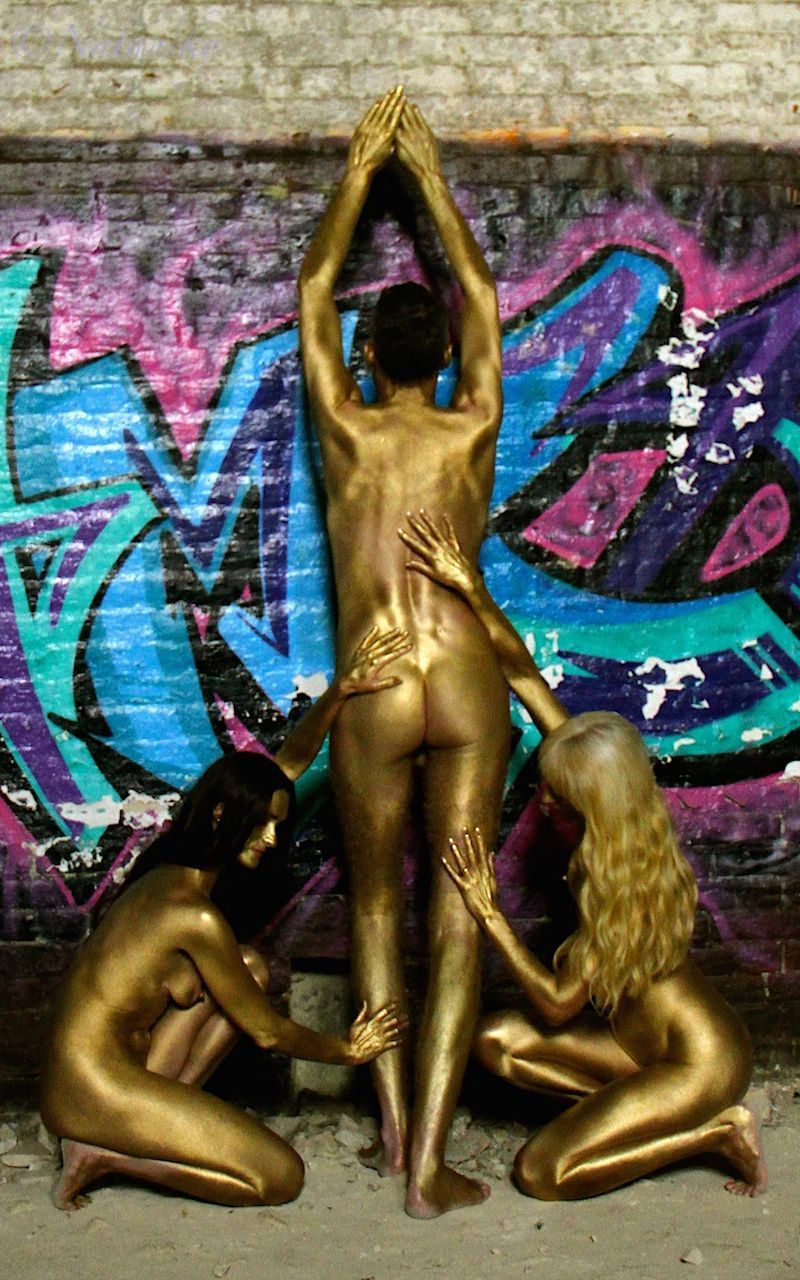
For the second part of the shoot we became gold. Babylon gold. Louise, Nefretari and I first applied gold by hand to our own faces. We then dropped our gowns and allowed Paolo and Natansky to spray us from neck to toes using aerosol body paint – there was just enough to go round. Any gaps were touched-up with the face paint.
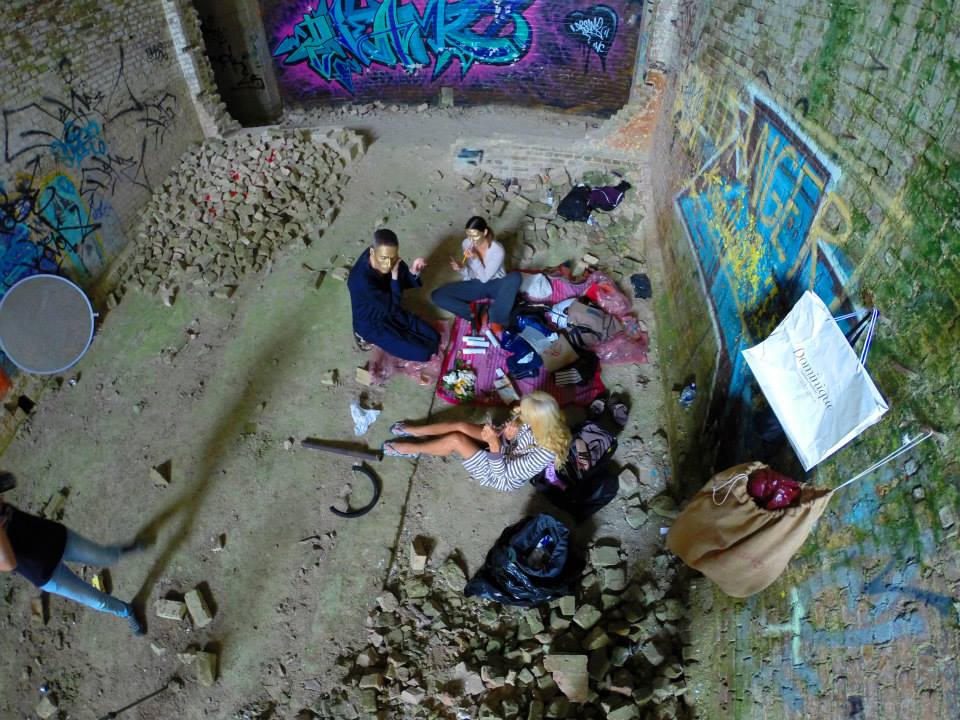
Photographer: Paolo Bridge
Fittingly, Nefretari started our gold sequence with an elegant solo pose seated on a low wall. The three of us then stood against a graffiti-decorated wall in all manner of combinations, culminating with a tightly-bound variation on Canova’s Three Graces from Greek mythology.
Photographer: Paolo Bridge

Photographer: Paolo Bridge
Photographer: Paolo Bridge
In a different part of the building we were captured in a corridor, walking in separation or with our bodies close together.

Photographer: Paolo Bridge
Nefretari posed solo in the window; Louise and I went head to head on a staircase.

Photographer: Paolo Bridge

Photographer: Natansky
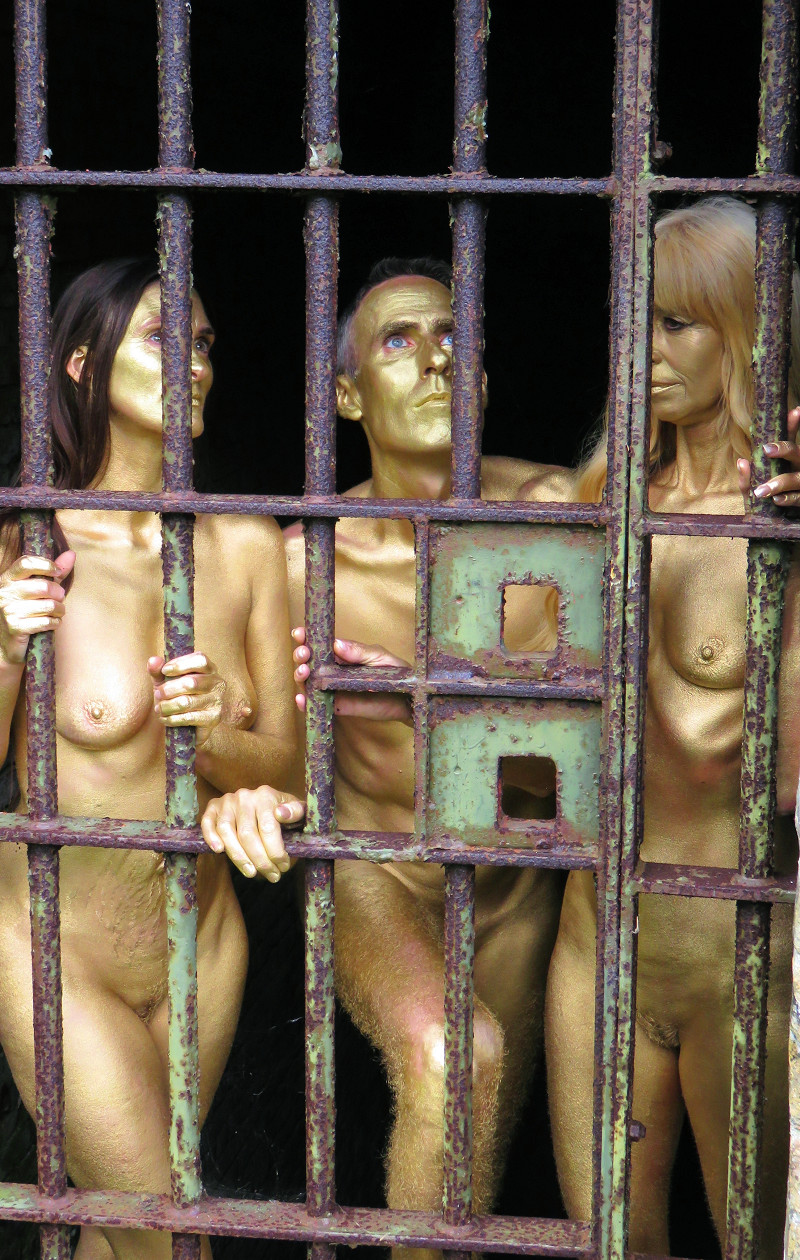
Finally we lined up for a shot seated on the staircase before ascending to the outside world. We stood at the top of the stairs, staring out from behind a rusty barred gate – golden prisoners gazing wistfully at the sun.
Photographer: Paolo Bridge
In the unkempt greenery outside we reprised our Three Graces, and picked the fruit in this Garden of Eden. Our last pose was occupying another broken brick doorway.

Photographer: Paolo Bridge
The hours had simply flown by. It was now mid-afternoon and we had lost the light, so we called it a day. A token attempt was made to remove our gold, but most would be showered off at home. As I boarded a train, still with golden face and arms visible, an elderly lady remarked: “Ooh look, it’s one of them statues.” If you only knew, dear.

So much had been achieved, and yet so much more remained of our ideas. Which is how it should be: let there be a reason to recharge, regroup, re-create and realise our dreams. We are the makers, and we made this: our Babylon.

“That’s a pose and a half,” murmured Edward… In fact I was merely standing straight, right leg slightly forward, chin raised for one minute. What enhanced it was the exotic oriental turban I was wearing, with two long rafraf trails of cloth that I’d draped over my outstretched hands, palms forward.
The turban was property of Edward Wills: artist, actor, longbowman, maker of exotic objects, to name but a smattering of his talents. It was a grand evening’s work with Tottenham Art Classes that first brought my poses to Edward’s attention, and which ultimately brought me the opportunity to don his stupendous headgear last Saturday.
The occasion was a ‘one-day life painting course’ hosted by the Candid Arts Trust in Islington. Edward was the tutor, and it was my privilege to be his model. We would be working from 10am to 5pm with five able artists joining us to hone their skills.

Central to the course was Edward sharing his knowledge and experience of materials. The artists would put their learning into practice painting two long poses. To warm up, however, we started with drawing and a sequence of dynamic poses for three minutes, two minutes, one minute or 30 seconds.
These first poses saw me alone without props, standing upon a purpose-built wooden podium with ceiling-mounted heaters on either side. I draped my white sheet over the podium and spent the rest of the day patterning it with footprints of black charcoal.
After our warm-up Edward led us through the proper use of an artist’s palette, and his selection of colours. The supporting detail was complicated but the artists’ grounding in his subject was clearly superior to my own. His words were understood.
We saw the preparation of traditional oil paints; we learned the rationale behind a full palette of 11 colours – no greens or purples here – and choices for a reduced palette of six; there were colour pairs, some transparent colours, some opaque colours, while traditional distinctions between warm and cool colours were brushed aside.
The joy in listening to Edward’s idiosyncratic delivery is that it’s based upon years of practice and understanding. His is no slavish regurgitation of theory. Indeed, his view is that more nonsense – was that the word? – has been written on colour theory than any other subject.
Having seen the palette established, I stepped from my gown and posed with hands behind my back while Edward demonstrated use of the reduced palette. It was then time for the artists to charge their own palettes and ready themselves at their easels. They would paint me on paper to begin with.
The pose was to be 90 minutes standing. One leg was a half-pace forward, my right hand was on my left shoulder and my left arm was extended with its elbow anchored to my waist. I took one break for a stretch halfway through but was otherwise static.
Considering this was just the preliminary practice I though the results were strong. A couple of artists had warmed to the task and would have been happy to build on their work for the rest of the day. Lunchtime beckoned, however, so we brought to an end our promising morning.

During the break I stretched my legs wandering around the Islington Contemporary Arts and Design Fair next door. Glasswork was to the fore this weekend. I gave my compliments to the artist who had fashioned a beautiful fragile coral-like structure out of four crushed Bombay Sapphire gin bottles.
We resumed work with another sequence of short dynamic drawings. For these I wore the aforementioned turban and struck magnificently dramatic stances. Alas, I can offer no visual evidence of this glory so I shall simply claim it as such until proven wrong.
Afterwards, I adopted a simple stance for another of Edward’s demonstrations, before preparing the podium for the day’s main work: a near three-hour seated pose. As this was the showpiece I wanted to make it interesting and sustainable. That meant every extremity being active yet supported.
I perched on the edge of a cushioned stool that I’d covered with my sheet. Both legs would be bent but not stressed. To help recreate the pose after rest breaks, I put my left big toe on the corner of the podium, with my left knee pointing at a paint fleck on the floor; my right big toe was hooked on the podium’s middle edge.
Arms: both would be crooked but at different angles. My left elbow would be planted on my left knee; my left hand supported my chin, with thumb and little finger aligned on my jawline. My right hand would be on my right knee, such that its fingertips just peeked into my peripheral vision. My gaze fixed randomly on a fire extinguisher.
And that was me set for the thick end of three hours, with breaks at 3pm and 4pm. The main weak link in my pose was my right elbow, which was beyond my lines of sight. It’s easy to lose sense of an unsupported limb ‘settling’ and being in need of visual adjustment. Broadly I think the pose held pretty well within the limits of what can reasonably be endured.
During the first hour I was concerned I may have made the pose too complex as two or three artists were finding the preparatory drawing phase quite challenging. As the main practice of the day was painting I started to regret I may have caused them to lose valuable time. Edward, however, reassured them it was time well spent.
Everyone was well into their stride after the first break. By the end of the day a few artists felt they’d taken the work as far as they could, while one would have happily carried on indefinitely. Their works were both fascinating and impressive to behold. They all shared common characteristics, yet each had its own distinct character.


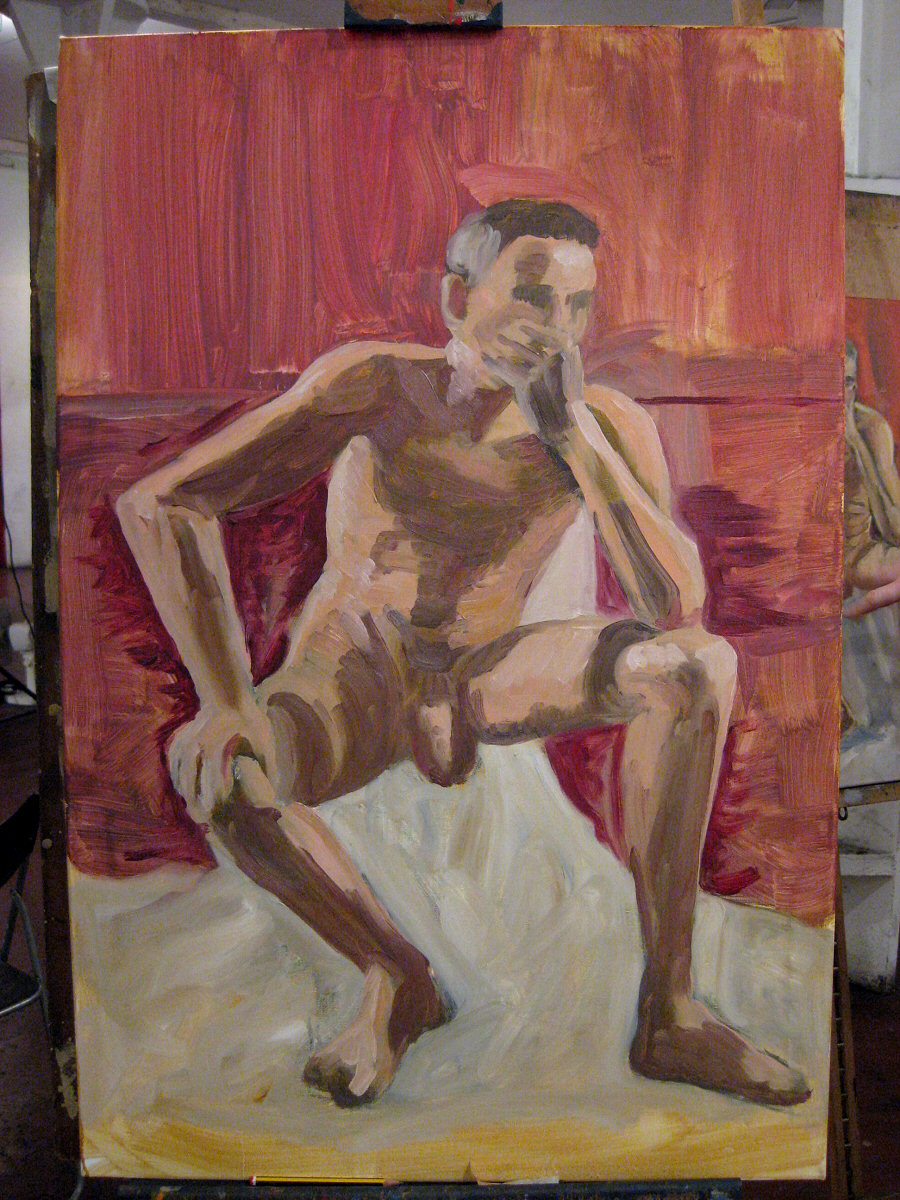
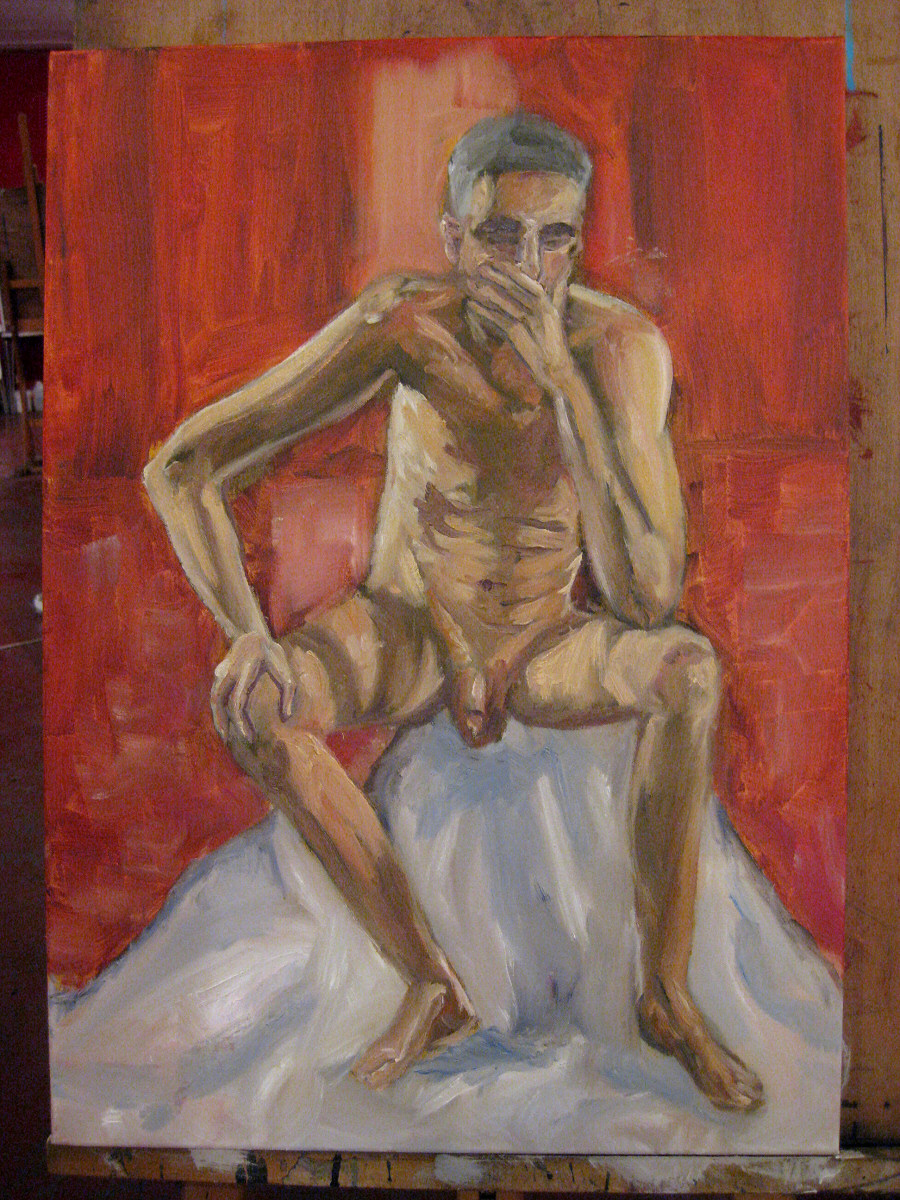
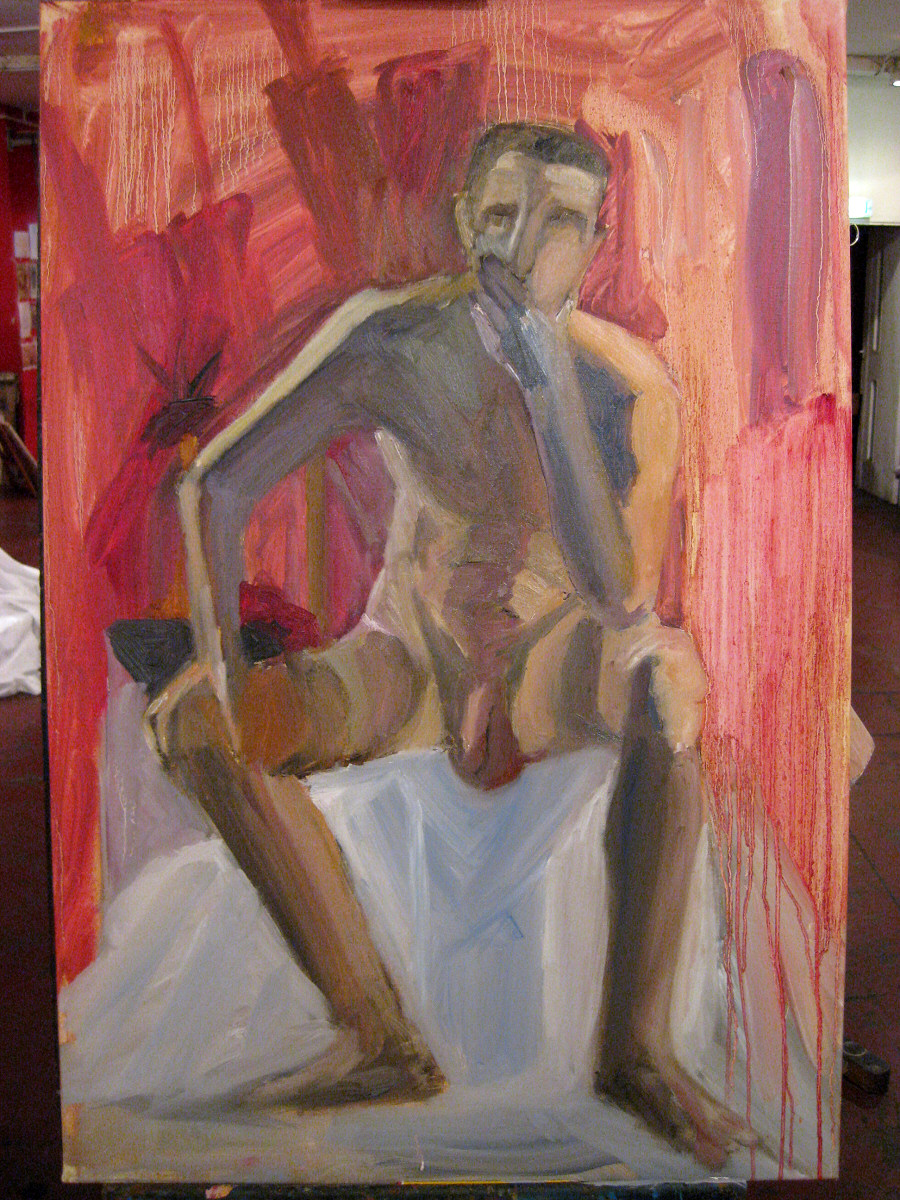
Throughout the session Edward gave advice on a one-to-one basis but this was done sparingly and shrewdly rather than strafing the artists with endless tips. Primarily he gave them renewed encouragement and helped them break through barriers. The aim was to provide technique and craft without stifling individuality.
We packed away. Artists washed their brushes while I washed my feet. Four of the five canvasses were put away to dry, while one was taken home on a London bus. It would have amused me to hold the same pose (clothed) while sitting adjacent to my portrait in transit. But I had my own journey. It had been a long day; a good day.
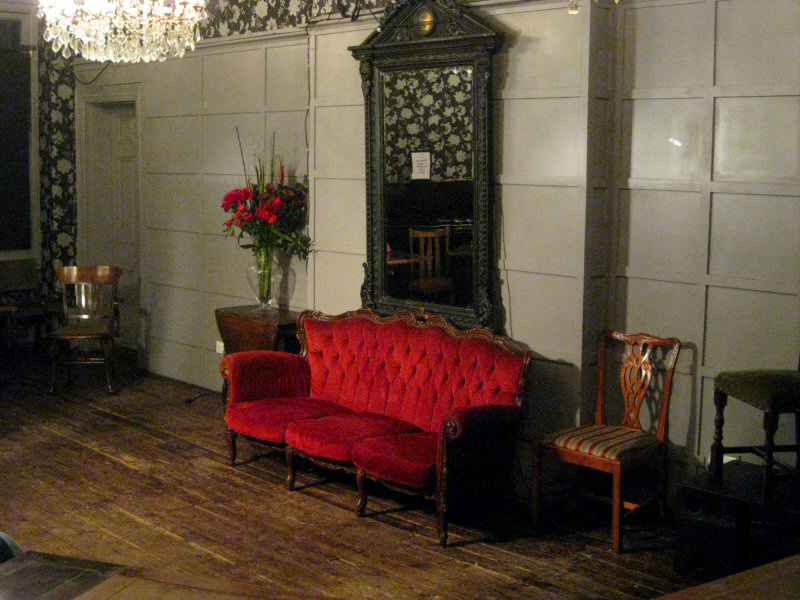
Wednesday evening last week I life modelled short poses at The Cambria pub for Camberwell Life Drawing. This week I returned for long poses. The evening started auspiciously: I found the dressing gown I’d carelessly left behind seven days before.
Again I met Tatiana in the upstairs function room, where we would be joined by about 10 artists. The poses would be 15 minutes standing, another 15 minutes standing, 30 minutes sitting on the floor – then a break – and finally 45 minutes seated on a couch.
There is a certain inevitability about numbness during my long poses; it’s something I really should work on preventing. In the standing poses I tend to apply my bodyweight through one leg and use the other for balance. Ergo I switched weighted legs between the two 15-minutes to share their burden.

While seated upon the floor I had my right leg fully extended, and my left leg crooked underneath it. Contrary to what might be expected it was the foot of the extended leg that went numb midway through and stayed that way to the end of the half-hour.
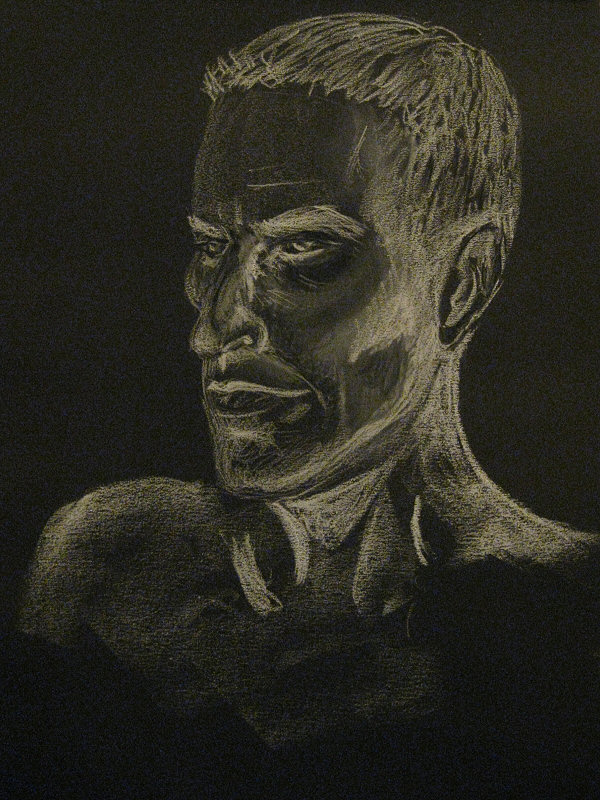
My final pose had both shins crossed as an X, one arm resting its elbow on one knee and its hand on the other; the other arm’s elbow being on the other knee and its hand supporting my chin. I felt a slight tremor in my unsupported leg early on but ultimately it was the hand under my chin that went numb towards the very end.
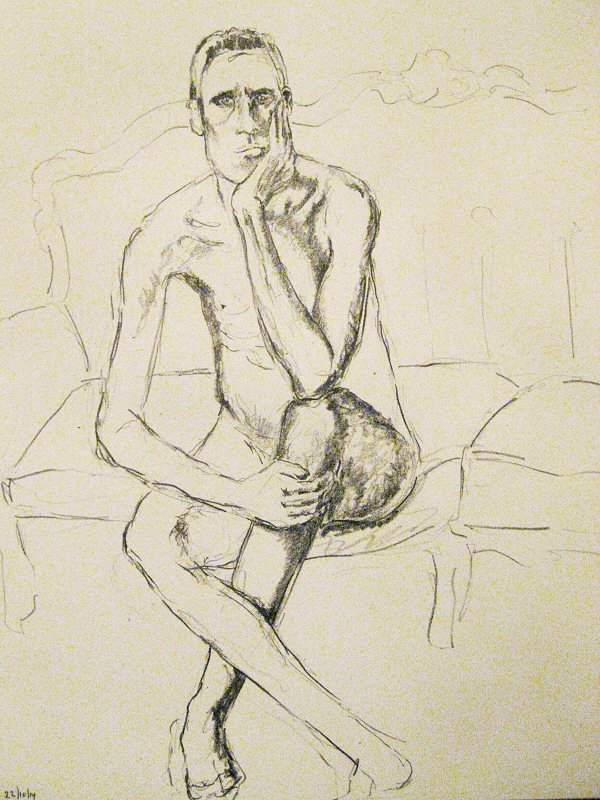

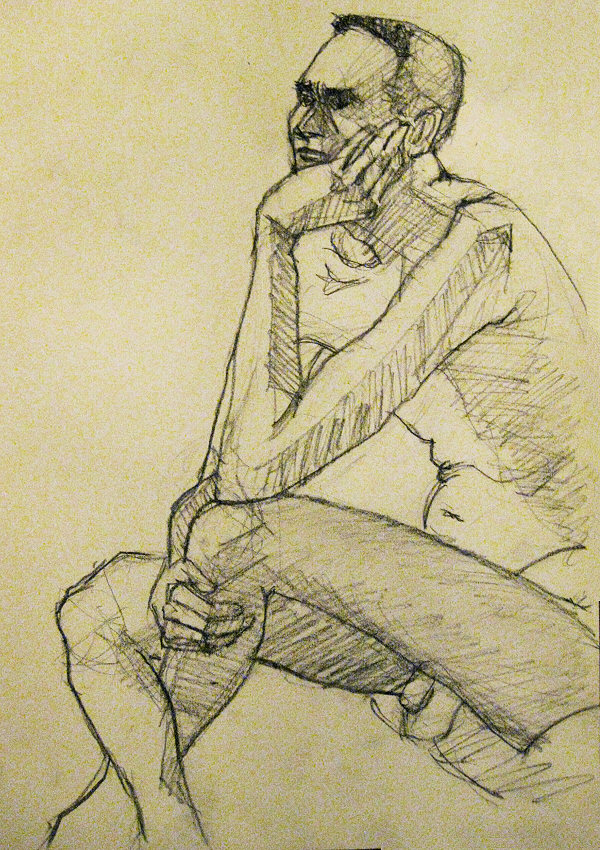
Tatiana graciously offered me a moment to stretch halfway through the final long pose. At the end I shook off my numbness, put on my clothes and photographed some great drawings. We then packed away, and half a dozen of us repaired to the bar.
How convenient it is to life model inside a pub. We segued to a fine evening of post-art wine, nibbles and good conversation, in excellent company. Now, after two successive weeks here I can’t reasonably expect to get a new booking any time soon, but I would be a very happy man indeed if the chance came to return some time in the new year.
It’s funny how things work out. On the Monday between two Mondays for which I was official ‘reserve’ life model of the A-side B-side Gallery, I received an email asking if I would be available that same evening. Neither the booked model nor the listed reserve could make it. I could, and so I did.
There would be five of us all told: the two Catherines – organiser and tutor – plus two artists and me. It astonishes me that people aren’t queuing up to join this group as in Catherine Hall they have possibly the most enthusiastic, resourceful and sensitively attentive tutor I’ve worked with.
This was my third time there. Each time Catherine has set wildly different challenges for both the artists and model alike with the aim of producing quality life drawing while exploring different methodologies. Explanations are brief yet comprehensive and clear. Afterwards it’s hints, tips and chill-out music all the way.
We warmed up with standing poses of 5 minutes, 3 minutes and three of 1 minute. I was then to be seated upon a low stool in a single pose for an hour and a half with a short break in the middle. The pose had my legs bent and a body-twist to the left so, whilst not especially comfortable, it was endurable.
The key practice point in this session was the use of plumb-lines to establish a fixed vertical in my body, then using the string horizontally to construct an outline of points. Something like that, anyway. Obviously it was impossible for me to see exactly what was going on.
In a novel move it was the artists’ foot positions that were initially marked on the floor with masking tape at a good distance from their easels. They would observe me from this distance then step forward to make marks on their paper without looking back to me whenever they were close up.
In the first session particularly, they were forever observing at a distance, taking three paces forward, marking close-up, taking three paces back and so on. I reckoned they each must have covered about a quarter of a mile. Catherine too, as she joined in the creativity.
After the break we did our best to put me back into exactly the same position. I don’t think we got it spot on, but we were near enough for everyone to be happy continuing.
At the end of the evening we had three very good drawings, each of its own character and style. One had nailed the tones, another the form, and another the face. Keeping in mind the two artists were using this plumb-line technique for a first time I thought it was a superb effort all round.


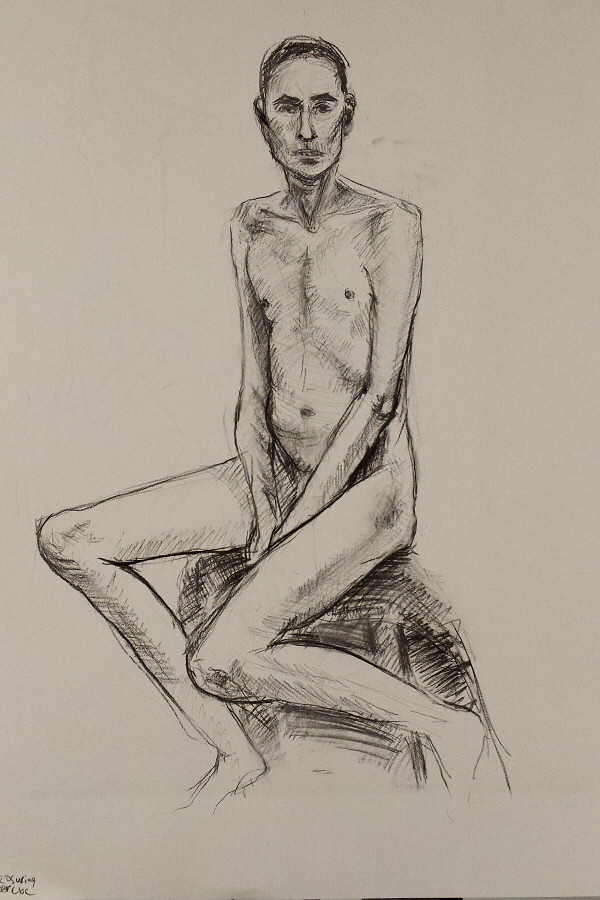
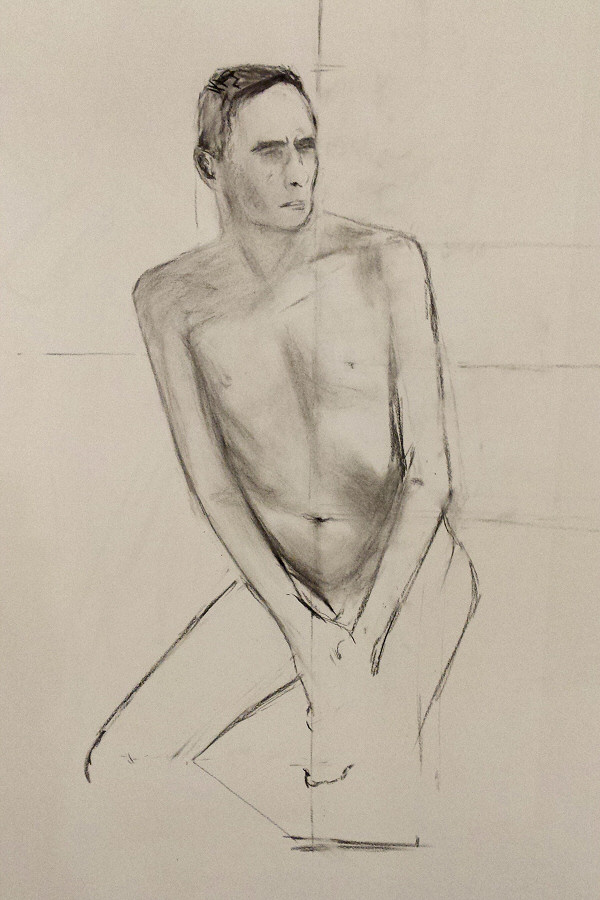
I will be looking forward to my next scheduled return to the gallery in two weeks’ time. What new practices will Catherine have in store for us? And, who knows? As I’m first reserve for next Monday I may not even have to wait a fortnight to find out…
 steve ritter