That moment you walk through a familiar doorway and immediately sense something unfamiliar about the place you’ve entered… such a moment I experienced on my first visit of 2015 to the A-side B-side Gallery.
The beaming welcome from artist and group leader Catherine Hall, from the centre of the room, was exactly as I remembered yet all around seemed different. First I noticed there were twice as many easels. Furthermore they were all new modern black frames rather than the heavy old wooden variety.
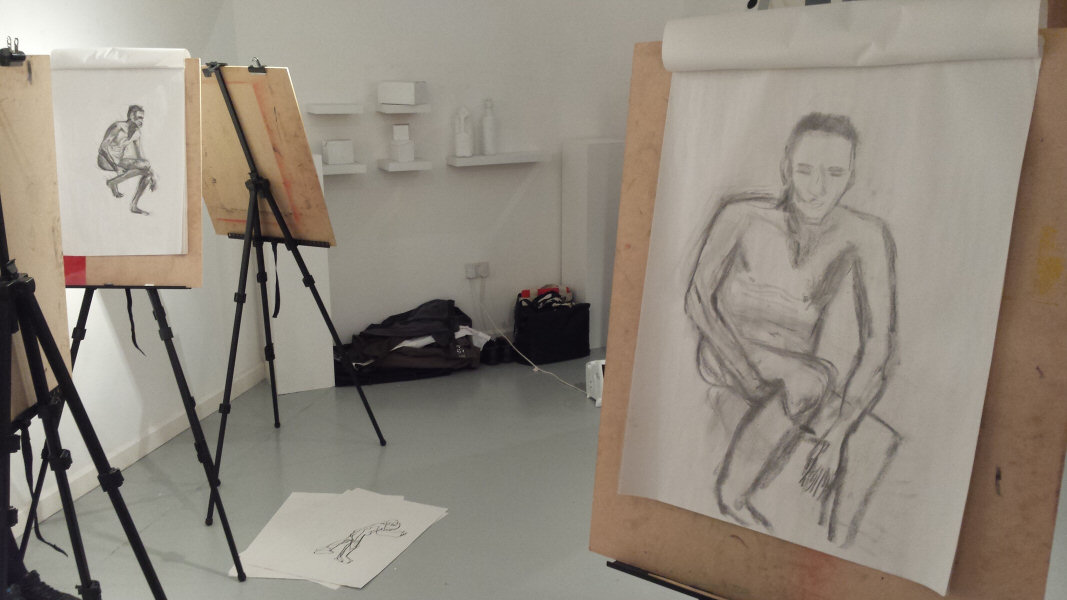
The entrance desk was on the right instead of the left. Oh, and the walls had all been painted! And the floor. And there was a portable wooden step with a crimson cushion for models to pose on. And a black curtain as backdrop. In fact, everything about the space was pristine and plush.
It was heart-warming to see. The gallery and its life drawing group are flourishing, and well deserve to be. With Catherine’s keen, clear, one-to-one expert guidance this is a group where amateur artists can improve their basic skills and enjoy learning a broad spectrum of new drawing techniques without pressure or judgement.
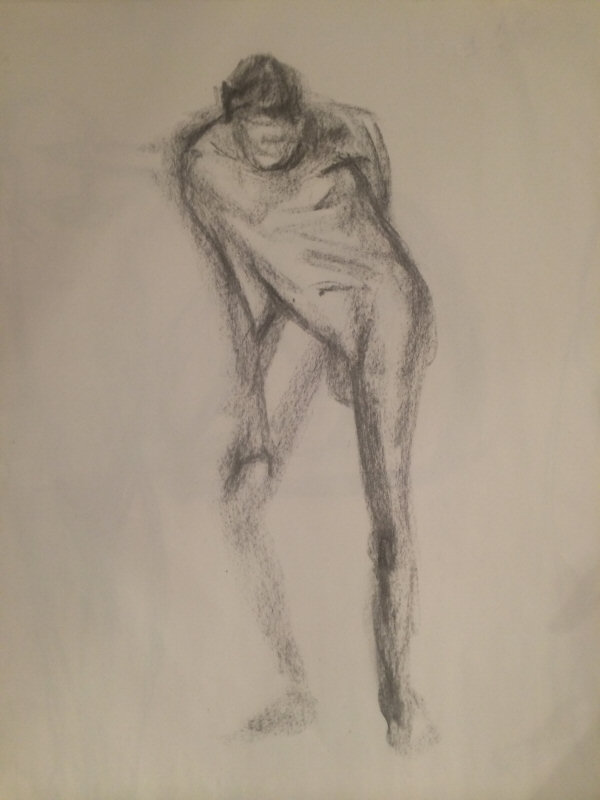
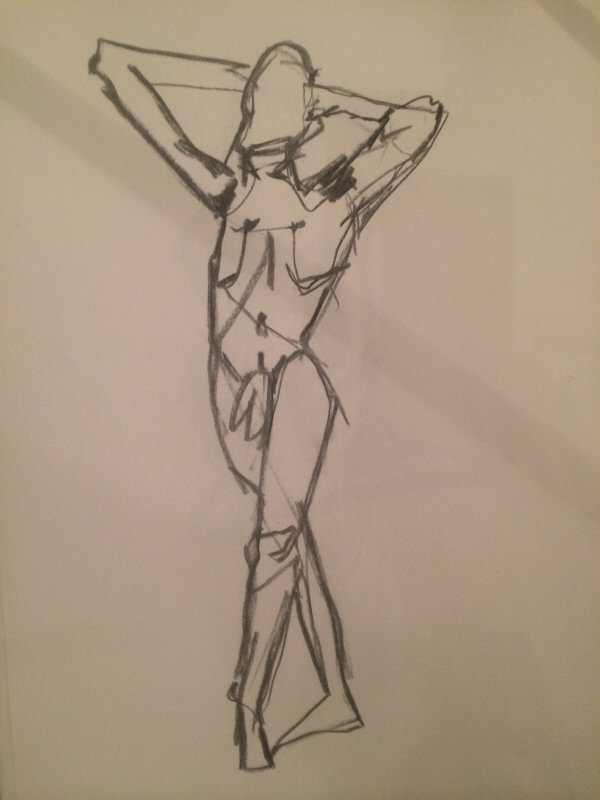
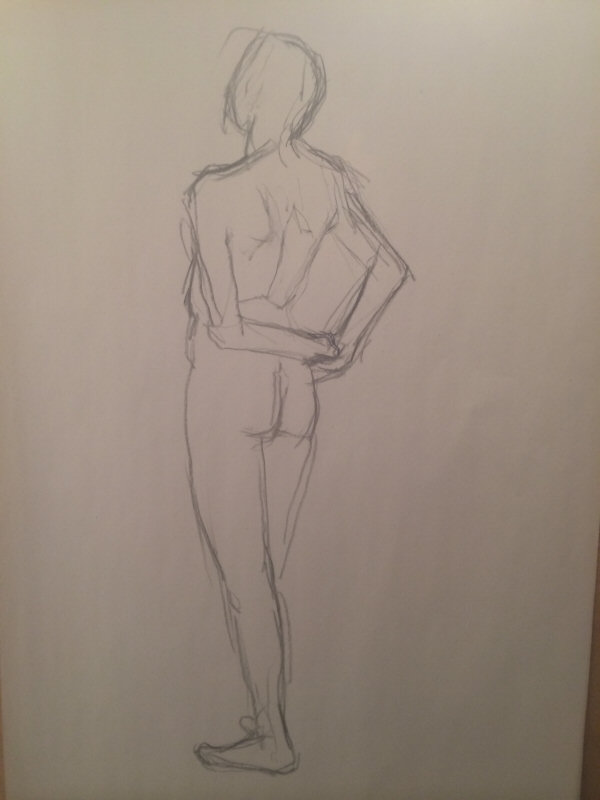
Seven of the eight expected artists arrived; we set to work. My first standing pose of 6 minutes was to be drawn blind – eyes to the model, not to the paper. An extraordinary array of forms were created: some surprisingly proportional, others capturing pleasing details, and yet others with a multiplicity of lines that created an animation effect.

We raced through three poses of 30 seconds, two of a minute and three of 3 minutes. These were to hone the eye and line; the essential form was to be outlined within the first 10 seconds. After such intensity we slowed right down with a leisurely 20-minute seated pose that took us to a break.
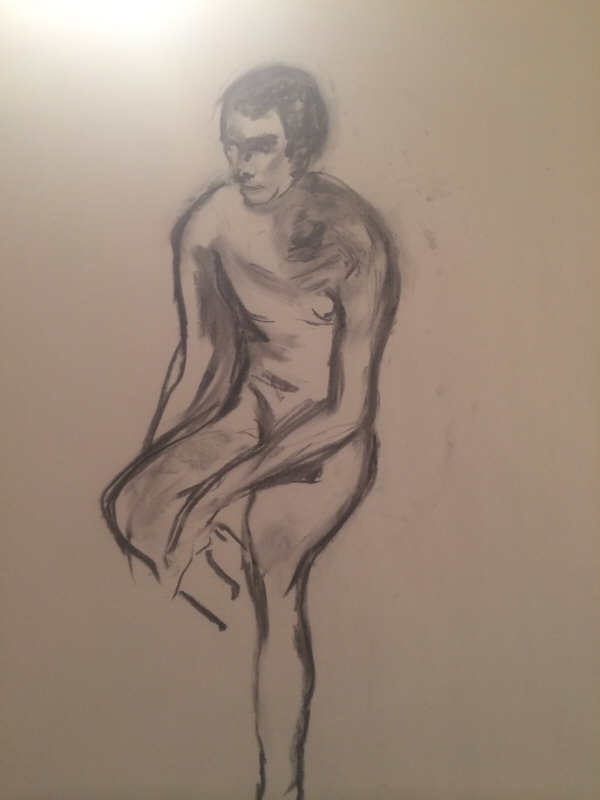
We resumed with two poses of 10 minutes each before seeing out the evening with a half-hour long pose. For the first 10 minutes, Catherine asked me for a standing pose that incorporated a straight line, so I reached my left arm back to hold a ceiling pillar, then leaned forward.
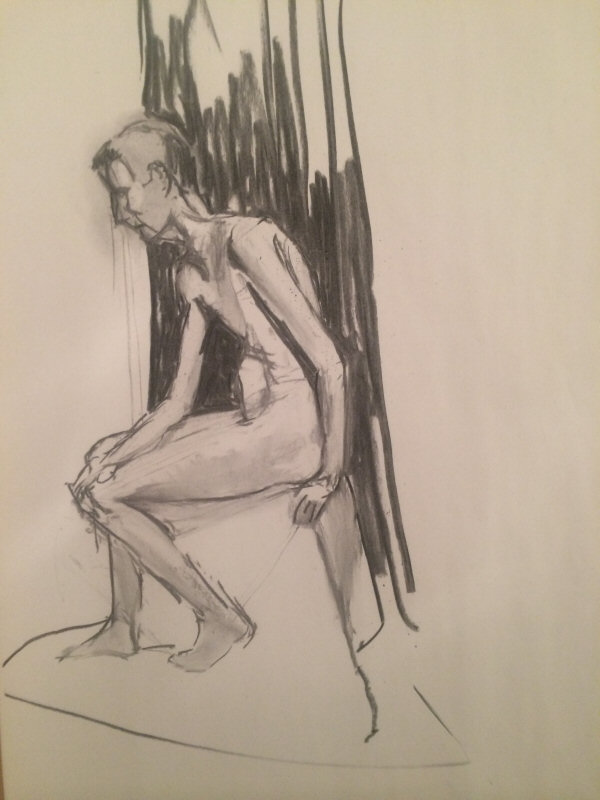
Left arm and pillar were straight lines forming a right angle from one perspective, with my right arm forming another right angle across my chest. 10 minutes was about my limit for holding that one.
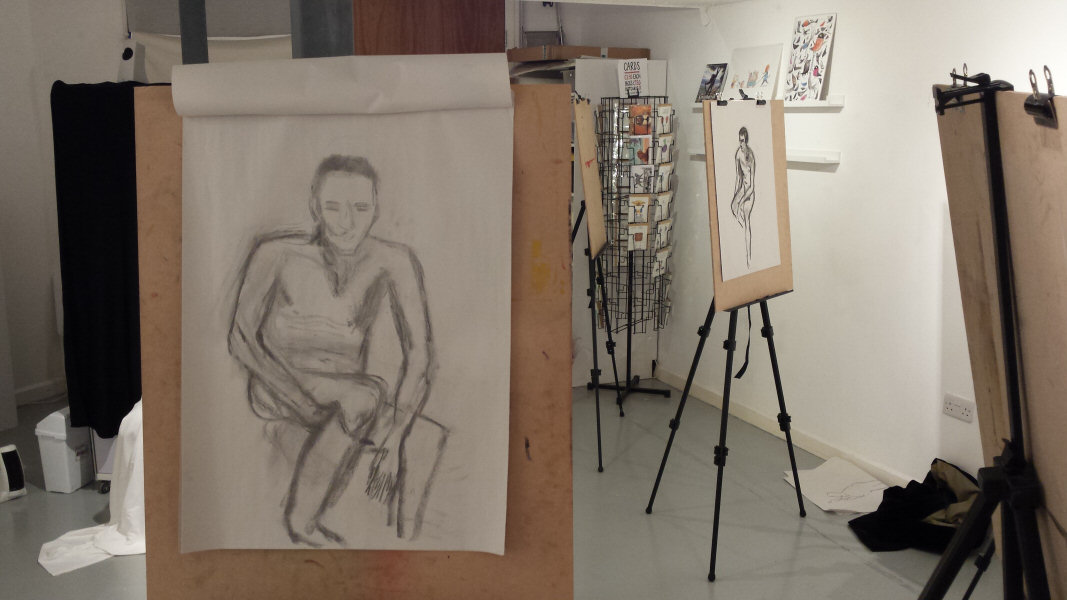
Come 9pm we were done for the evening. Artworks were admired, fixed with spray and rolled up to be taken home. The artists kindly said their thank-yous and – I hope – left satisfied with a positive two hours of creative outpouring.

I wondered whether many of them go to other life drawing groups in London. Possibly not; so if they value being part of an easy-going, pleasant group with constant variety, challenges and progression supported by personalised tips and encouragement, then they may not know quite how lucky they are.
It was fantastic to see more people making the discovery, and the A-side B-side itself with a bright make-over befitting a bright future.
Time passed 1pm. The merciless minute-hand was racing away from its ponderous little friend as I dressed, bade farewell to the receptionist at Albemarle College, and rapidly descended the steps into Marble Arch station. I was expected at The Book Club in Shoreditch before 2 o’clock.
As one life modelling job ends, so another begins.
At Albemarle I’d posed my unadorned body for four art students simply to observe and capture creatively. Life at the Book Club, however, would be very, very different. Here be monsters… moreover, mediæval monsters presented by Art Macabre in a sell-out ticketed event for between forty and fifty artists.
I made it there in good time for our 2pm start but the pressure was off anyway. My co-model for the afternoon – Melissa – was already on the scene, her lower half in period costume and upper half midway through being body-painted by Art Macabre creative czar, Nikki aka Raven Rouge.
Melissa would be portraying a complete menagerie of monsters during the first hour whereas after the break I would have but one universal role: the medico della peste… the pestarzt… the médico de la peste negra… the Plague Doctor.
The most iconic feature of a mediæval plague doctor is his beaklike mask. But how does one acquire such an extraordinary leather proboscis in this day and age? One looks no further than Art Macabre’s maker magnifica: Linsay.
For this special occasion she had surpassed herself to create an object of exquisite glory. Perfectly shaped, handsomely stitched, with glass eye-pieces to the fore and brass buckle fastening at the back, it would be my absolute privilege to model it – a work of art in its own right.
Death drawing enthusiasts were already upon our inner basement wall like bees over honeycomb as the more delicate details of Melissa’s headdress were being finessed into position. Linsay opened the doors and artists meandered in to seek comfortable vantage amid a cluster of tealights and chairs.
When the hubbubbing hoi polloi had hushed, Nikki strode out to our low corner stage. Beyond the curtains of our dim crimson ‘green room’, she welcomed artists and whet their appetites for astonishing sights to come. Melissa then emerged in full mediæval costume and posed as if listening to the whispers of a skull.

This first pose was just a gentle scene-setter lasting three minutes. The second pose, however, whilst only lasting four minutes was more like a mediæval torture: in a static dance of death, Melissa would hold the skull high aloft and gaze into its eyes. Only four minutes? Go on, try it.
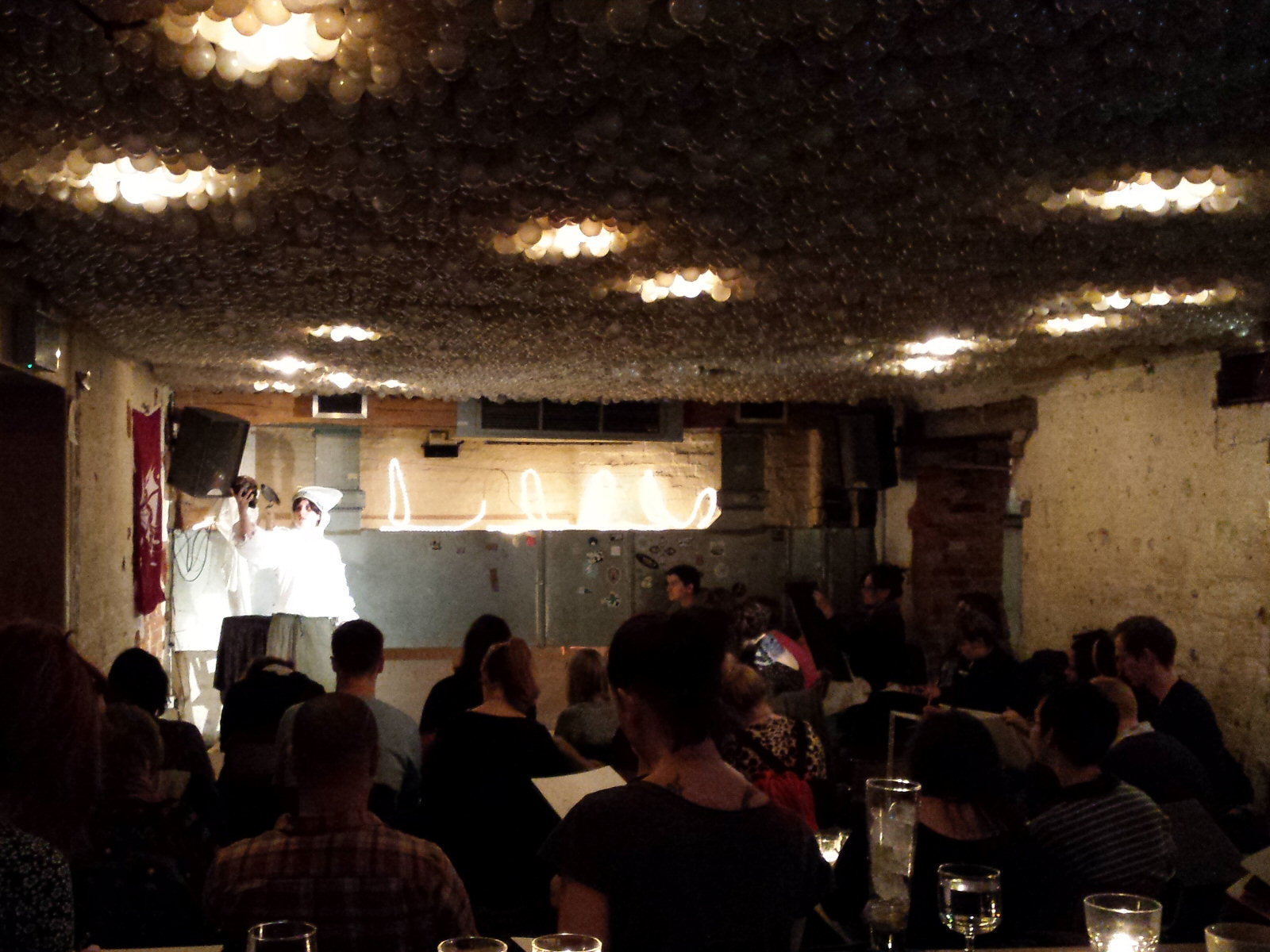
After the longest four minutes of her life, Melissa lowered her arm; lowered herself into sitting position; and Nikki lowered Melissa’s top for a semi-naked pose of five minutes as ‘the mandrake‘. This presented the first major test of imagination for our artists: to depict her as half woman, half plant.


Pose complete, Melissa uprooted and shed the last of her clothes, then turned away from the audience to reveal a broad face painted across her back. For seven minutes she would be a Blemmye – artists were asked to imagine her with no head at all.


Next came one for the purist: a virgin. Not necessarily the Virgin, but certainly a virgin in a pose of seven minutes, complete with black-feathered companion. Upon finishing this, her penultimate pose, Melissa stole backstage for a last change of costume.


Off came the horns that she’d been wearing up until then, and onto her head went the foam-made crown of a unicorn. Returning to the stage, she closed the first half of our session with a candle-cradling 10-minute seated pose.
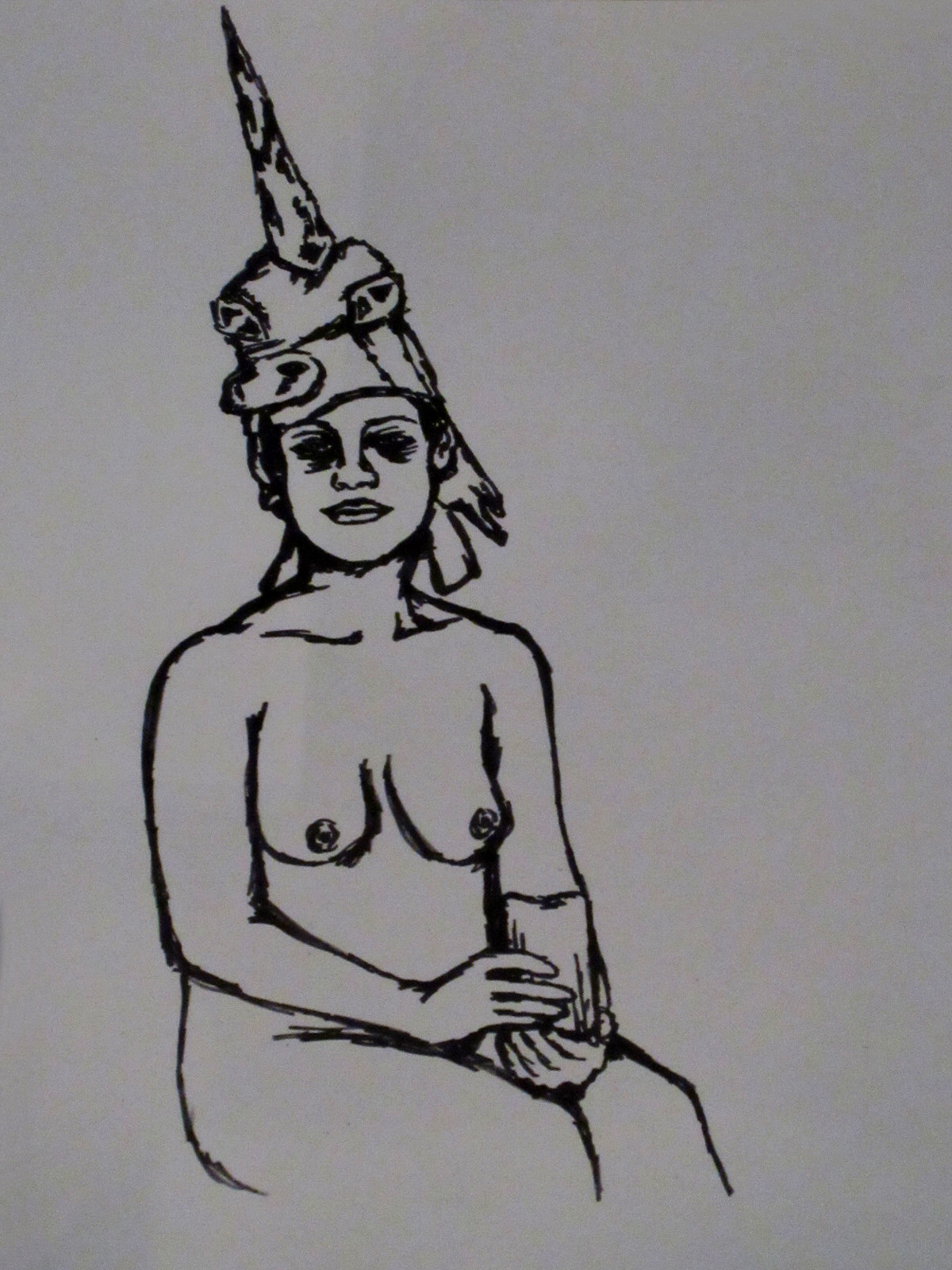
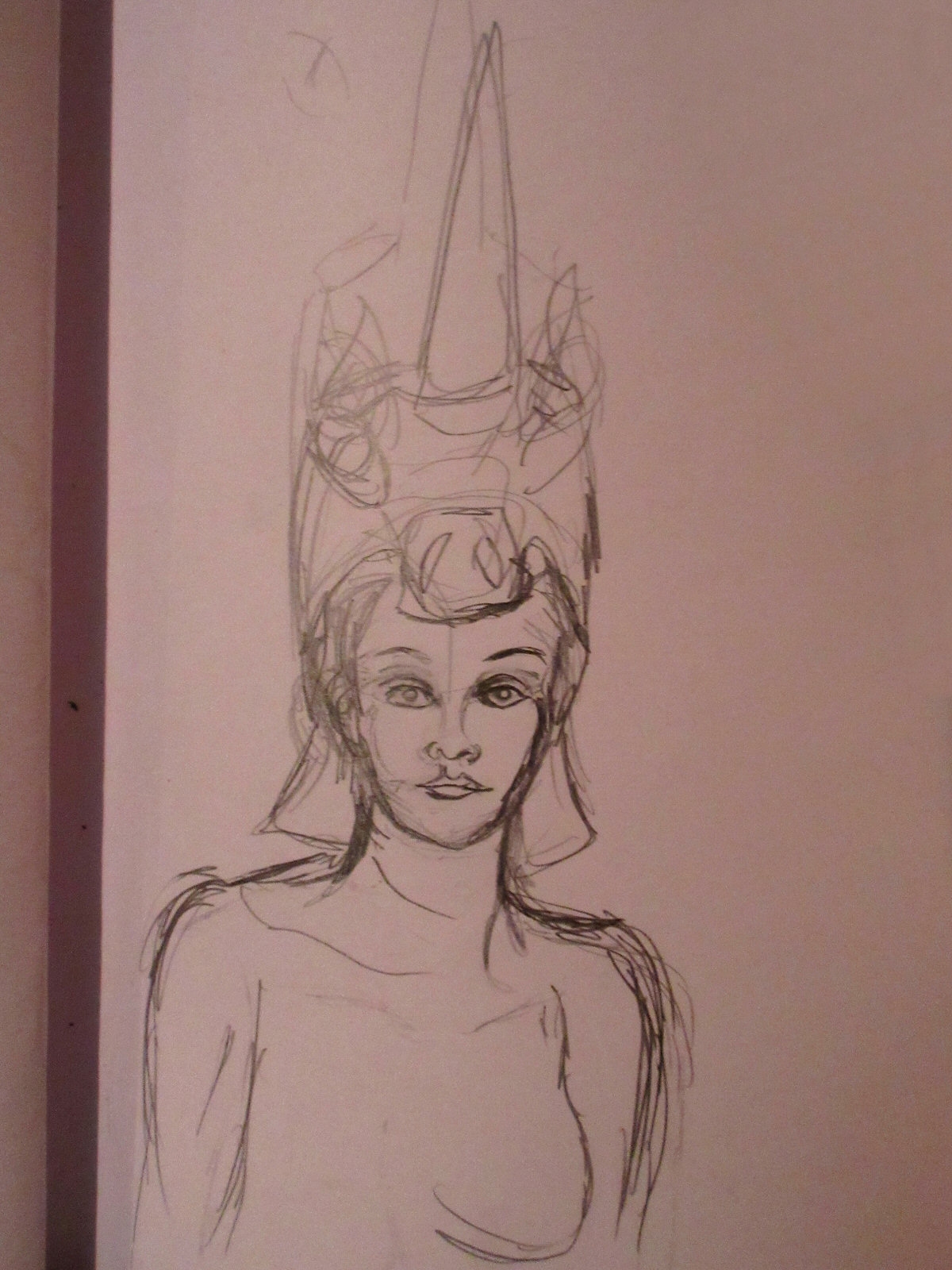
It had been a real tour de force from Melissa, all the more impressive for being her life modelling début. For my turn, I was stripped nude, put into a long black cape and the plague doctor mask, had another black cloth draped over my head, and was pressed under a wide-brimmed black hat. That was me sorted.
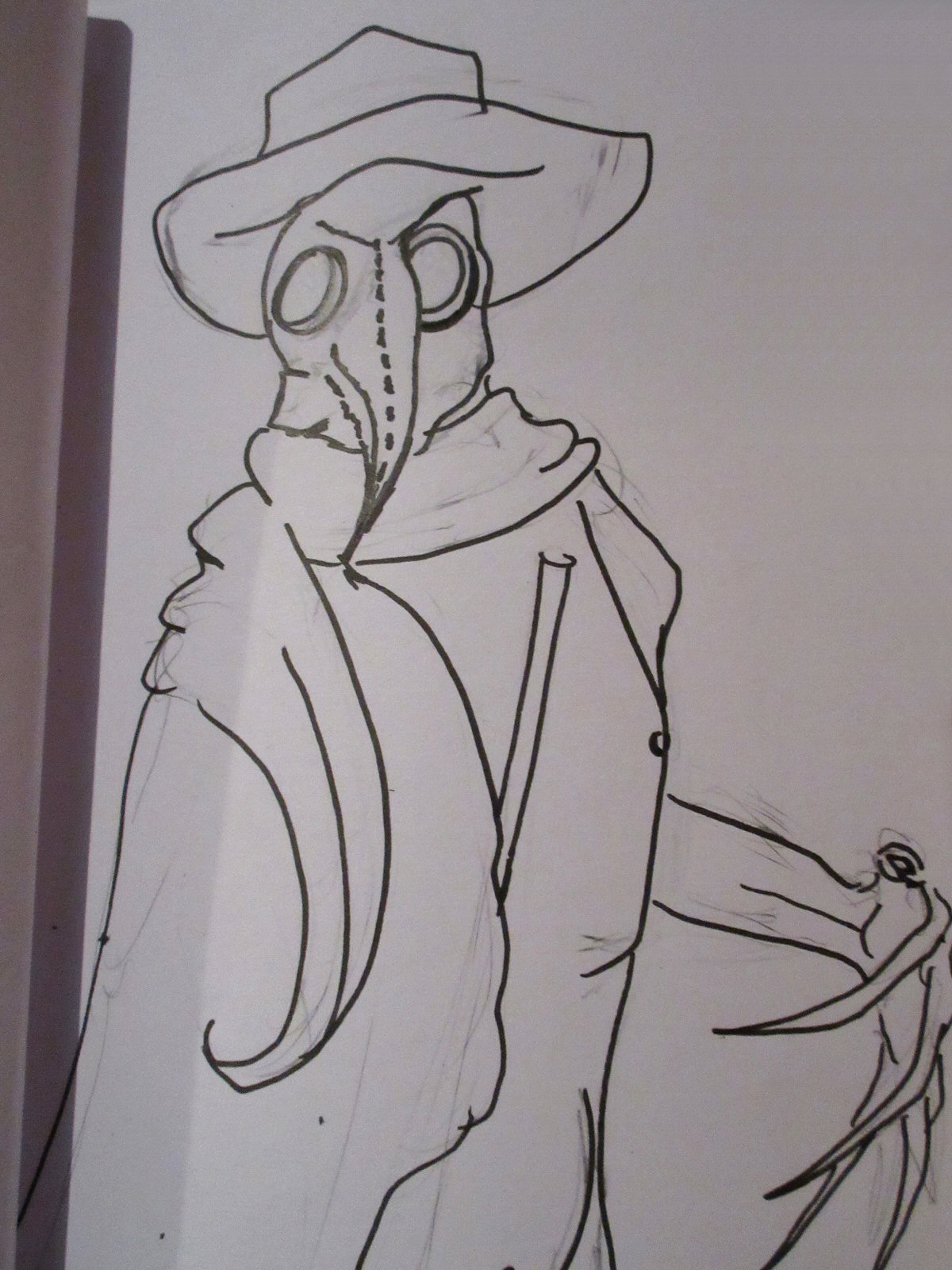
With grotesque black claws on one hand and a long cane in the other, I was ready to meet my public. Nikki lead me onto the stage, introducing my character both visually and verbally, then left me in pose for an opening 10 minutes.
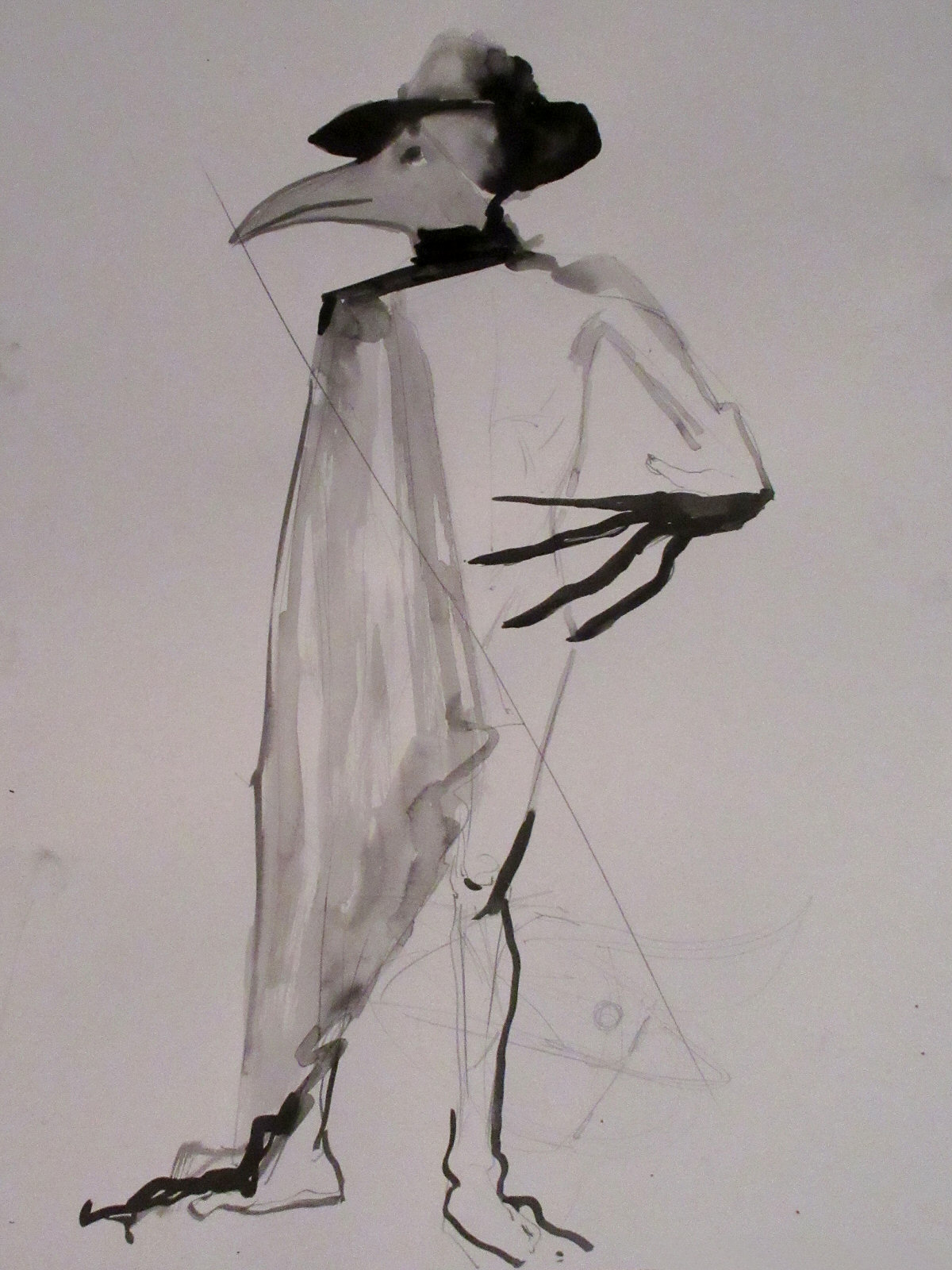
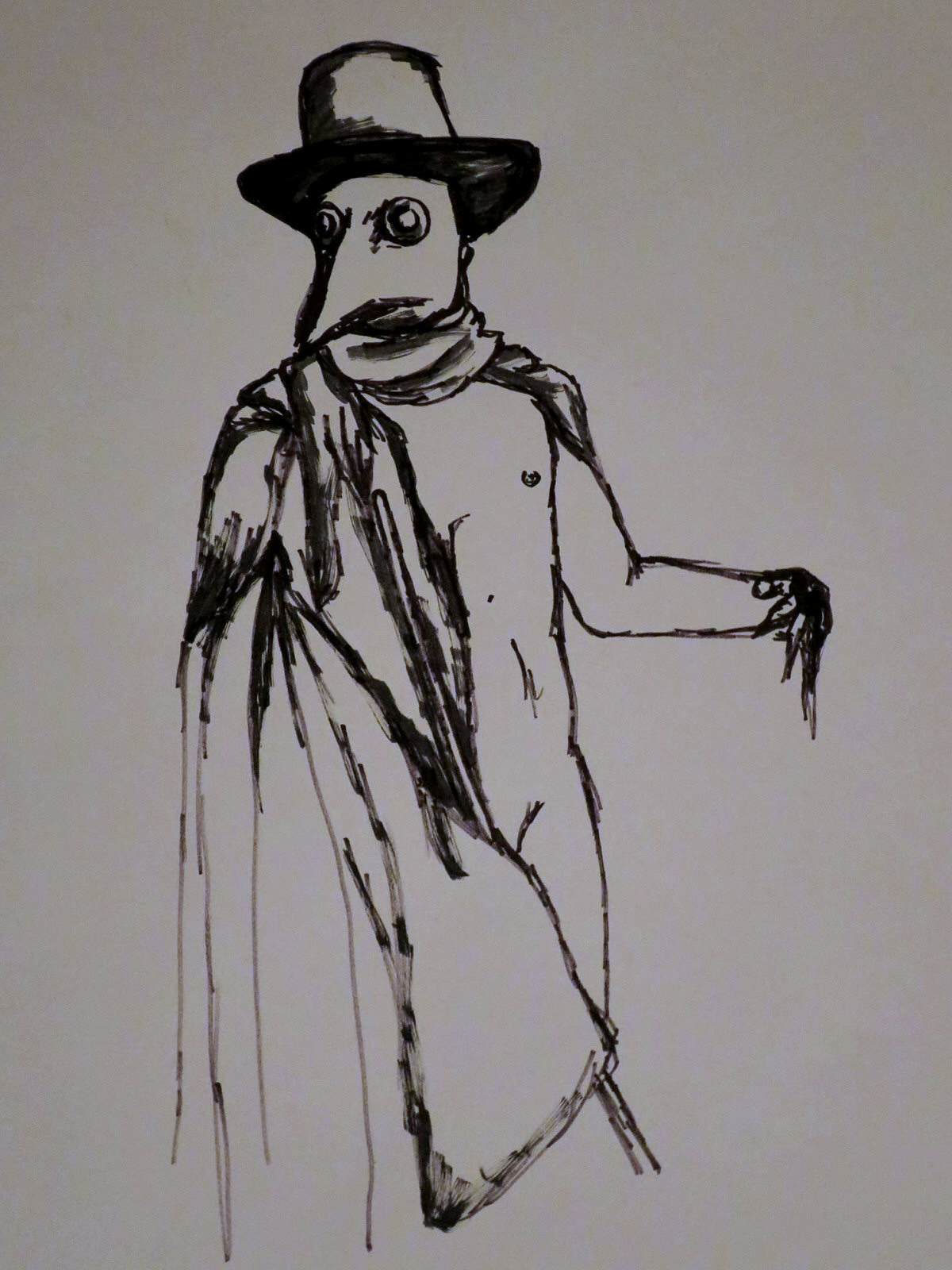
After five motionless minutes, I started to ponder silently the possibility of suffocating in my mask and collapsing. I had become aware that my inward breaths were getting warmer and warmer as I recycled my own trapped carbon dioxide. What to do? Keep calm and carry on, of course.

I didn’t collapse. Whilst it might have afforded excellent opportunities for the artists to observe a long reclining pose, it would have been rather unprofessional and somewhat undignified. The 10 minutes raced by as I mulled such thoughts.
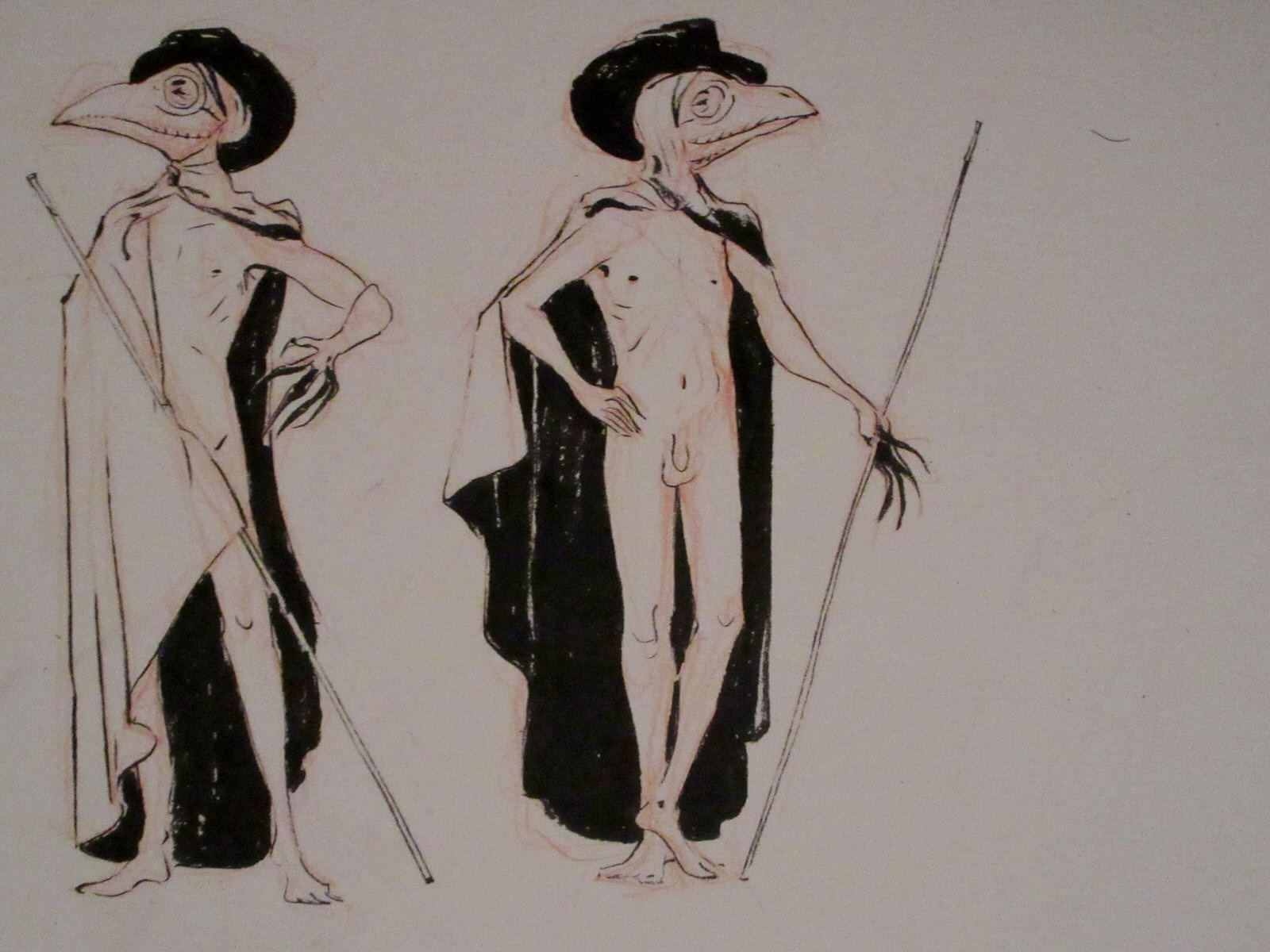
My second and final pose would again be standing, but this time 25 minutes, facing a different direction with a different stance. I found a good supported position and drifted into ‘the zone’, whatever that might be. I was savouring the weirdness of it all.
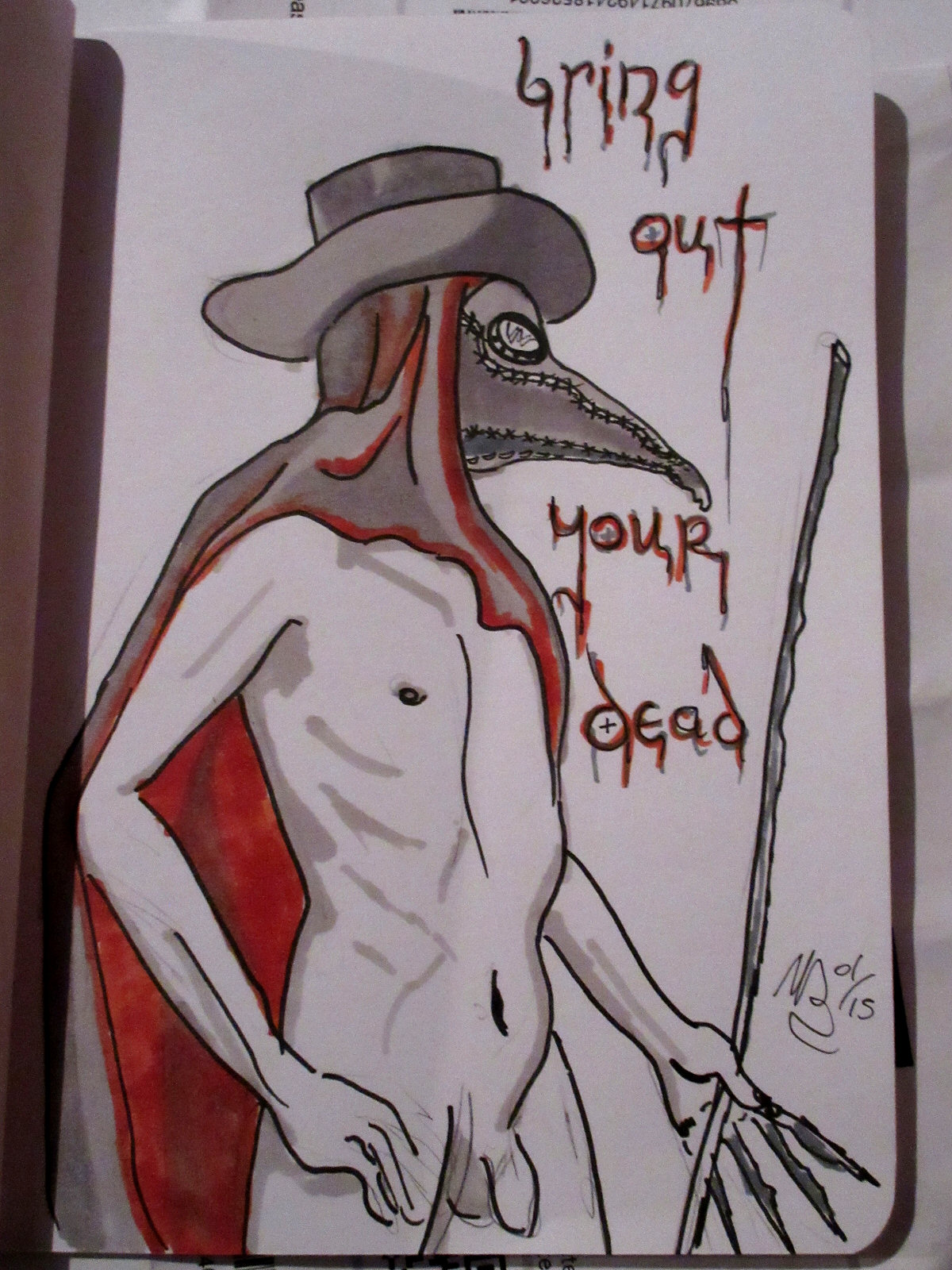
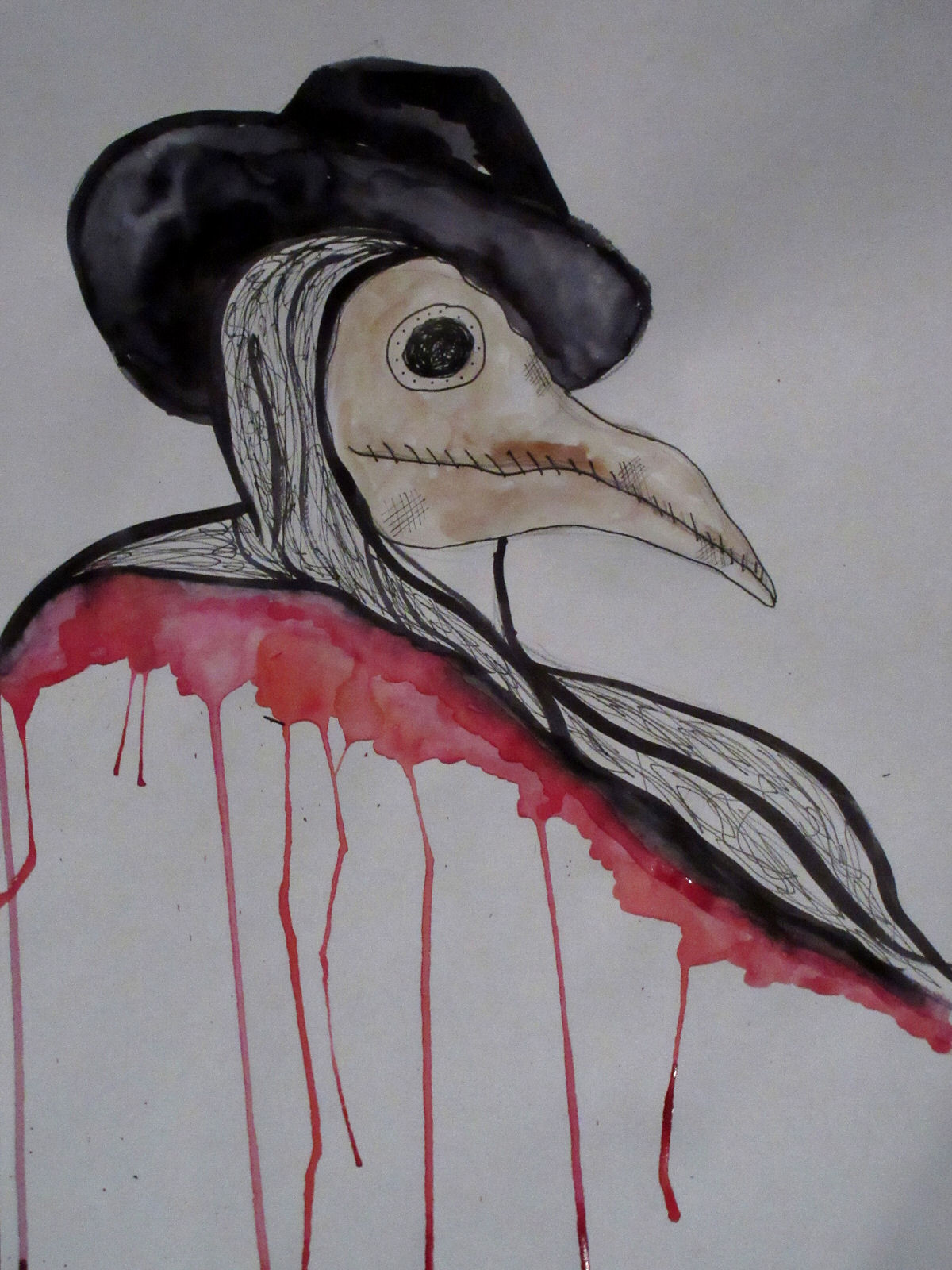
Never before had I imagined myself stark naked save a cape and a leather mask on a London stage, standing before a live audience. Do not presume to know your destiny; life can always take you beyond the limit of your expectations.


I could have stood there for ages. The hour of our ending was upon us, however, and Nikki drew the session to its close. Applause was very generous, and well deserved for Melissa and Raven Rouge. As is customary, Nikki invited all the artists to lay out their work around the room.

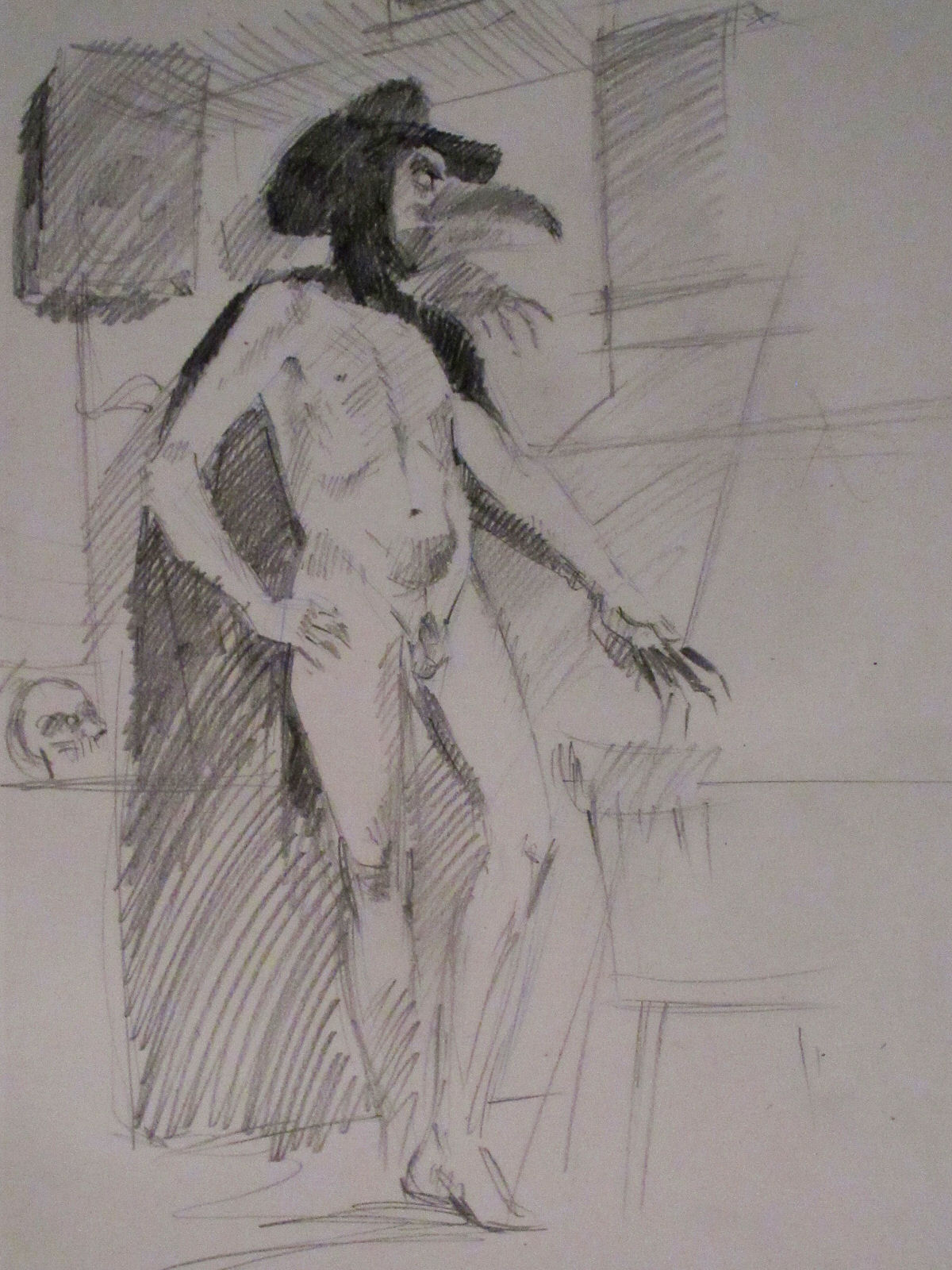
I was keen to join in the admiration, but first had to stumble backstage and somehow extricate myself from mediæval bondage. The claw and mask were both affectionately and stubbornly attached. By adding brute force to my ignorance – whilst taking great care not to damage the mask – eventually I got free.
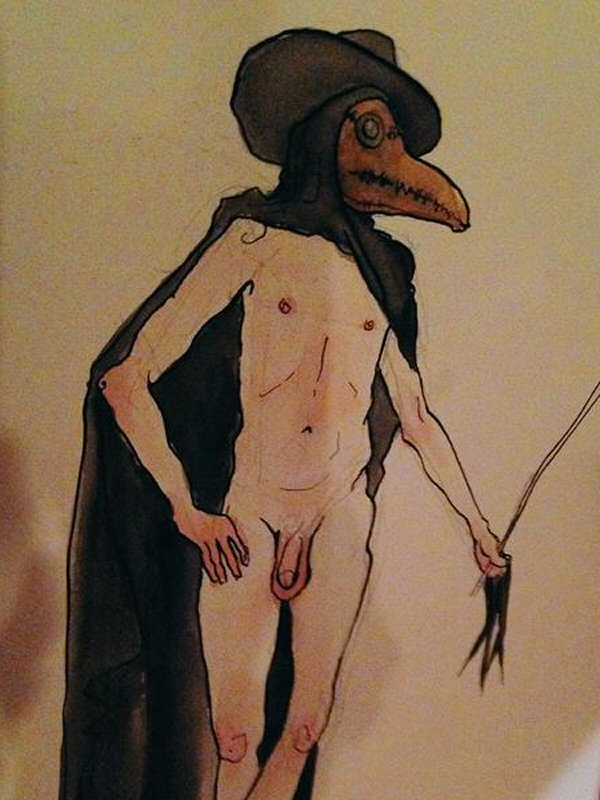

When Nikki booked me for this event she had promised to make me “unrecognisable”. Proof of her success, as I returned in clothes to photograph the art, was that a couple of artists spoke to me about the plague doctor as “he”. Erm… that was me!

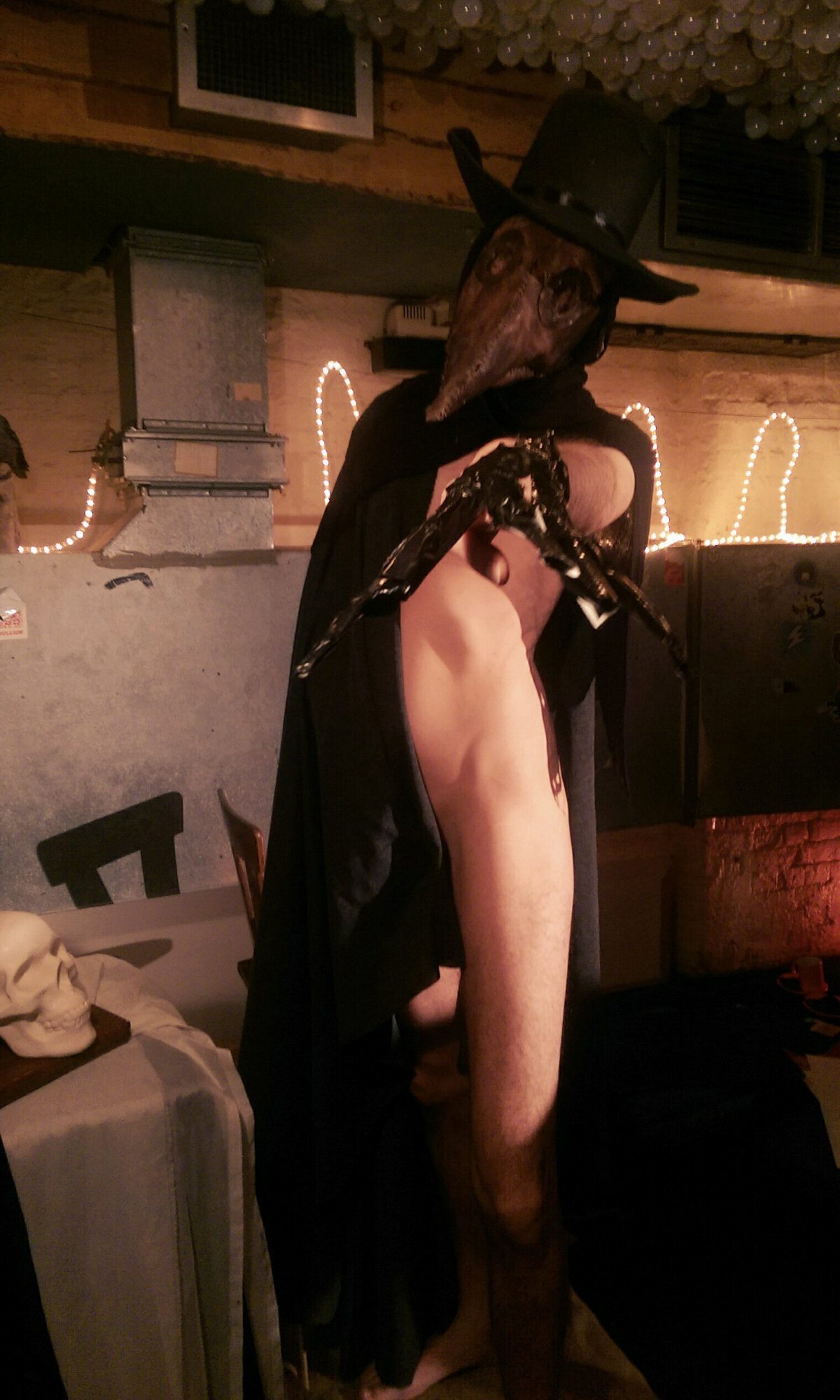

This was my tenth Art Macabre death drawing salon. Whilst not their most glamorous location or the most challenging poses, it was perhaps the most enjoyable day so far. Well worth a dash from 21st century west end London into mediæval east end murk.

p.s. this last drawing? By Melissa.
Return to college. It had taken two years, six months for my first college life model booking to arrive. A mere ten weeks later I was back for my second, posing again at Albemarle College on their first Saturday after the winter break.
Once more Susan was tutor and four students were attending – albeit one out, one in from last time. We’d made provision for me to be working from 9:45am to 1:15pm, but in practice it was more like 10am to 1pm with a 15 minute break an hour from the end.
To get the students warmed up after weeks away, Susan called for four contrapposto studies. As my natural standing position always appears to be contrapposto, this was not too tough a call. For added variety I faced west, north, east, south in poses lasting 5, 5, 10 and 10 minutes.

That done, we moved onto the main work: a single long seated pose of an hour before the break, resuming for 45 minutes after the break. First I would be sketched in rough outline, then given colour with yellow, red and blue oil pastels to be used for light, mid and dark shading.
Works had progressed very nicely up to the break.

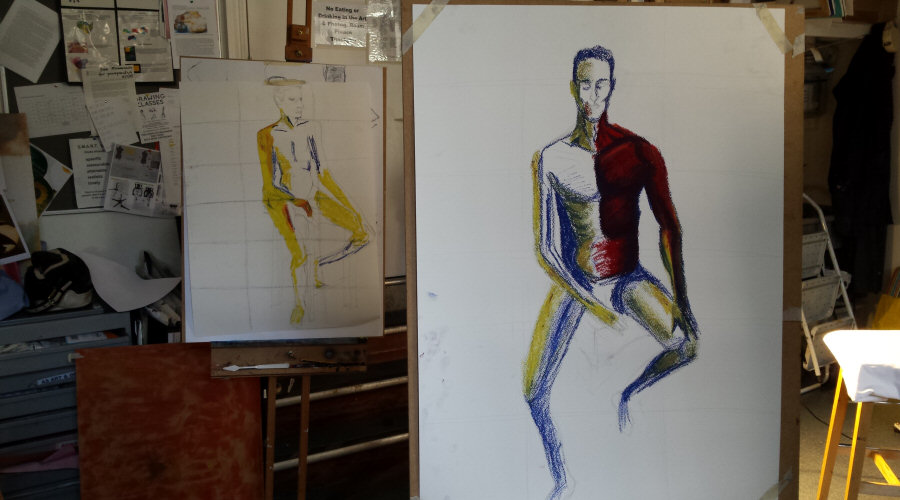
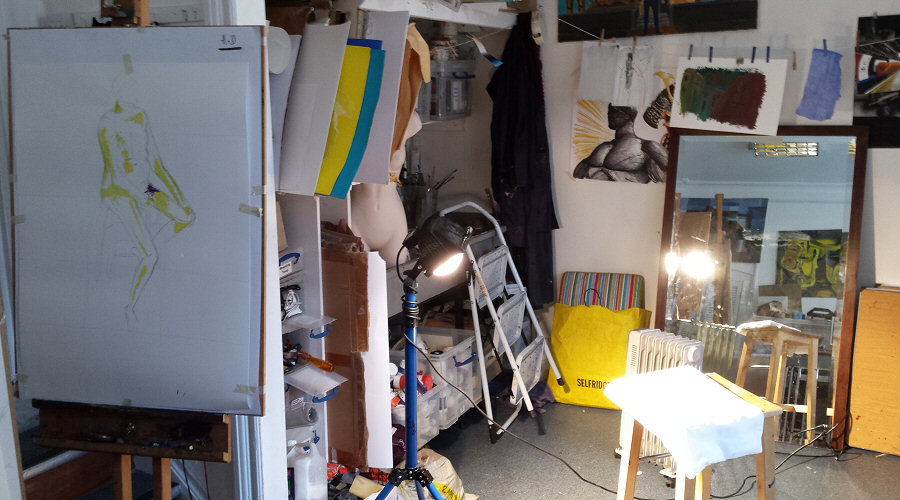
Upon resuming, more intense colour blocking was added using oilbars and the whole was brushed into life with white spirit. I was comfortably stationed with no numbness, aches or strains but as with any long spell in one position, my muscles sighed at the variety when eventually they were allowed to move.
I had not seen this kind of artistic development before. The students would be adding background and finishing touches after I’d left so I was rather sorry that I wouldn’t get to see the completed compositions. I had a prior engagement at the opposite side of the city, however, and only an hour to get there.
A life model’s work…
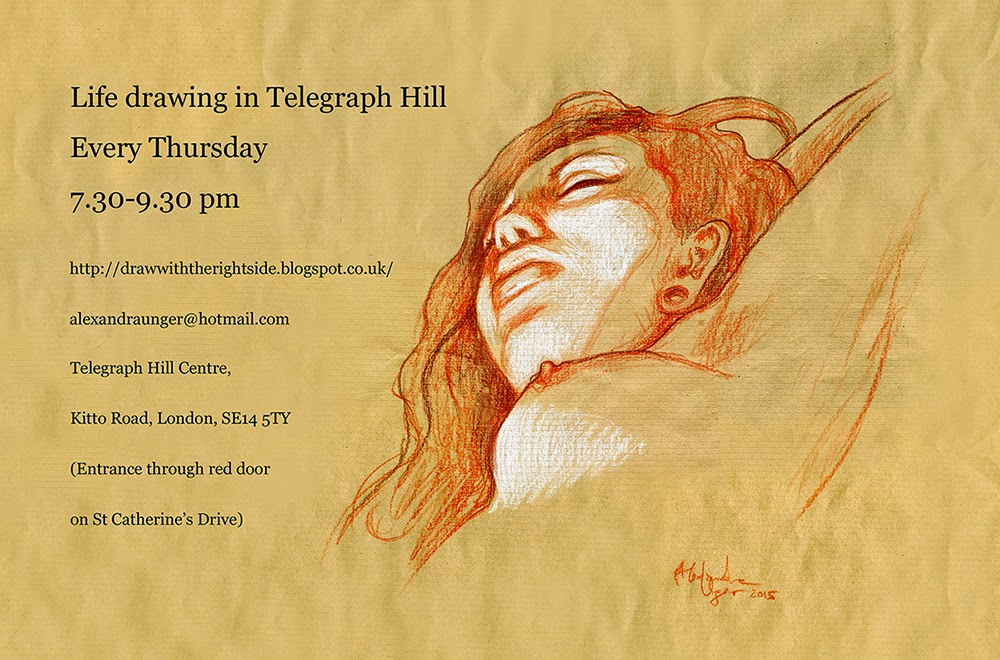
“Hey, Steve, is that you?” Having posed twice previously for Alexandra Unger at her life drawing group in Telegraph Hill, I’d evidently become recognisable by my shadow; it alone was visible to her as she walked towards where I was waiting.
I’d arrived at the Telegraph Hill Centre five minutes earlier and loitered in its lamp-lit doorway. Alex, together with artist Marco, unlocked and we all entered the pleasingly warm room. We moved tables and chairs; I set down my white sheet, whilst Alex and Marco attended to the heater, kettle, music, lighting and art materials.
“I would like you to use your scarf,” said Alex, showing how it might serve to enhance some interesting poses. At £1.49 from QD, I could afford to give it a good workout, so readily agreed. Including Alex herself, there would be five artists present; I would start with a sequence of five 2-minute poses for them.
Looping my scarf around the side panel of a low storage unit, I was left with about half a metre of its length to work with at each end. Next I had to think of five original poses that would work well in this scenario… I selected:
- standing in a crouched tug-of-war stance
- one hand and one knee on the floor, facing away from the unit
- facing back towards the unit, uneven arms, one leg paced forward
- reaching high, back to the artists, one hand holding the wall’s edge
- sitting on the floor with both feet up on the side of the unit


Two 10-minute seated poses followed, with the scarf free from the unit and supporting angled but comfortable arrangements of limbs. The first half of the session ended with a 20-minute standing pose, no scarf, crossed ankles and both hands on my left hip.
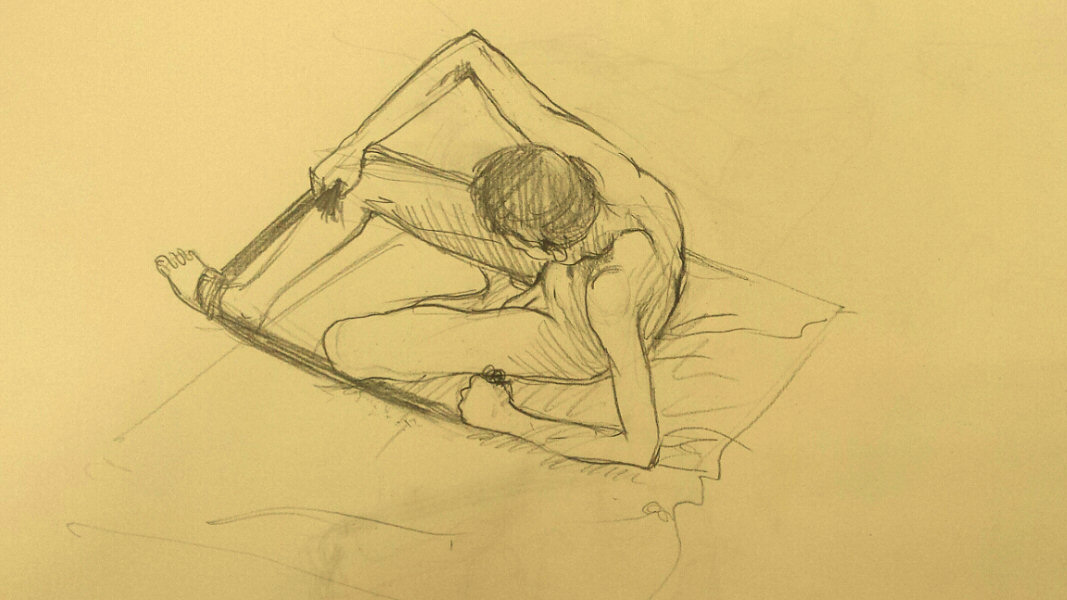
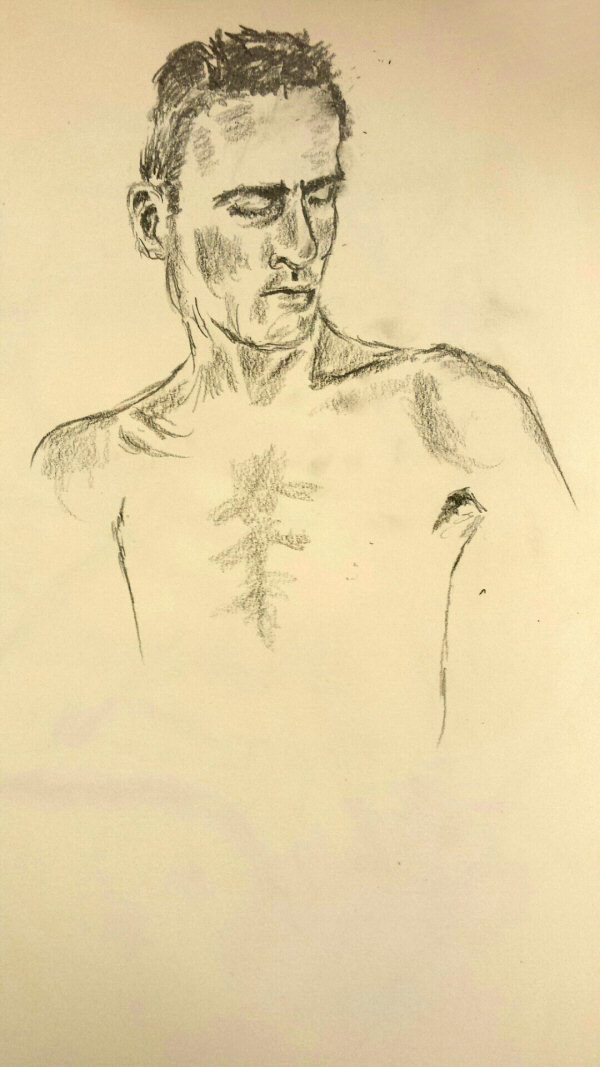


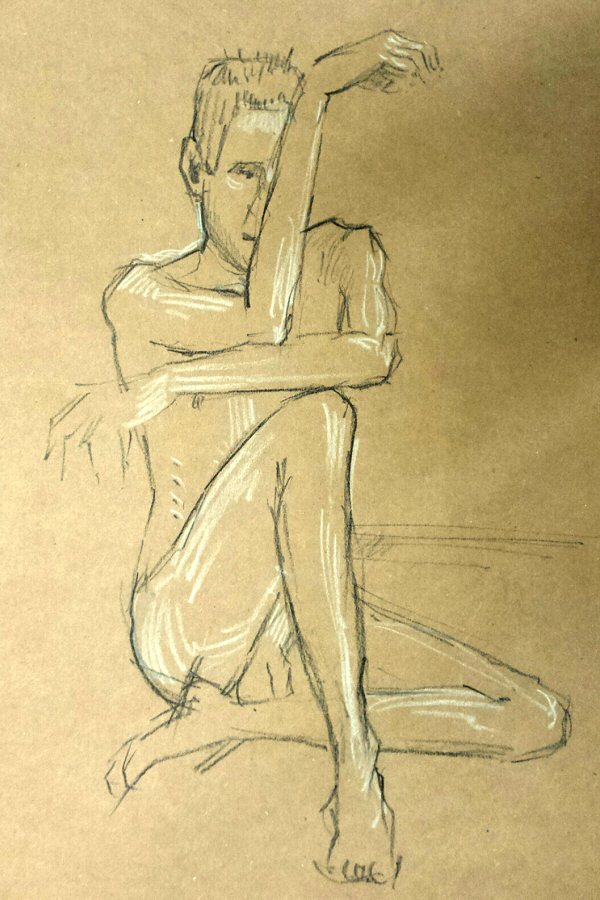
After a break for cookies and a nice hot mug of tea, it was agreed that we should end with two poses of 15 minutes and 30 minutes. For the initial pose I sat with one knee sideways on the floor, the other raised, and my arms forming a kind of crucifix outline with it. It was the trickiest pose of the evening – Alex described is almost cubist.
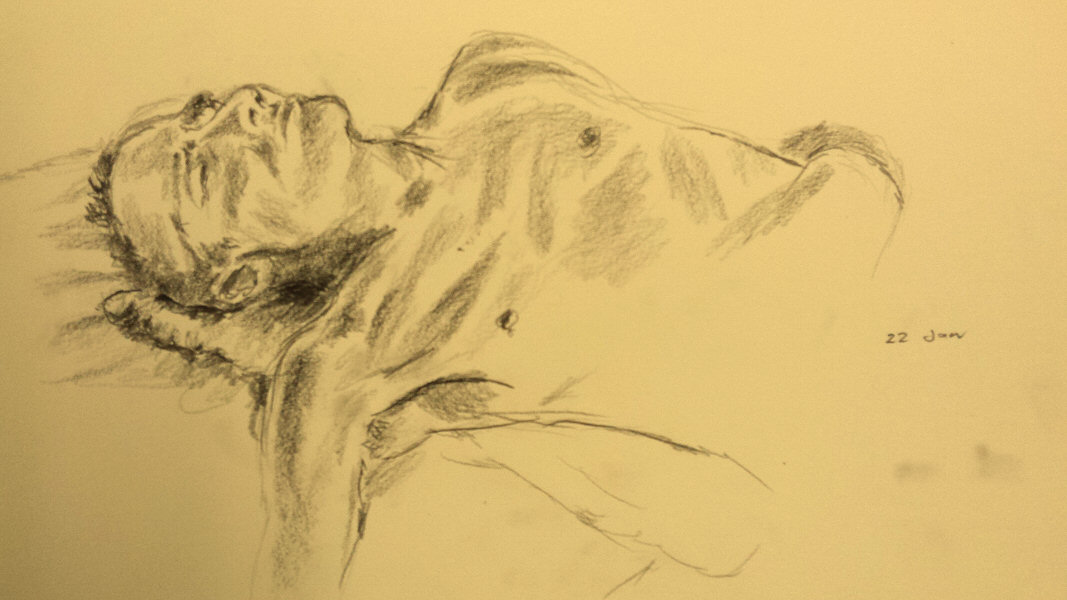
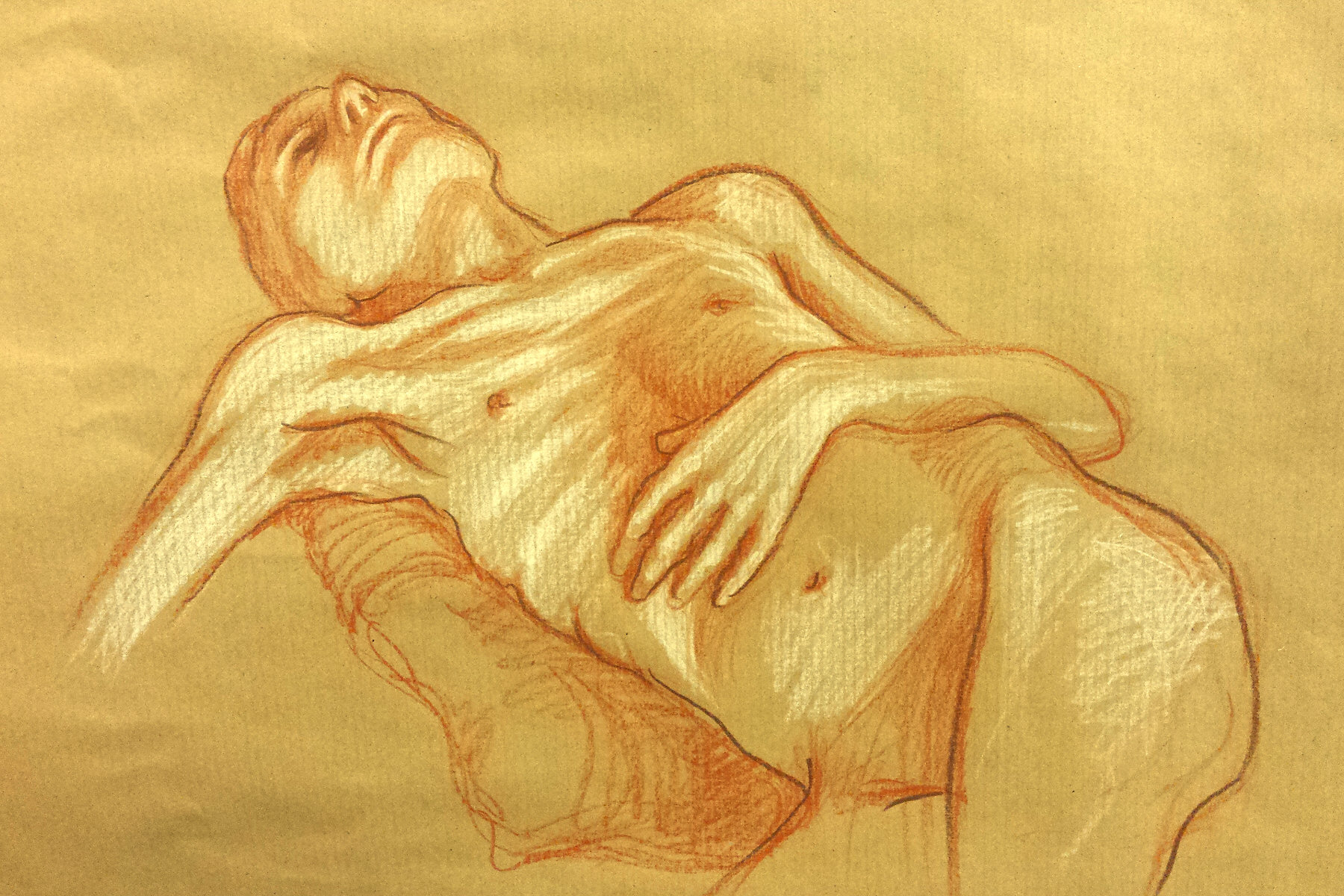
For the last half-hour I had a relaxing lay down whilst Alex positioned her lamplight to cast shadows across my ribcage. “With more time,” she said afterwards, “it could be an anatomy class.”

Job done, I dressed and departed all too soon. It’s one of my longer journeys to travel between Nunhead station and home in Essex but it’s worth every moment. The group is firmly among the most enjoyable to work for. It’s friendly, the standard of drawing is very high yet never pressured; it’s warm, comfortable and there’s always great music.
It’s a real gem in the crown of London’s wildly diverse life drawing scene.
Early evening in a poorly-lit side street, north of Hoxton station. I stand before a dark row of unfamiliar old brick railway arches wondering which one might be number 365. Fortunately salvation was at hand.
“Steve?!”

Two arches down I could see two people attempting to unlock a shuttered frame. The one who called my name was Ilga Leimanis. She would be facilitating a life drawing workshop for a company of landscape architects. I would be her model.
The booking came via the happiest of all routes: a recommendation. Esther Bunting of Spirited Bodies had previously posed for Ilga, and put forward my name as a capable candidate for future sessions. Esther is an astonishingly great model so I was keen to justify her confidence.
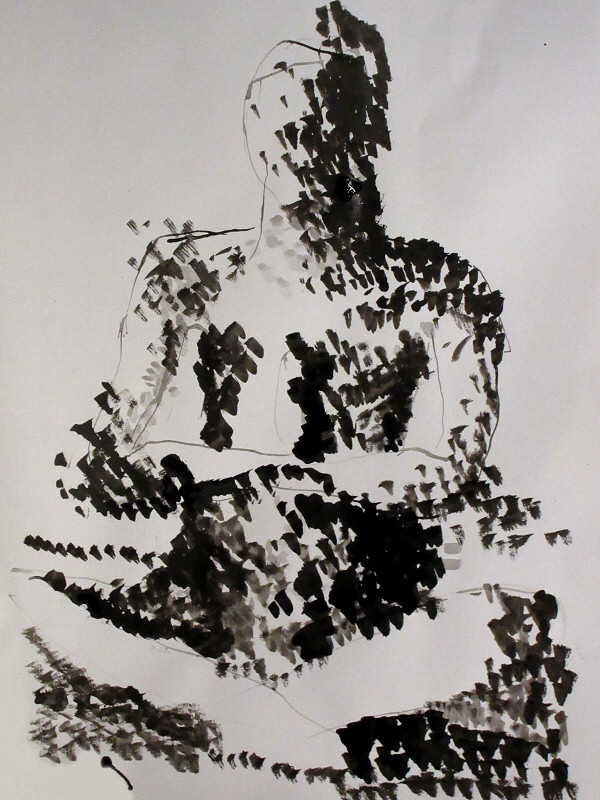
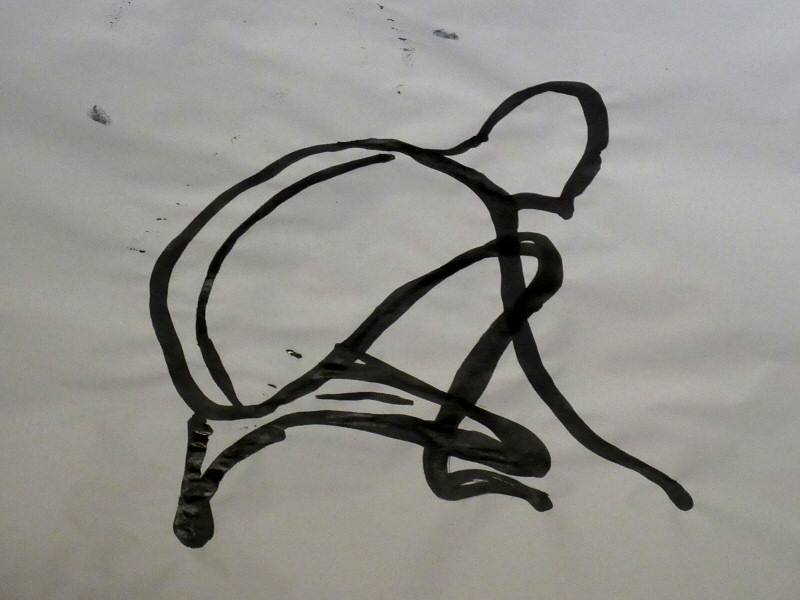
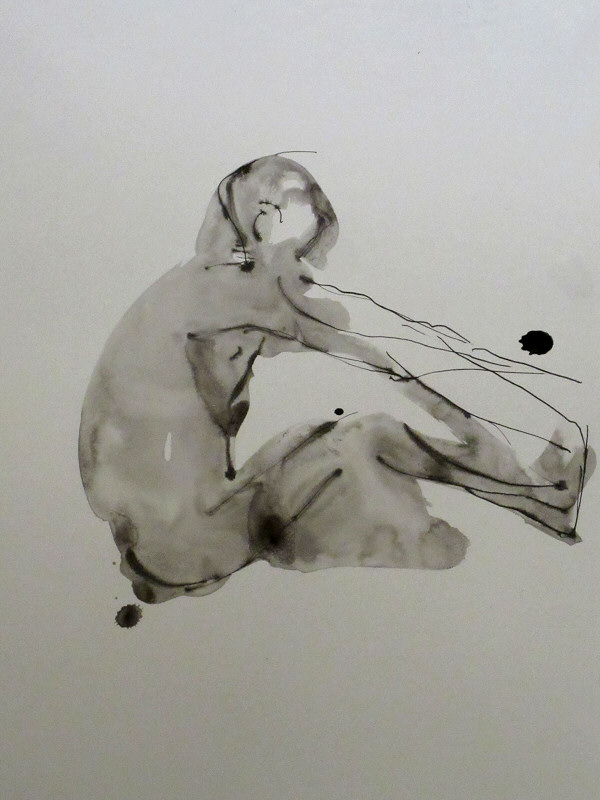
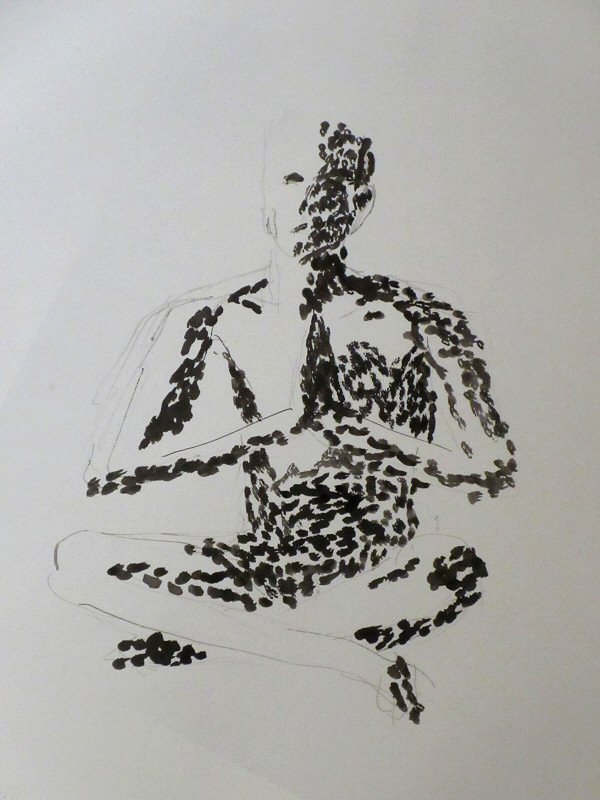
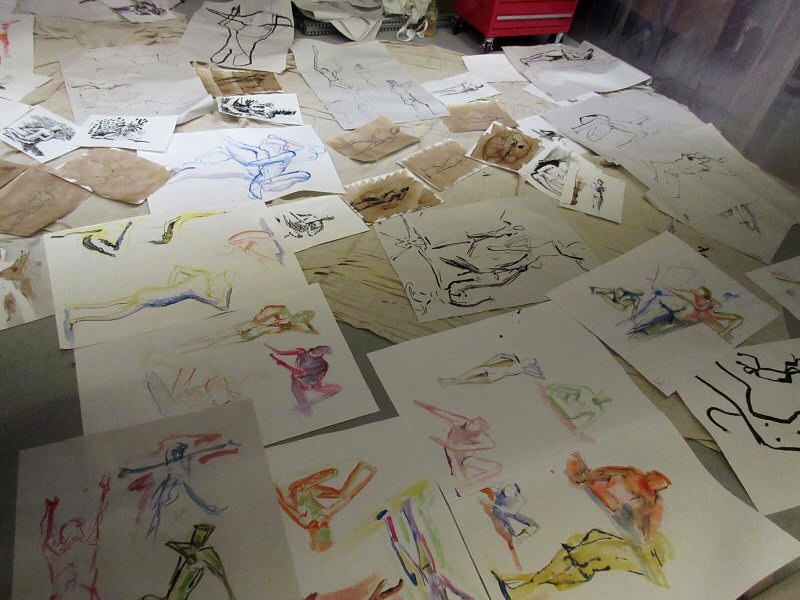
Eight artists would be working with wet materials – paints, inks – throughout the entire two hours of the session. I would be alternating short, dynamic poses from first to last without a break. The longest lasted 12 minutes; the second longest was 6 minutes.
So… a lot of poses.

You might think the constant changes and extra physical stress of short posing would keep me warm, but no. For some peculiar reason I felt cold almost from the start. This was in no way the fault of Ilga or the architects who’d spoiled me with not one but two heaters to myself. I simply struggled to find the sweet spot between burning too close or chilling in a no man’s land of vaguely circulating air.

The work itself was rewarding. Ilga was brimming with ideas; she kept us ticking along nicely, always encouraging new creativity. The architects in turn were in relaxed mood yet serious about their art.

I sought to offer constant variety: standing, squatting, kneeling, sitting, semi-reclining, facing left and right, forwards and backwards. If anyone out there thinks a life model is someone that takes off their clothes, slumps down and merely idles for hours, I regret to inform that you have it all wrong.

After the final pose I padded away to get dressed in a shadowy corner while the artists paved the floor with fascinating works of all colours and styles. Ilga led a review while I tiptoed among them and took photographs where shadows permitted.
And then I quit to the icy night-time air outside… grateful to the architects for their life art patronage; grateful to Ilga for her faith; grateful to Esther for her kindness.
It seems incredible that it’d been over a year since I last posed at Wanstead House. Some of my earliest bookings were here when I was just starting out as a life model, so it felt good to be back again.
Six artists were expected, and six arrived promptly in time for a 7pm start. The pose plan was simple: two standing poses of 15 minutes apiece, then 30 minutes seated on a chair, followed by a nice long break, and finally 30 minutes seated on the floor.
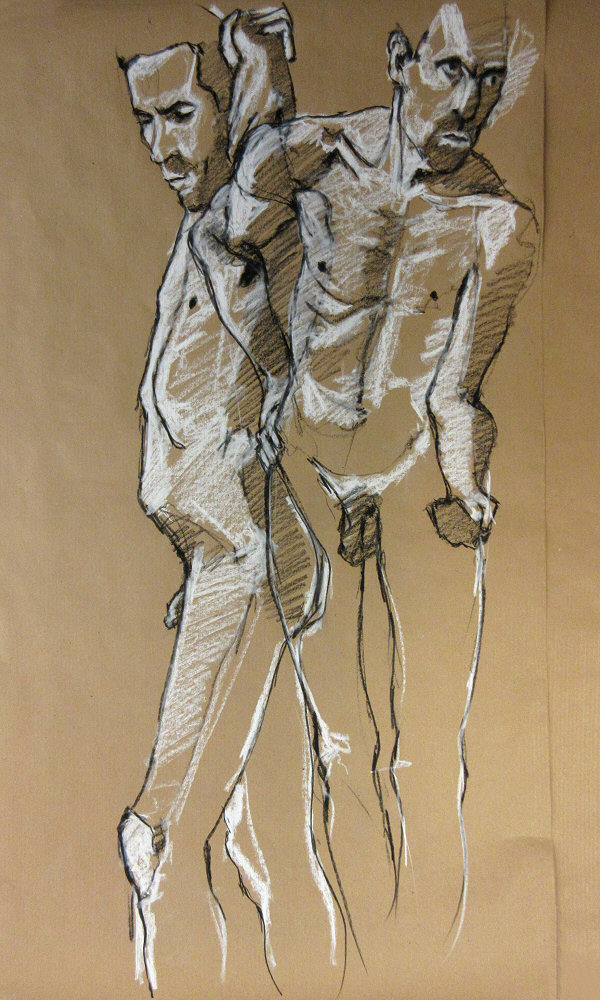
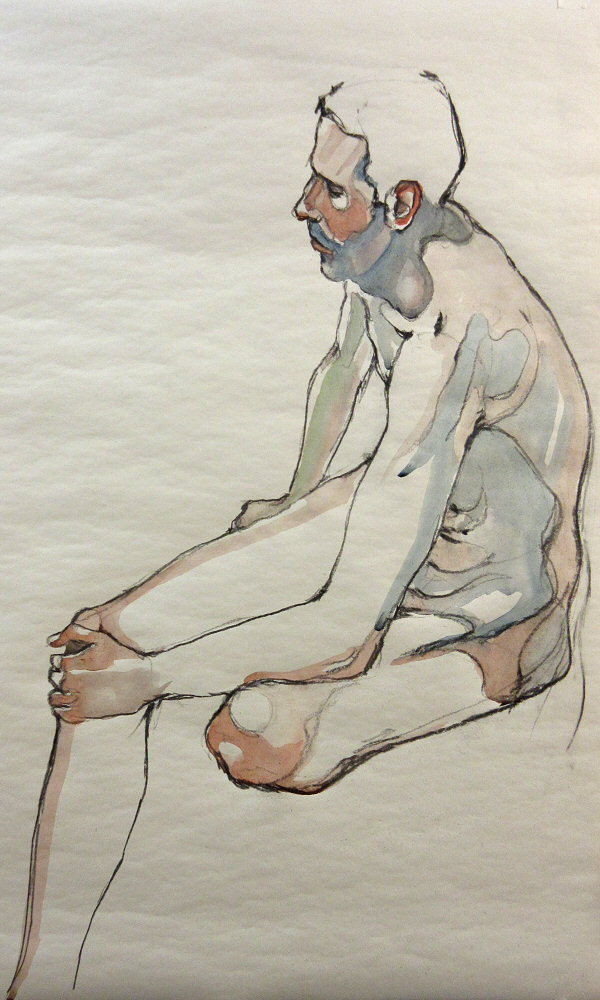
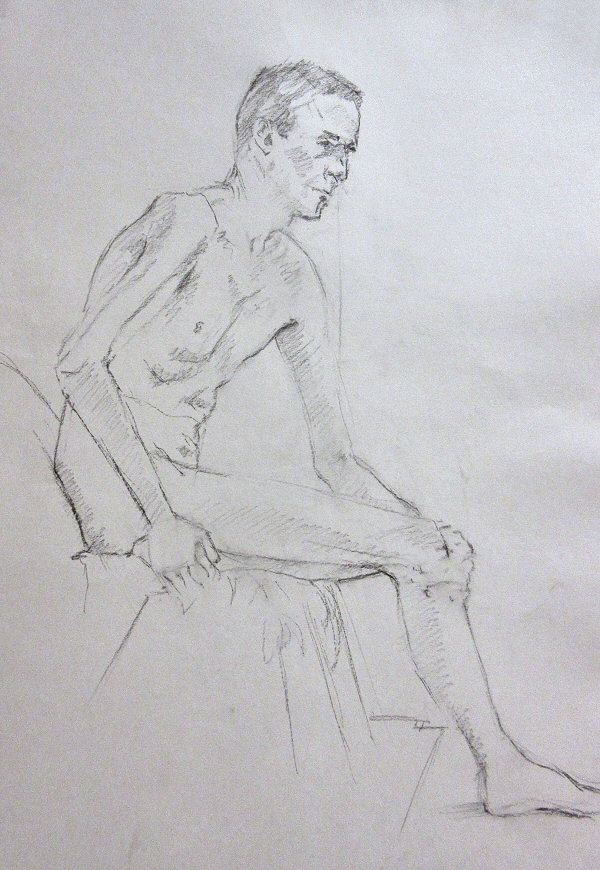
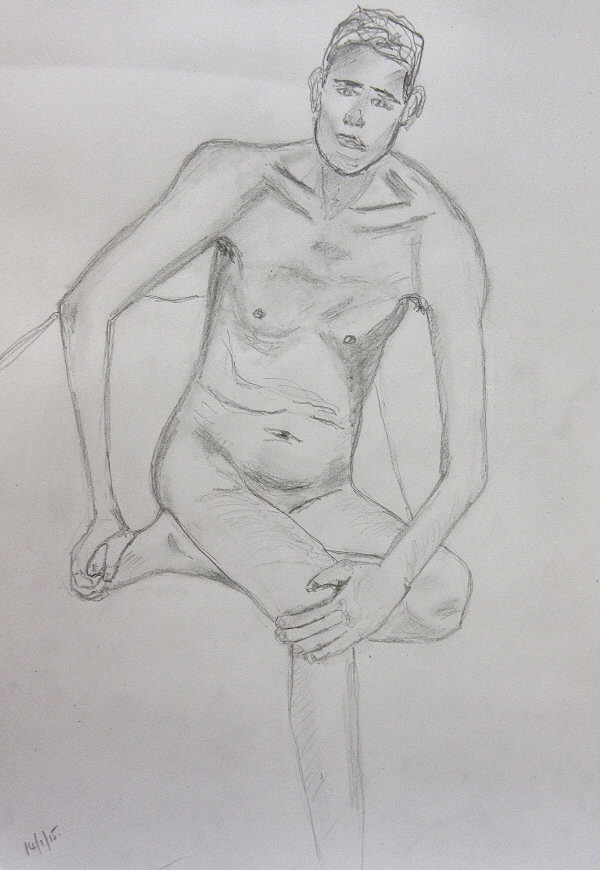
My only Wanstead visit in 2014 had been to help group organiser Patrick promote his classes during a Wanstead Art Trail event at the local library. In a very nice gesture at the end of this session, he kindly gave me the portrait he drew of me that day. It remains one of my favourites.
Having already welcomed 2015 with a New Year’s Masquerade and Forbidden art performance, it was time for a return to more conventional life group modelling. And where better to start than one of the Bethnal Green groups run by Adrian Dutton?
It turned out that the session wouldn’t be wholly conventional as I was to be reunited once more with fellow model Maurice for duo poses. We’d posed together for Adrian in July 2013 and March 2014 so were flattered to be paired for a third time; we must have been doing something right.
The twist was that most of our poses were to be asynchronous. It meant there would be fewer opportunities for direct interaction but we could fit many more poses into the evening. Artists would have a choice of pose lengths to draw.
As usual we began with a 10-minute welcome pose; on this occasion a kind of static high-five. We then got dynamic – 1 minute, 30 seconds, 2 minutes, 3 minutes – after which our asynchronous posing began.
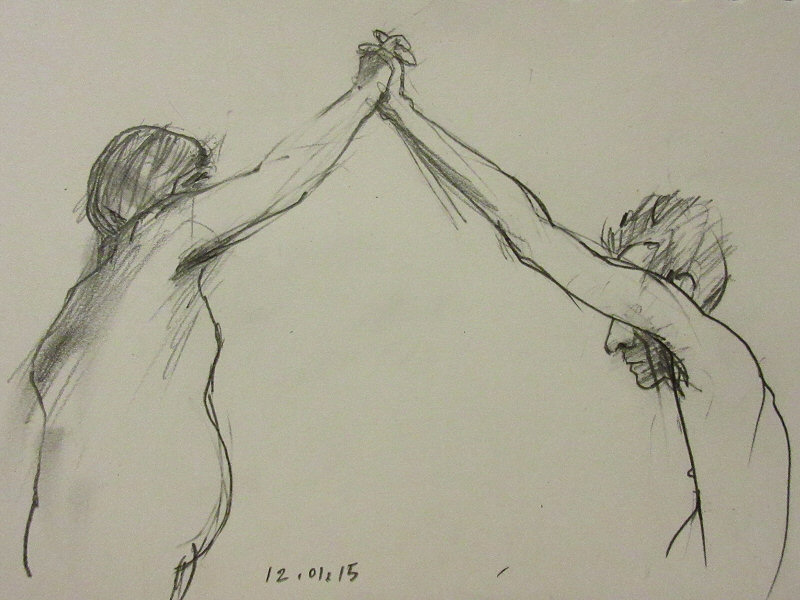
First Maurice held a 5-minute standing pose whilst I responded to his stance with five separate 1-minute poses, circling him as I did so. The compliment was returned when I held still for 10 minutes and Maurice came up with a series of 2-minute variations.
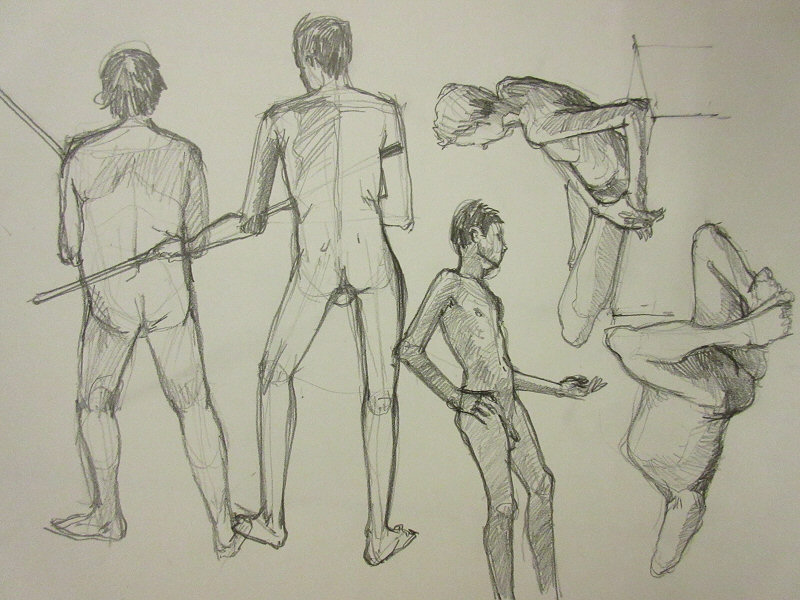
Finally for this first half of the evening, Maurice reclined for 20 minutes while I reclined and stood for 10 minutes apiece. The break that followed could last up to half an hour for artists. Models, however, resumed with informal sitting poses after just 15 minutes for those keenest to continue drawing.
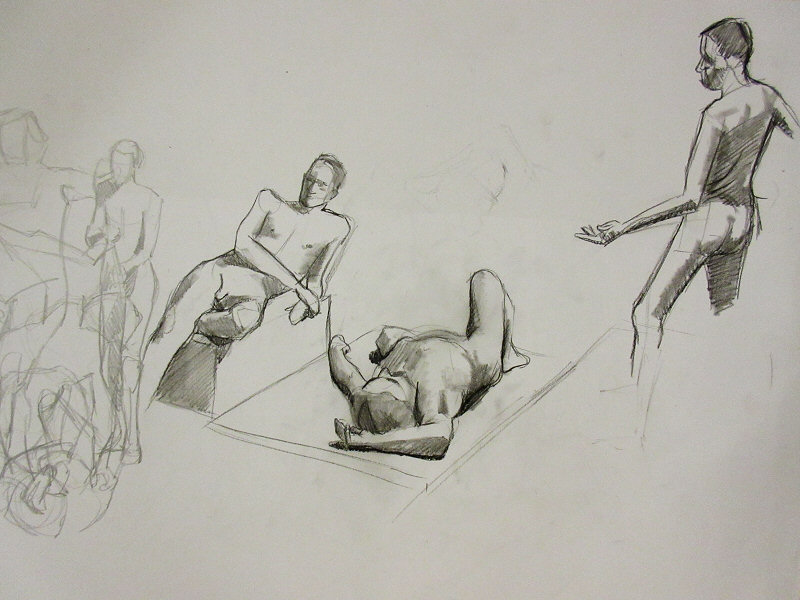
When everyone was back in their seats we had a quick flurry of dynamism – 1 minute, 30 seconds, 15 seconds – before lengthening in time. I lay down for 20 minutes while Maurice posed twice, and finally Maurice sat for 30 minutes while I posed three times.
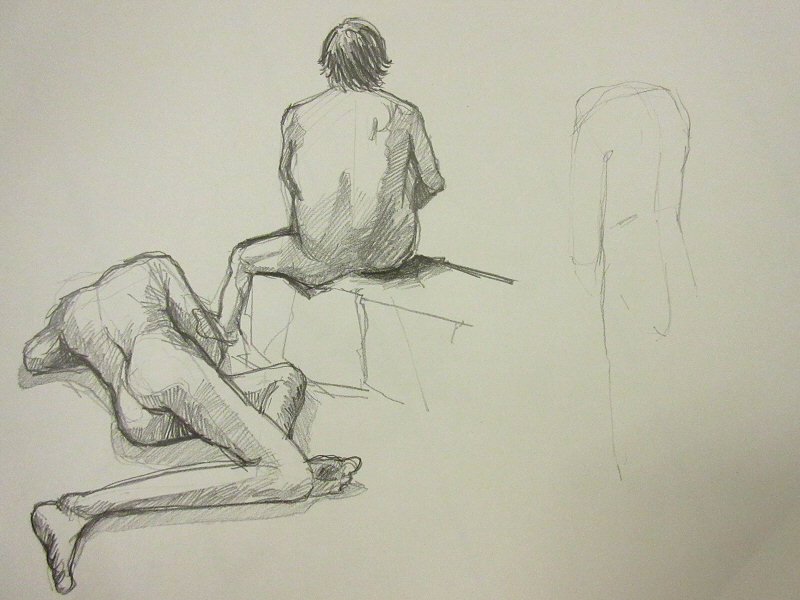
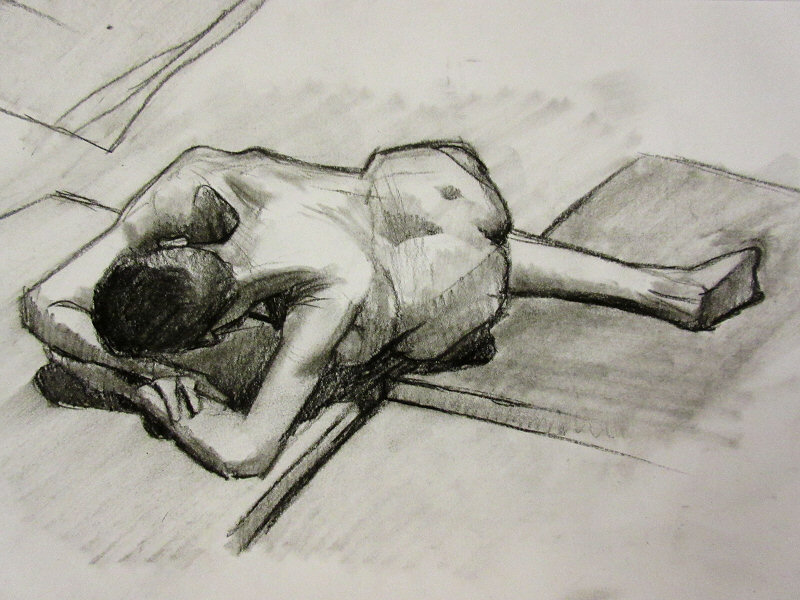
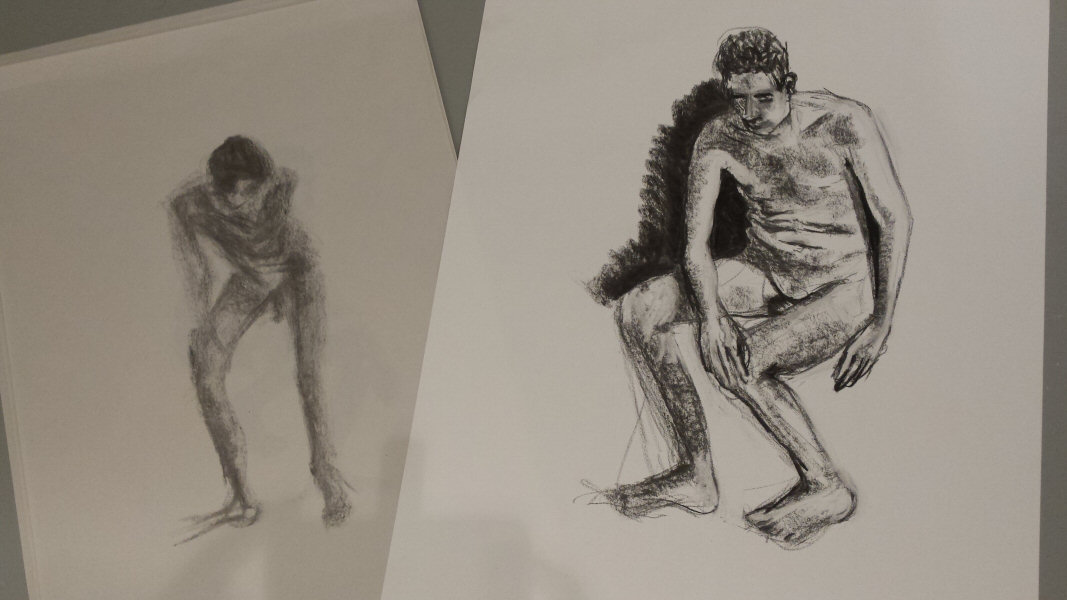
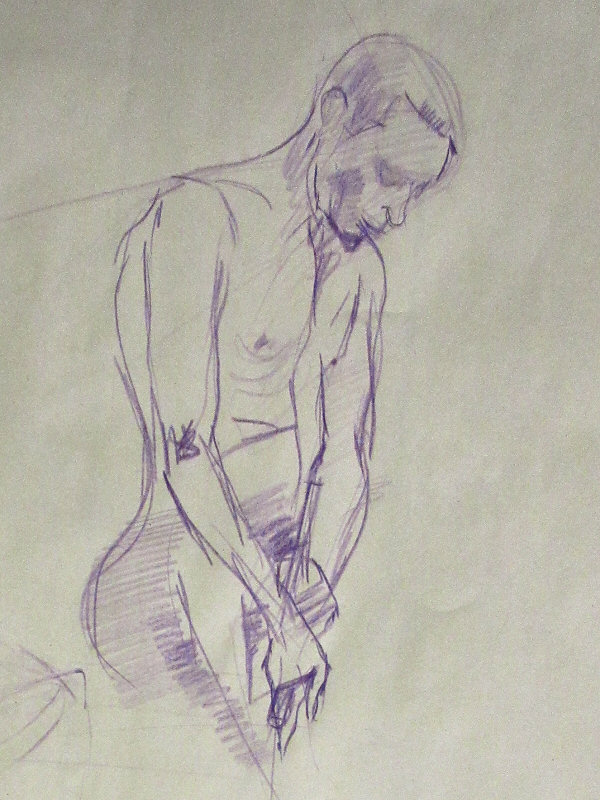
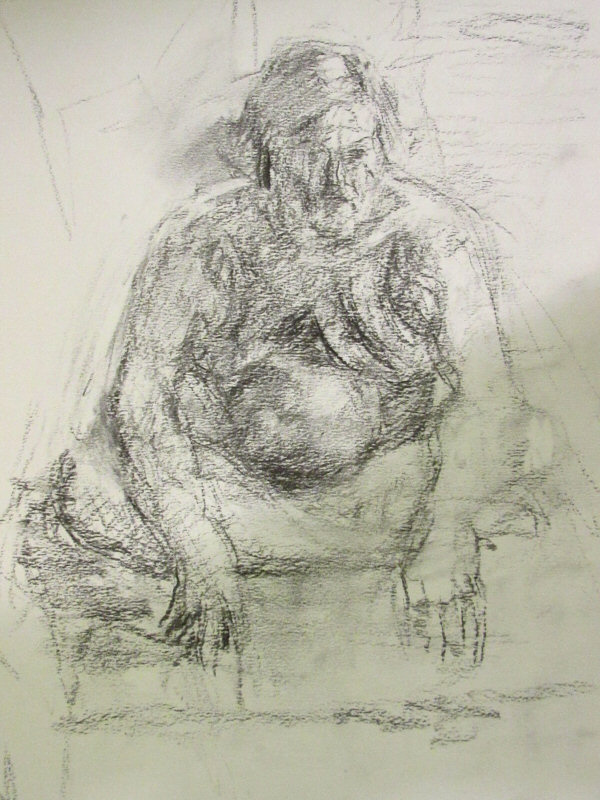
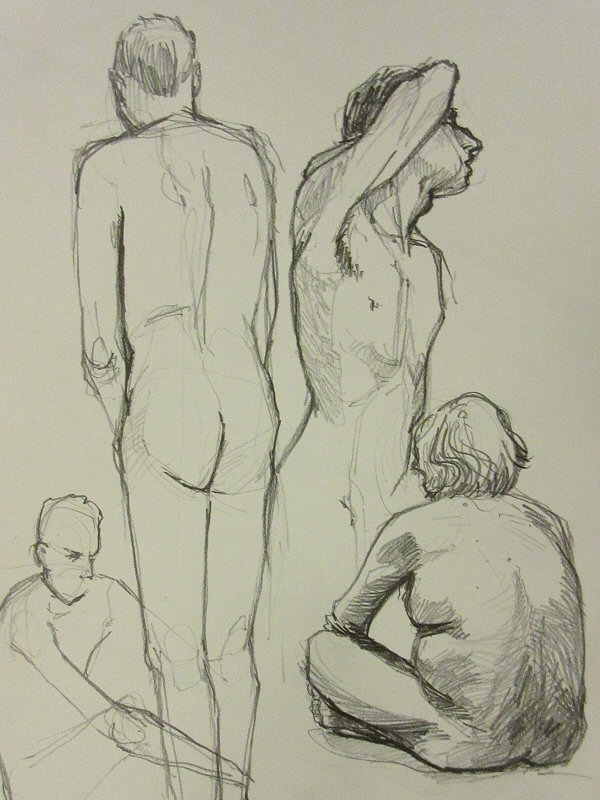
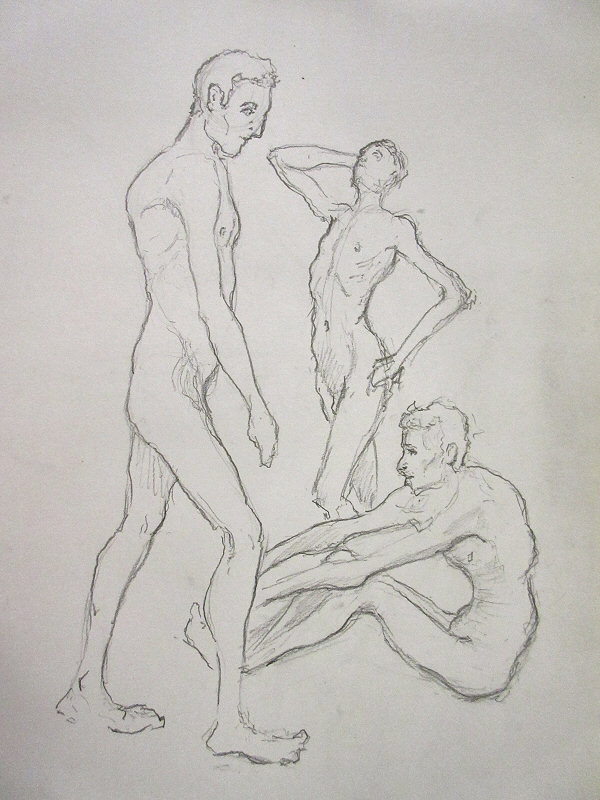
All in all it had been a pretty thorough workout for two gentlemen with a combined age knocking around the 100 mark. As on previous occasions, we gave it a good go, put in a fair bit of variety, and tried to get the most from our contrasting body types. And also as per previous occasions, there was some excellent artwork to show for it at the end.
 steve ritter