For this Friday evening gathering of Hesketh Hubbard Art Society at Mall Galleries the models were Esther on 15-minute poses (sensuous slot), me on 30-minute poses (workhorse slot), Tanja smiling serenely on portraits, and Magda – who I have not yet met – in the separate space for gruelling long poses.

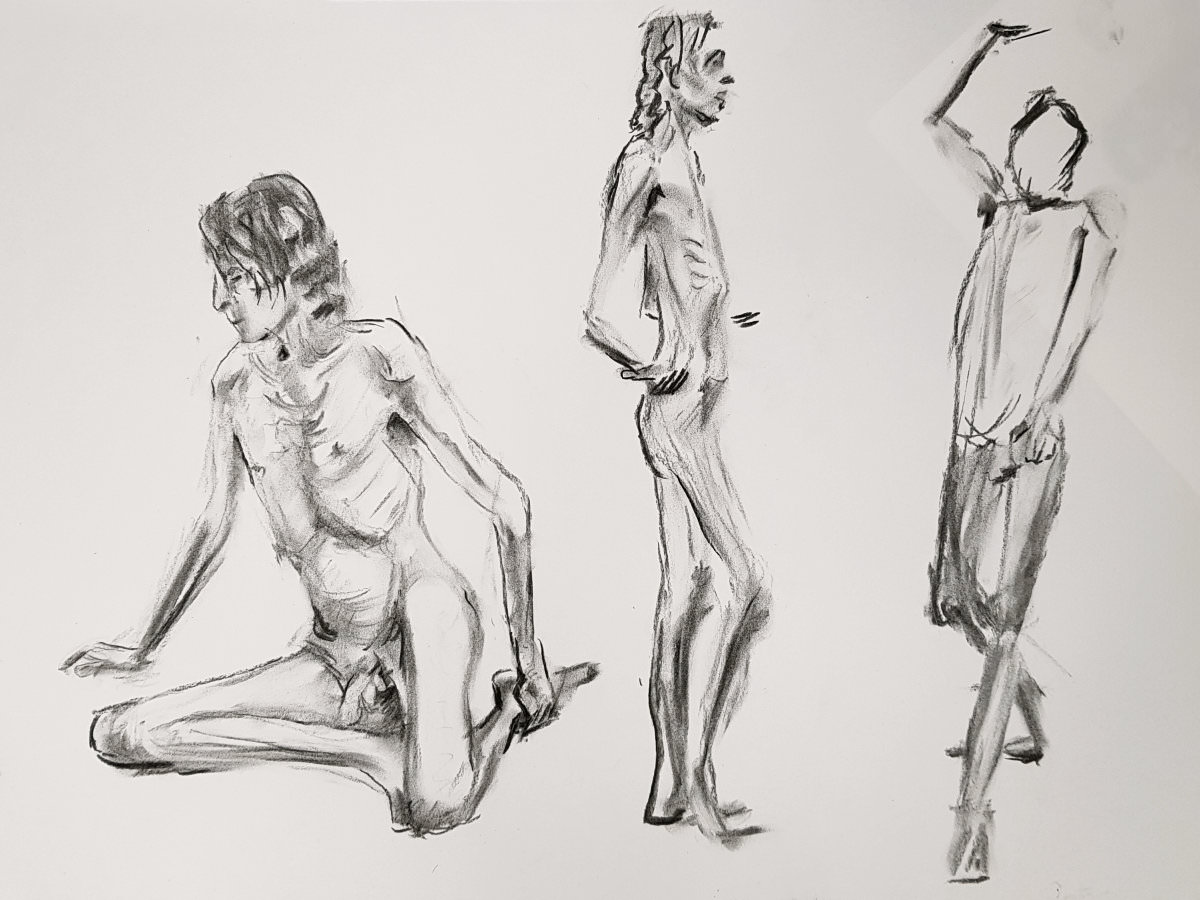
Artwork by Anthony Roe.


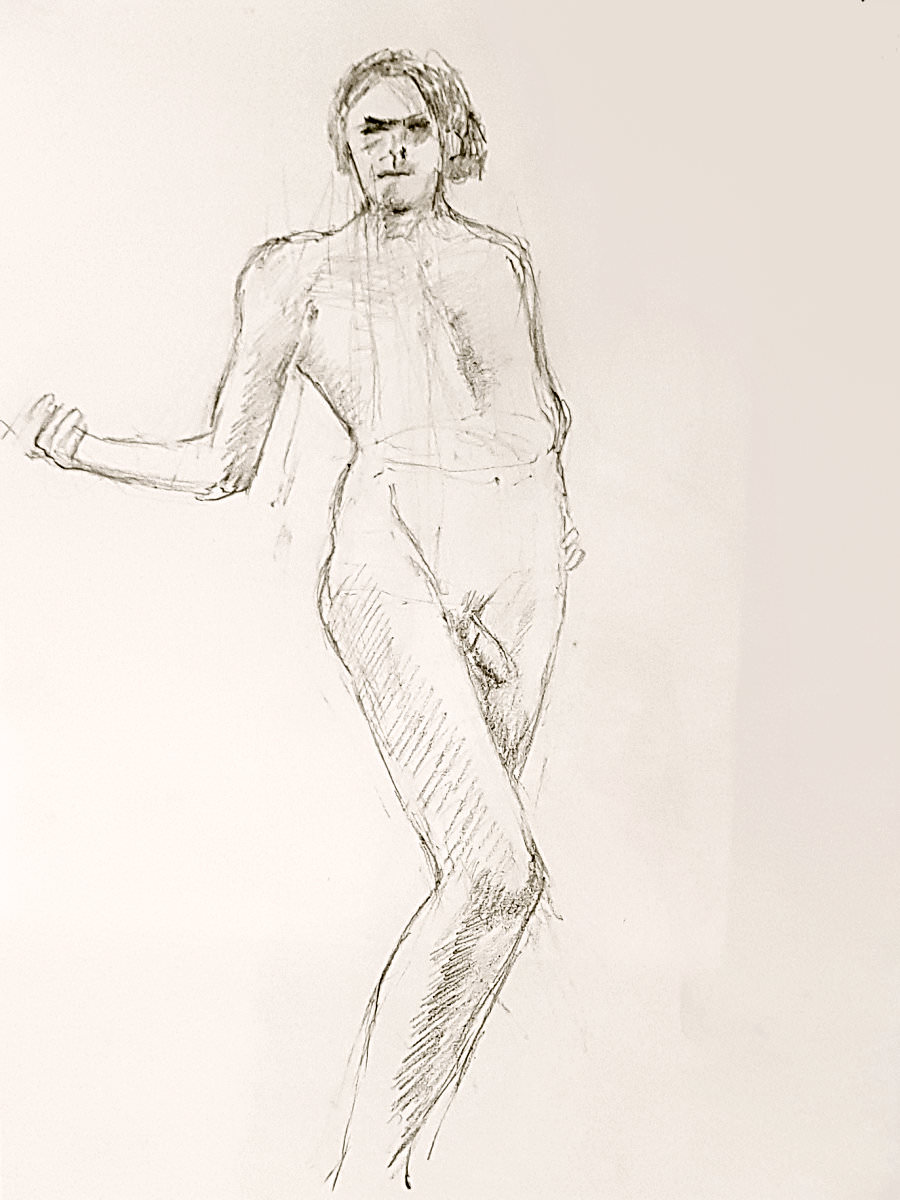
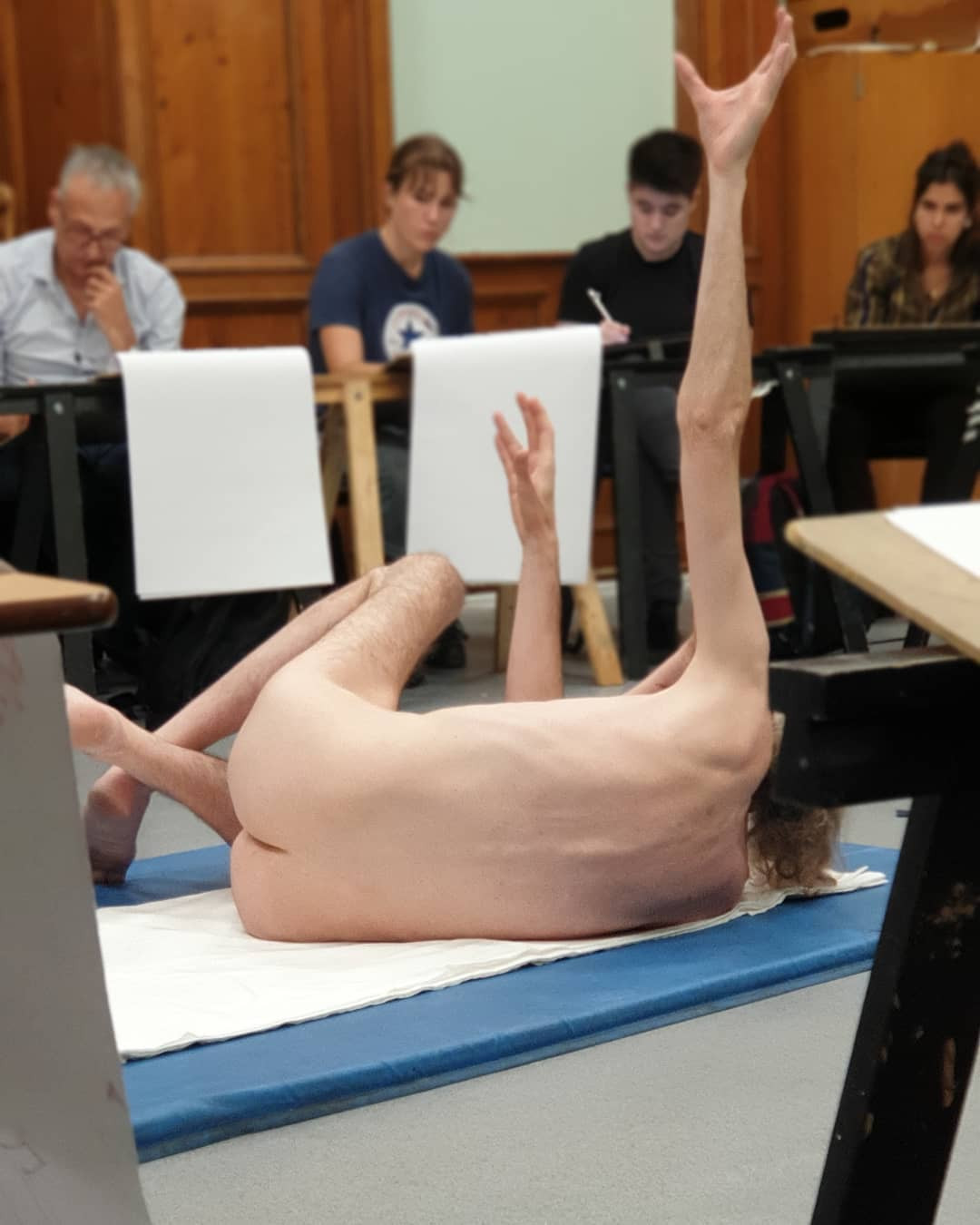
For the first half-hour I stood with my right foot a pace forward, right arm out, left hand on hip and a slight twist to the torso. For the second half-hour I reclined and extended my left arm fully vertical. On Monday I had pushed this pose to 25-minutes for the first time and now I’d made it to 30; still quite comfortable, but maybe that’s the safe limit.


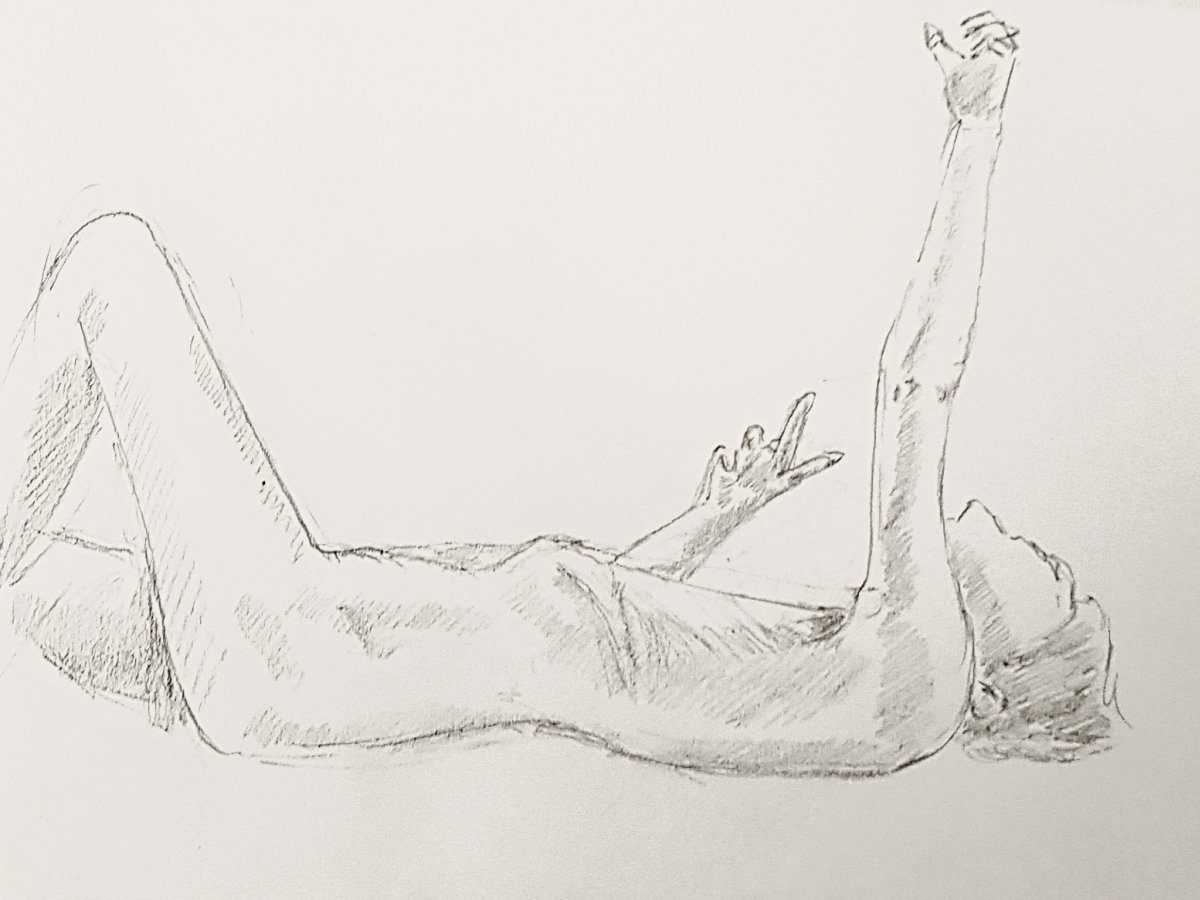
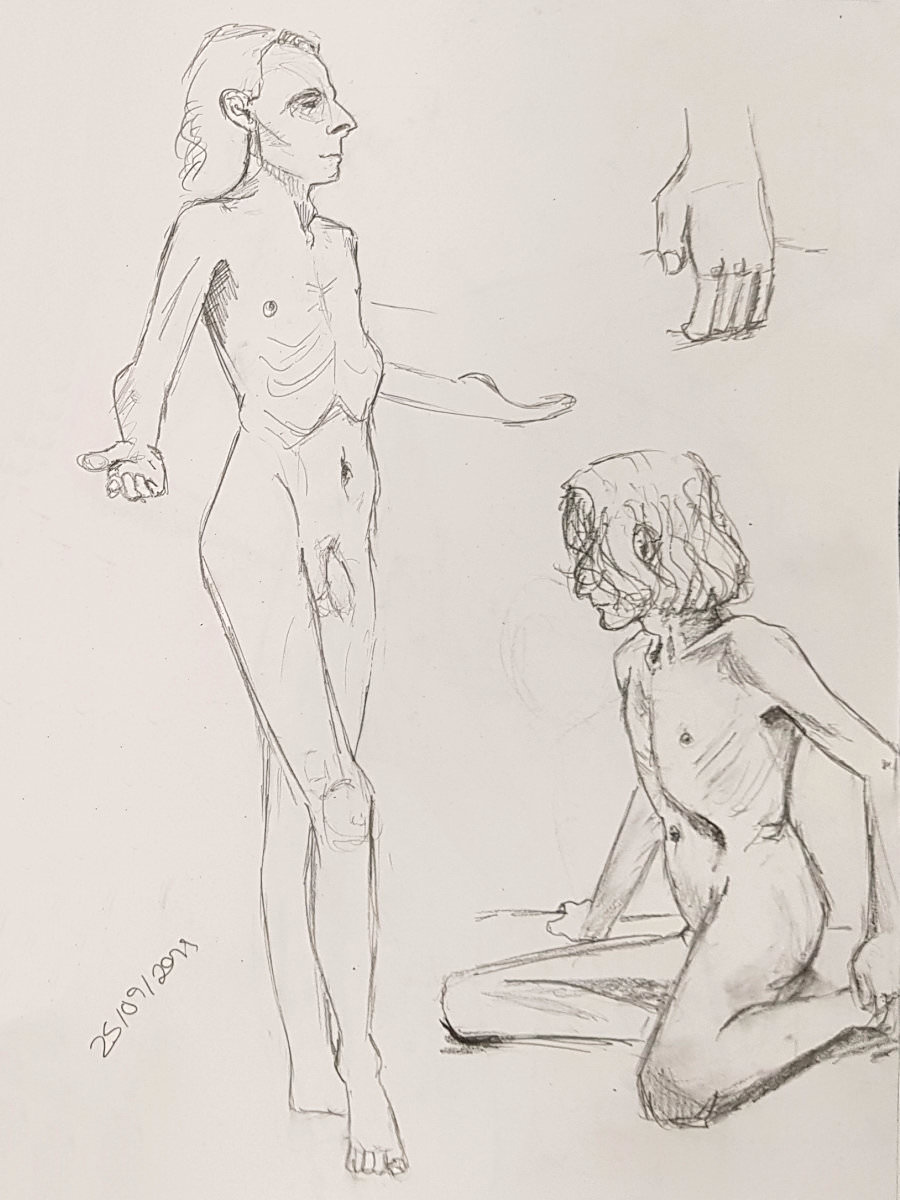
Once our 15-minute break for tea and biscuits had raced by with indecent haste, I got into a seated position for my third pose. This one probably overran by a minute as the chap who calls “change please” for the 15-minute slots – and who is barely audible at the best of times – now entered whisper mode at the very moment I needed him.

Artwork by Simon Whittle.

Esther wasn’t fully in my line of sight but I thought I saw a movement. Still uncertain, I asked my artists if they’d heard a time call and a couple of voices confirmed they had. Very well. I clambered to my feet and for the last 30-minutes stood with both forearms angled outwards at waist level.
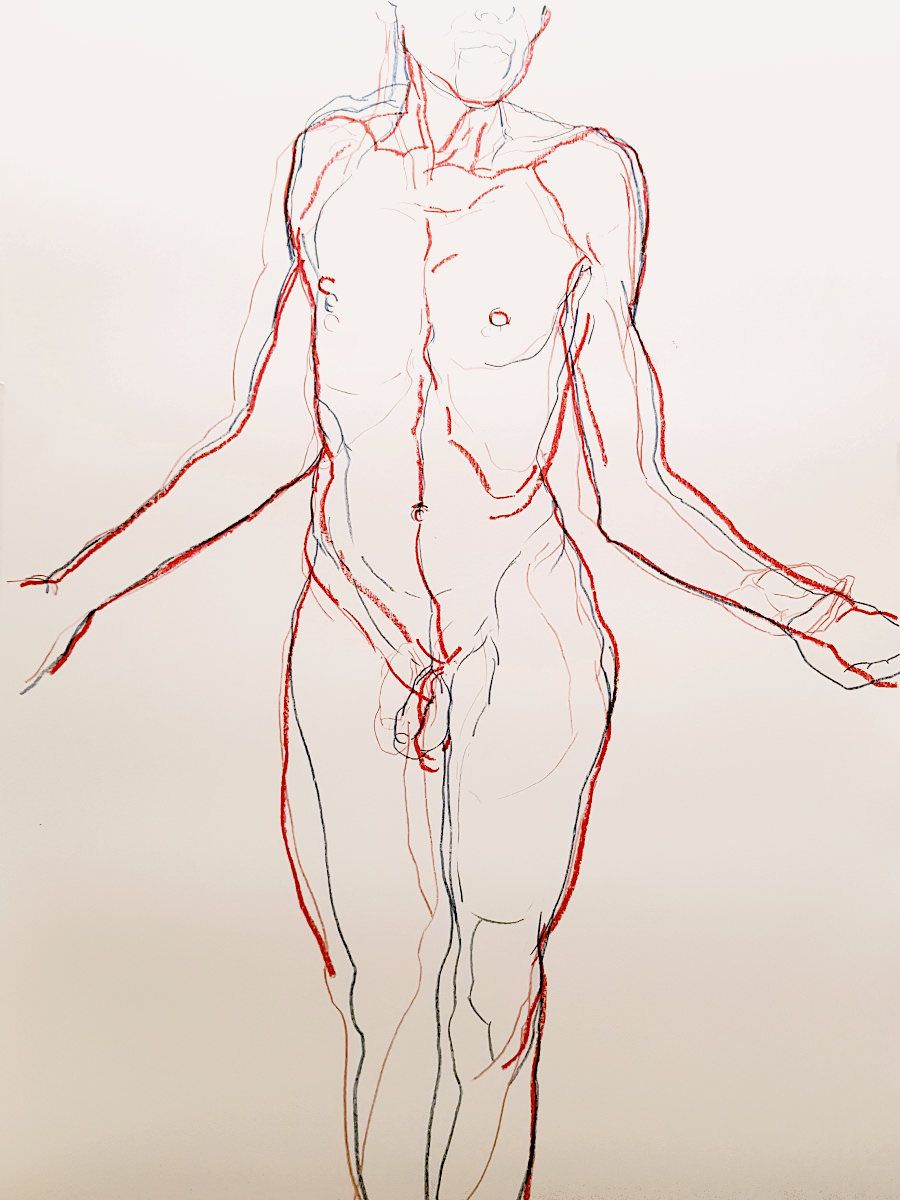
Artwork by Anthony Roe.

My right arm started to ache a little towards the end but in general this was a painless evening’s toil. Afterwards it was good to catch up with people I hadn’t seen in months, and to photograph some fine artworks before they were spirited away – one has to be quick. In all, a positive session. It was nice to be back life modelling here.
My return to the National Maritime Museum to model for its employees’ after-hours life drawing was not a direct repeat booking but rather the result of me responding to their model call-out posted on the Register of Artists’ Models (RAM) website. Their fee would cover 78% of this year’s RAM subscription, and thus goes 78% of the way towards vindicating renewal. I’m now 45th in the list of long-standing RAM members.
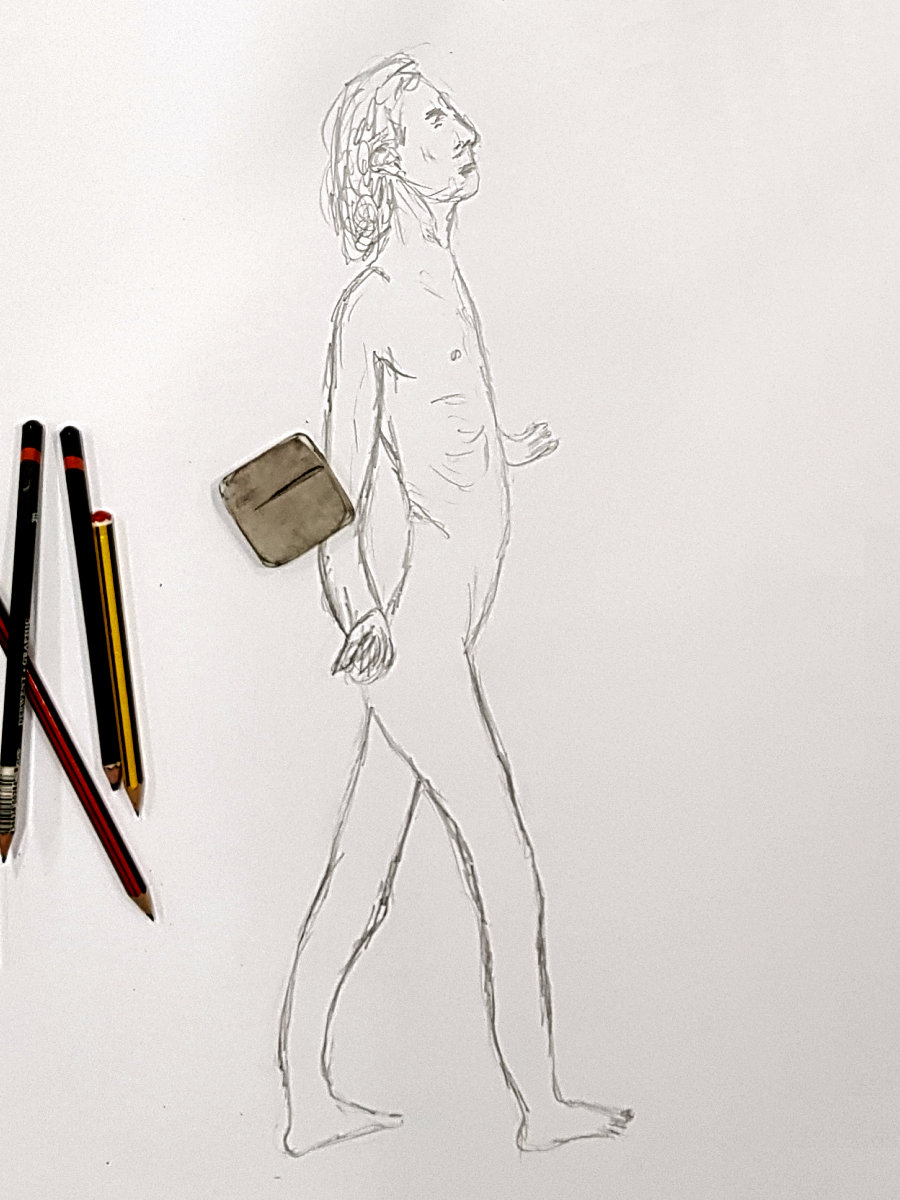
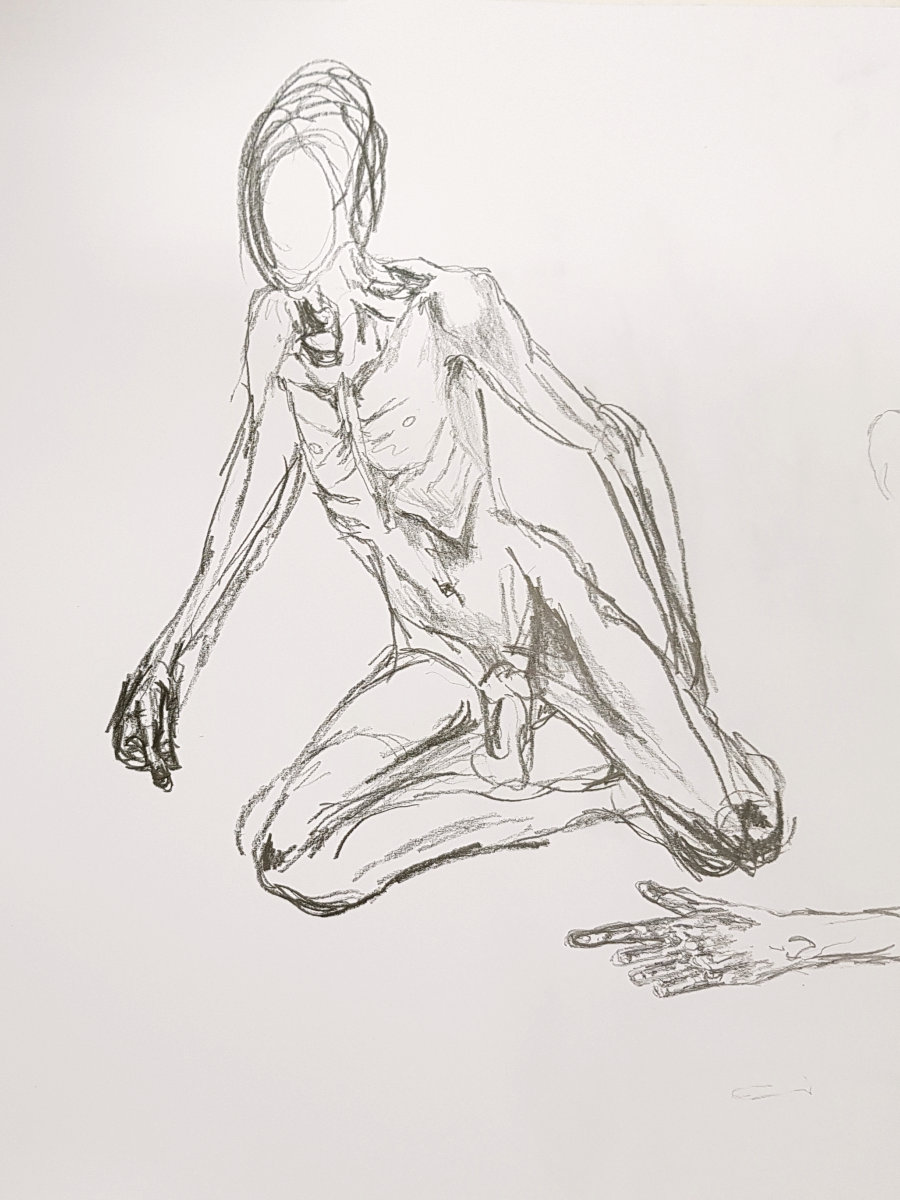
In the session itself, there was no need for long-standing as all poses were less than half an hour in length. We began with four 1-minute poses, two 5-minute poses, then 10-minutes, 15-minutes, and another 10-minute pose up to a break. We finished with poses of 20-minutes and 25-minutes. I’d felt comfortable throughout, albeit I was told at the end: “The longer the poses got, the more difficult you seemed to make them!”
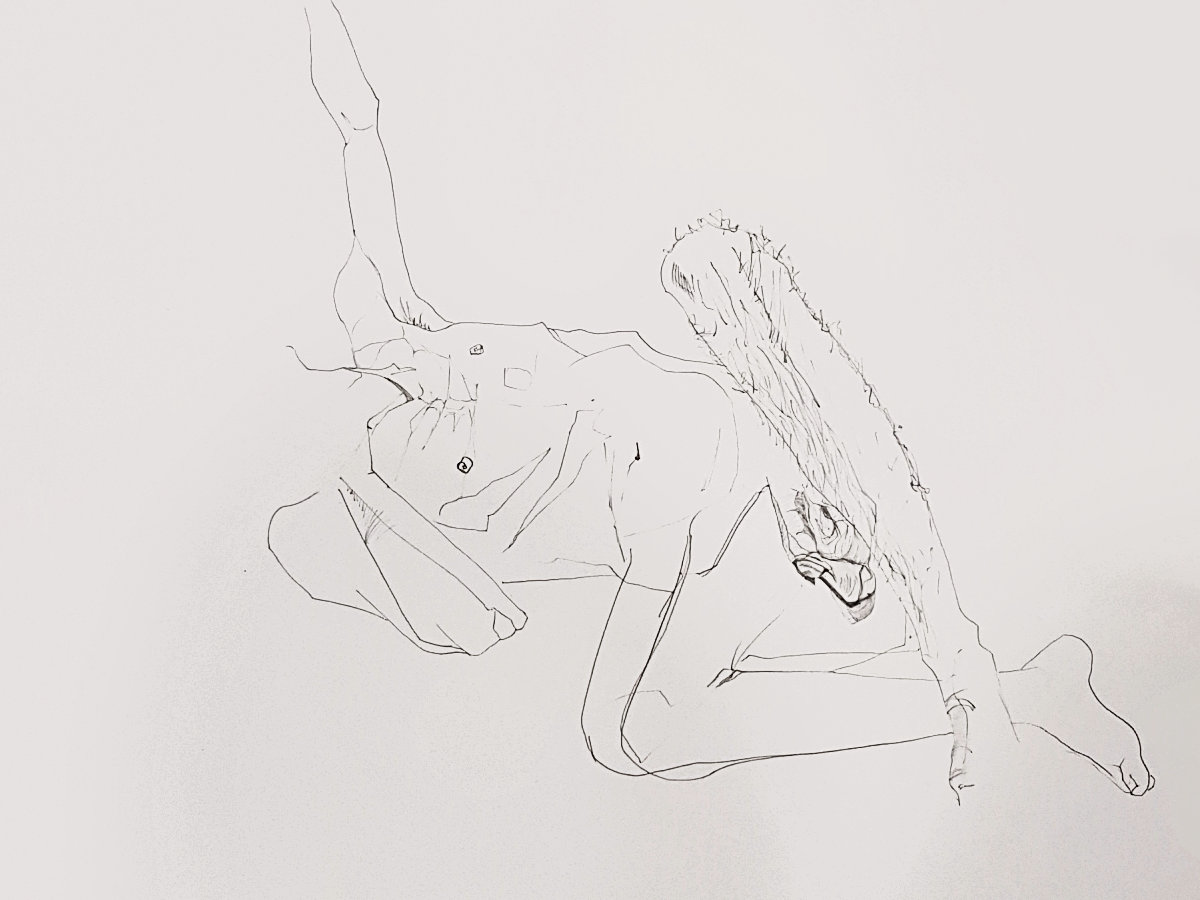
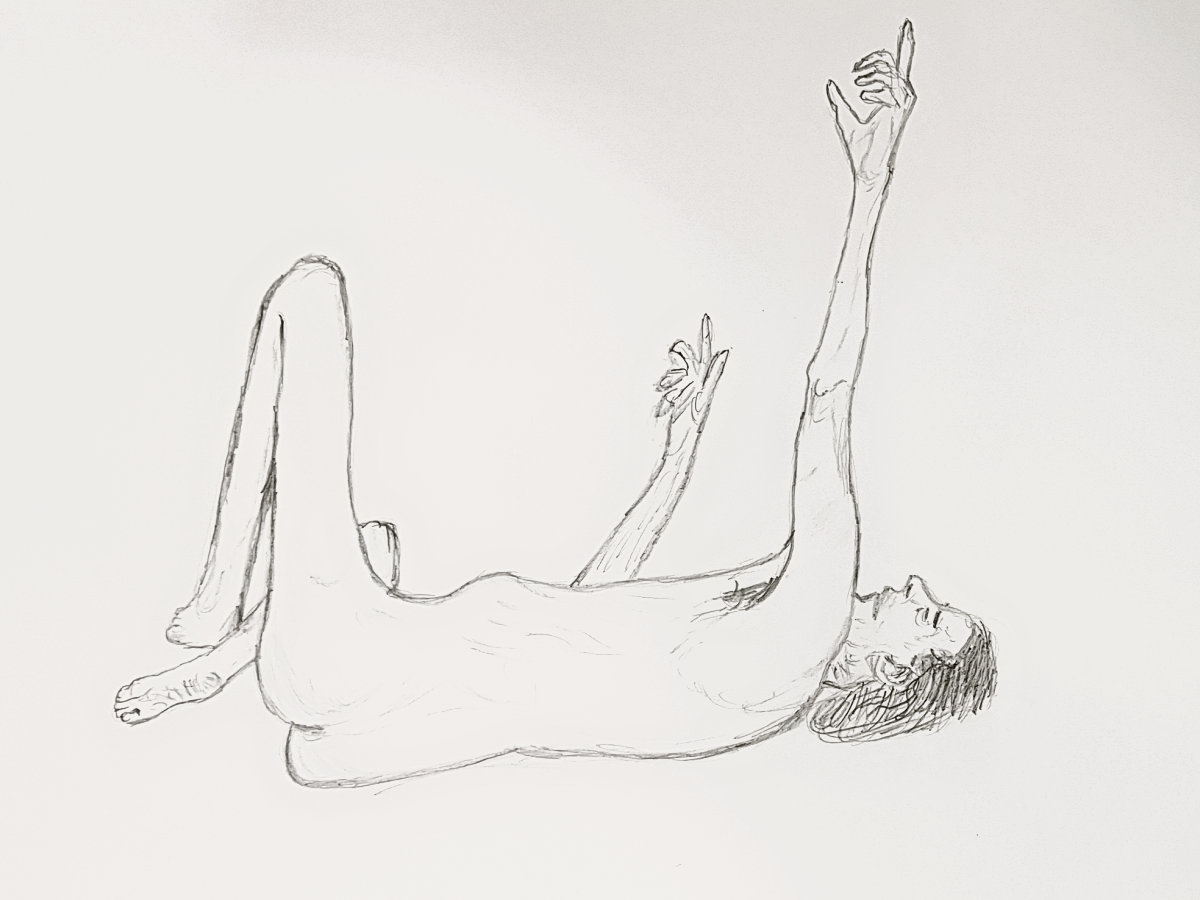
RAM membership is a curious thing. I first signed-up back in March 2012, yet of 473 people currently registered as models, 216 joined in the past year alone. As the total membership seems to oscillate around 500, it shows the drop-out rate must be quite high. RAM doesn’t meet every model’s needs, but I find it’s still just about worthwhile financially, and they do play a useful role in setting standards. I’ll stick with them.
Monotype printmaking involves drawing or painting ink onto a non-absorbent surface, or removing ink using brushes or rags, then transferring the image to a sheet of paper by mangling the two together. The process creates a unique print as most of the ink is removed during the initial pressing – any further attempt results in a ‘ghost’ at best. I’d never before modelled for monotype, so relished the chance at Lewisham Arthouse.

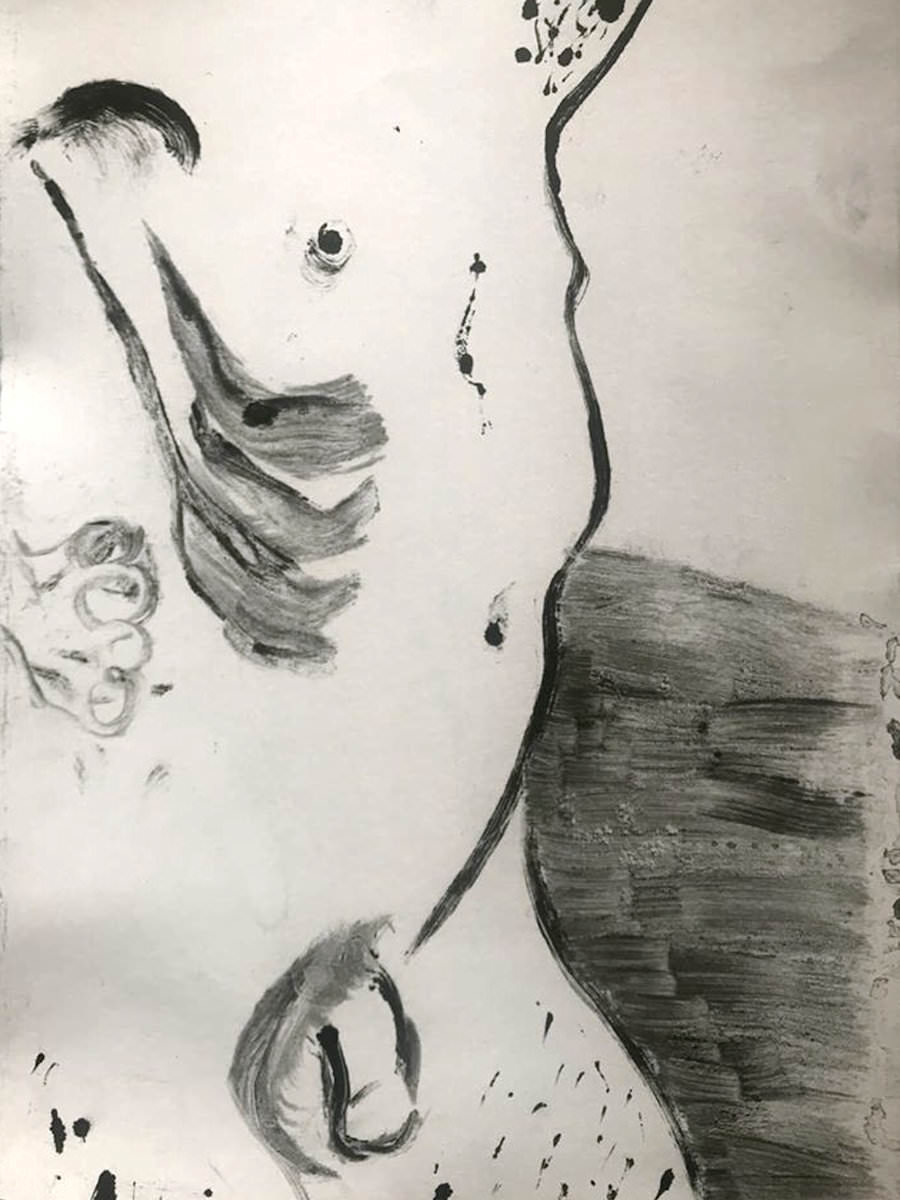


This was a London Drawing Group event led by Frances Stanfield, so whilst I did not know quite how monotype modelling requirements might differ, I knew the session itself would be enjoyable. It began at 10am with activities that let artists practice using their materials, after which I was to start work at 10:45am. My first joy came before I’d even entered the building; when I rang the doorbell it was answered by Lily Holder.
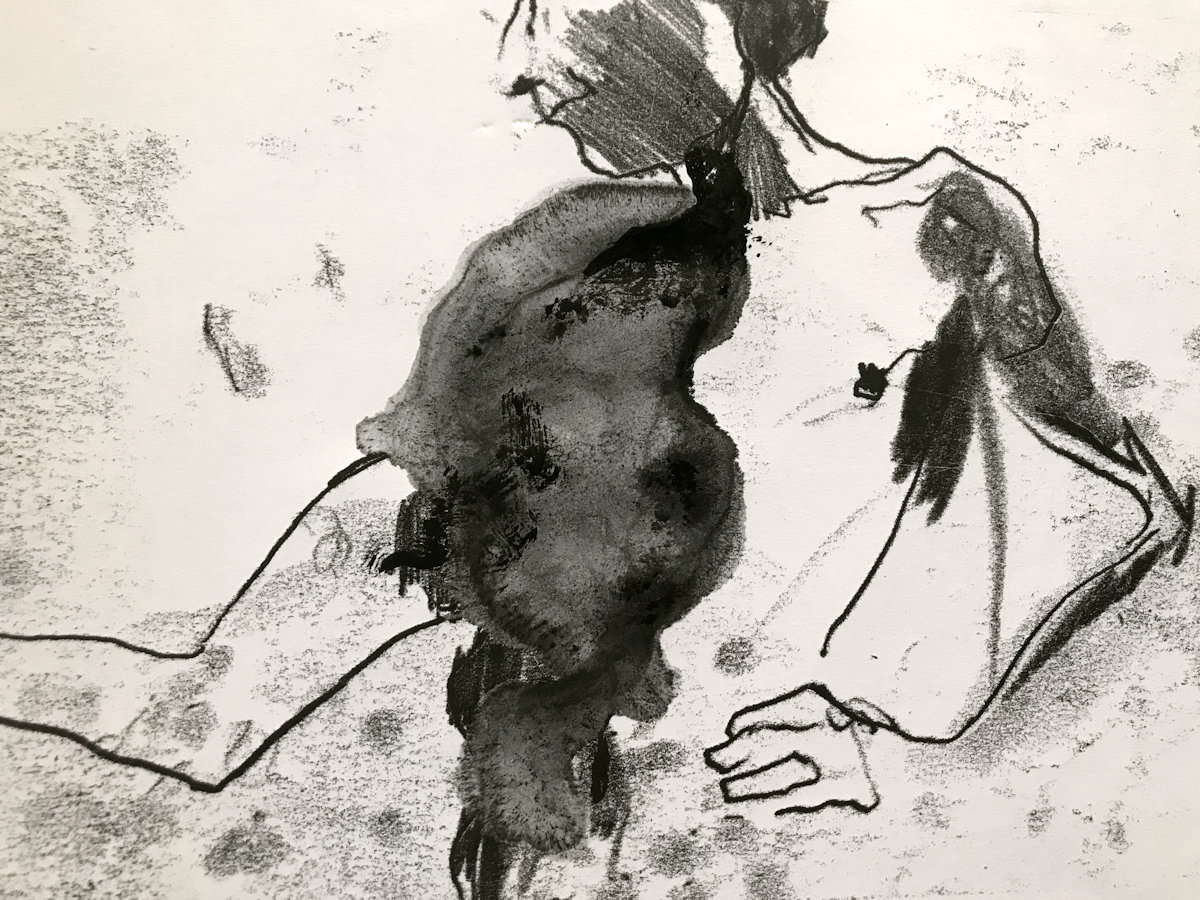
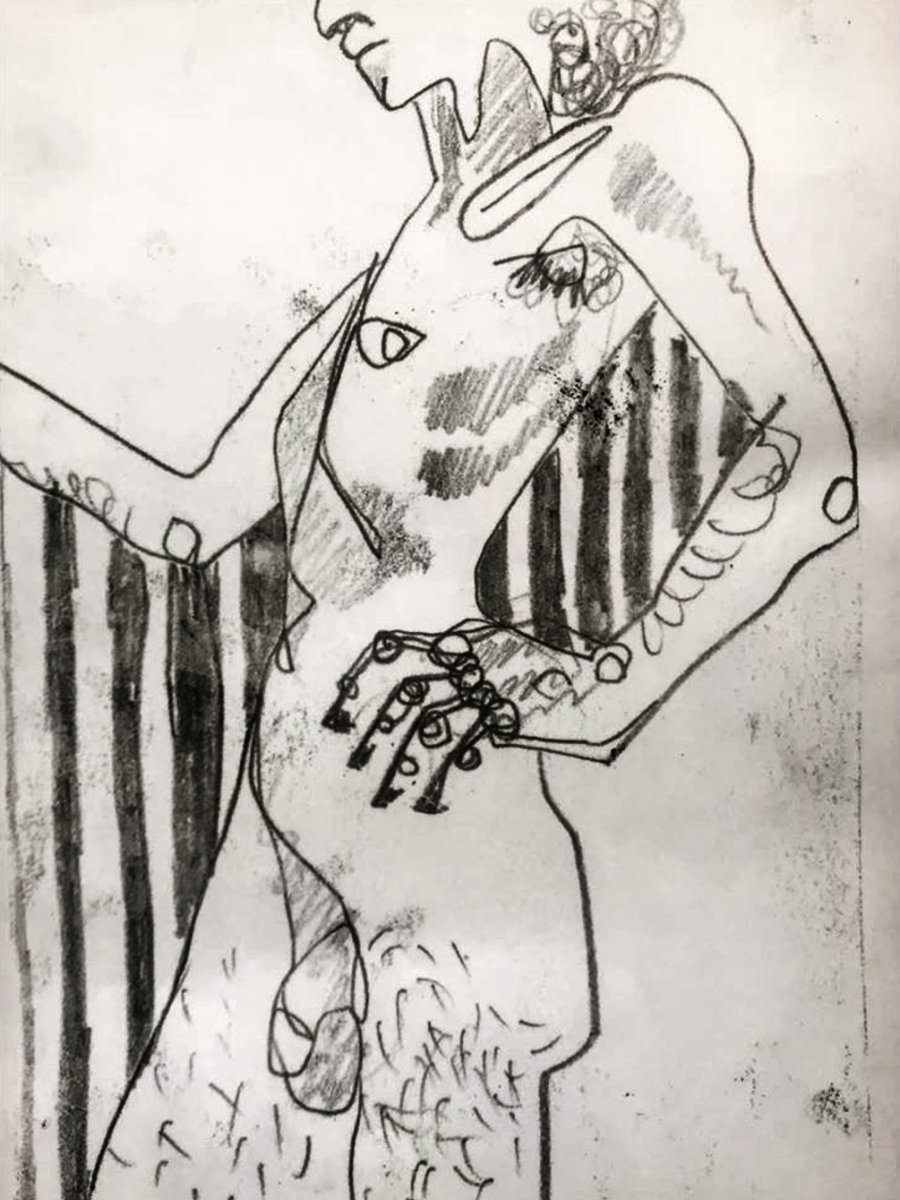

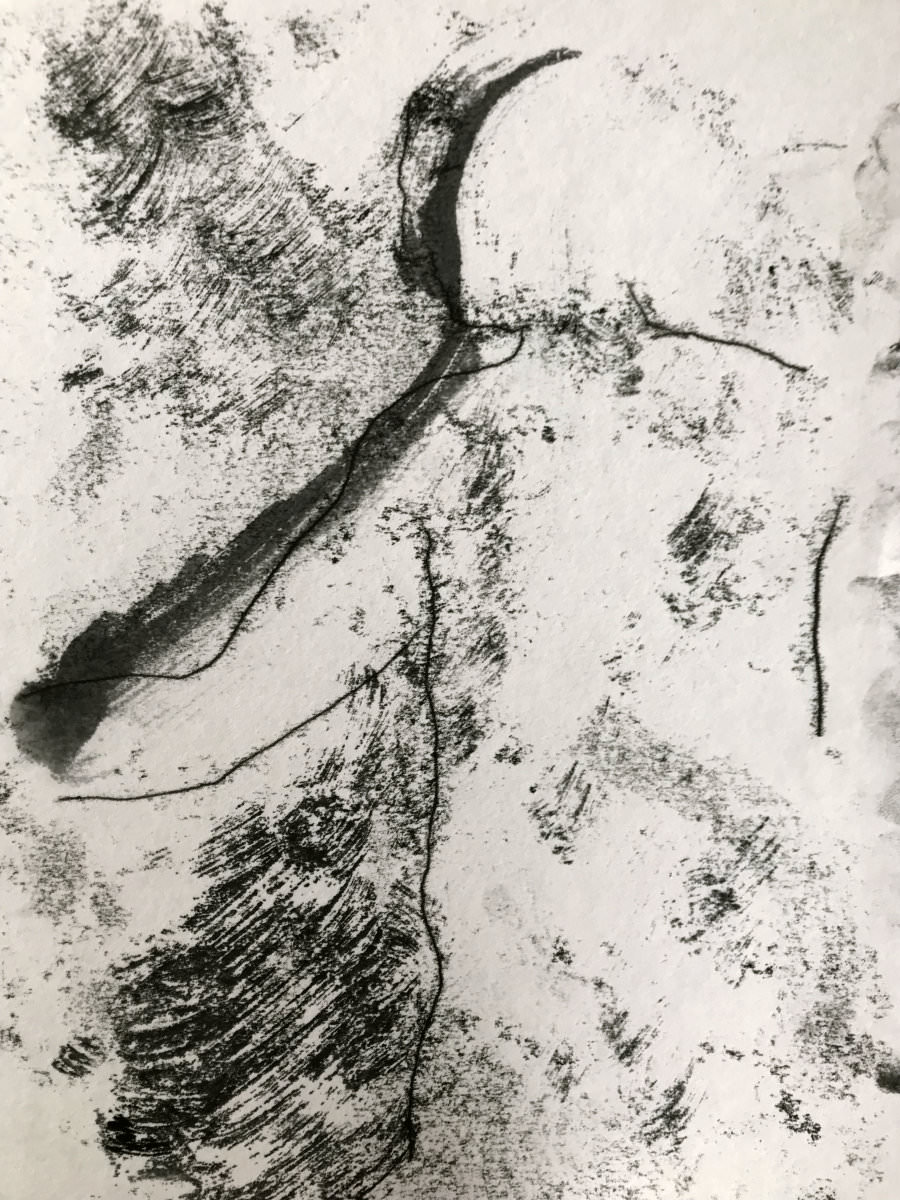
Lily has both posed with me as a model, and hired me when she’s been a life drawing class teacher or facilitator; now here she was as an artist honing another skill – kudos for that. I myself had to demonstrate but one skill: sustaining poses that were suitable for monotype production. These commenced with a pair of 10-minute standing poses, first facing one way, then modified and facing the opposite direction.

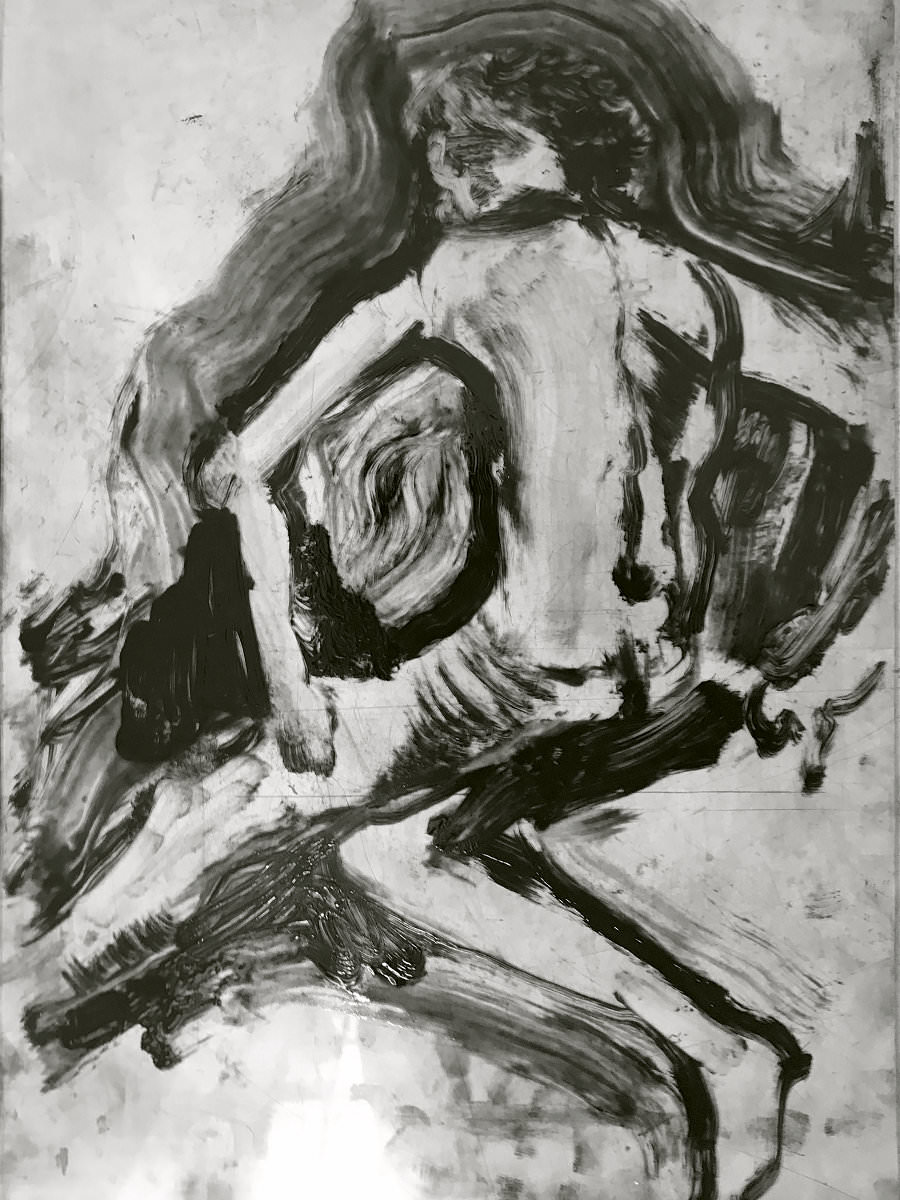
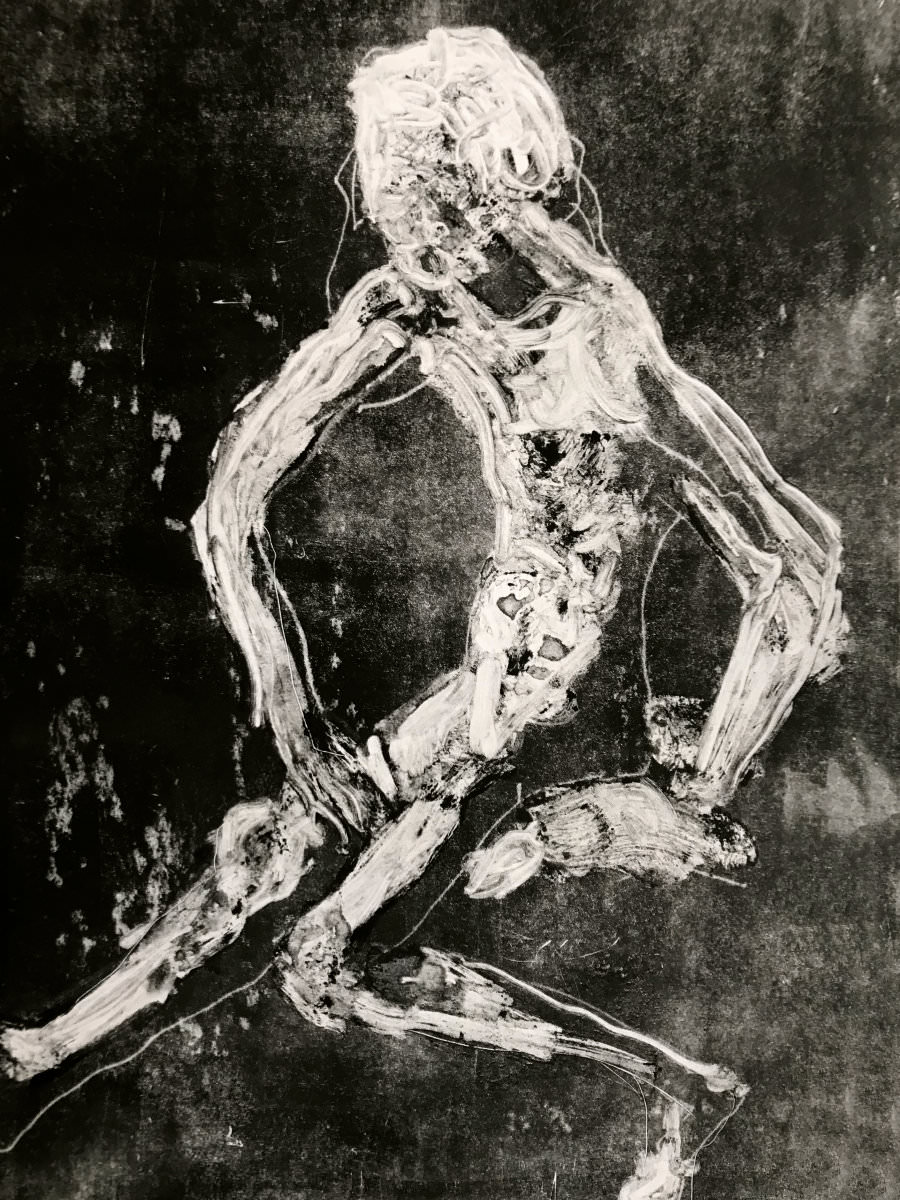

From the warm-up exercises I noticed that prints seemed to emerge as a combination of strong outlines and washes of texture; almost no internal detail or shading featured. Thus, I made sure all my initial poses were open and outward-reaching, with my limbs creating at least one area of negative space. For poses three and four, I sat on a stool for 15-minutes, and then lay on the floor with one arm raised for another 15-minutes.

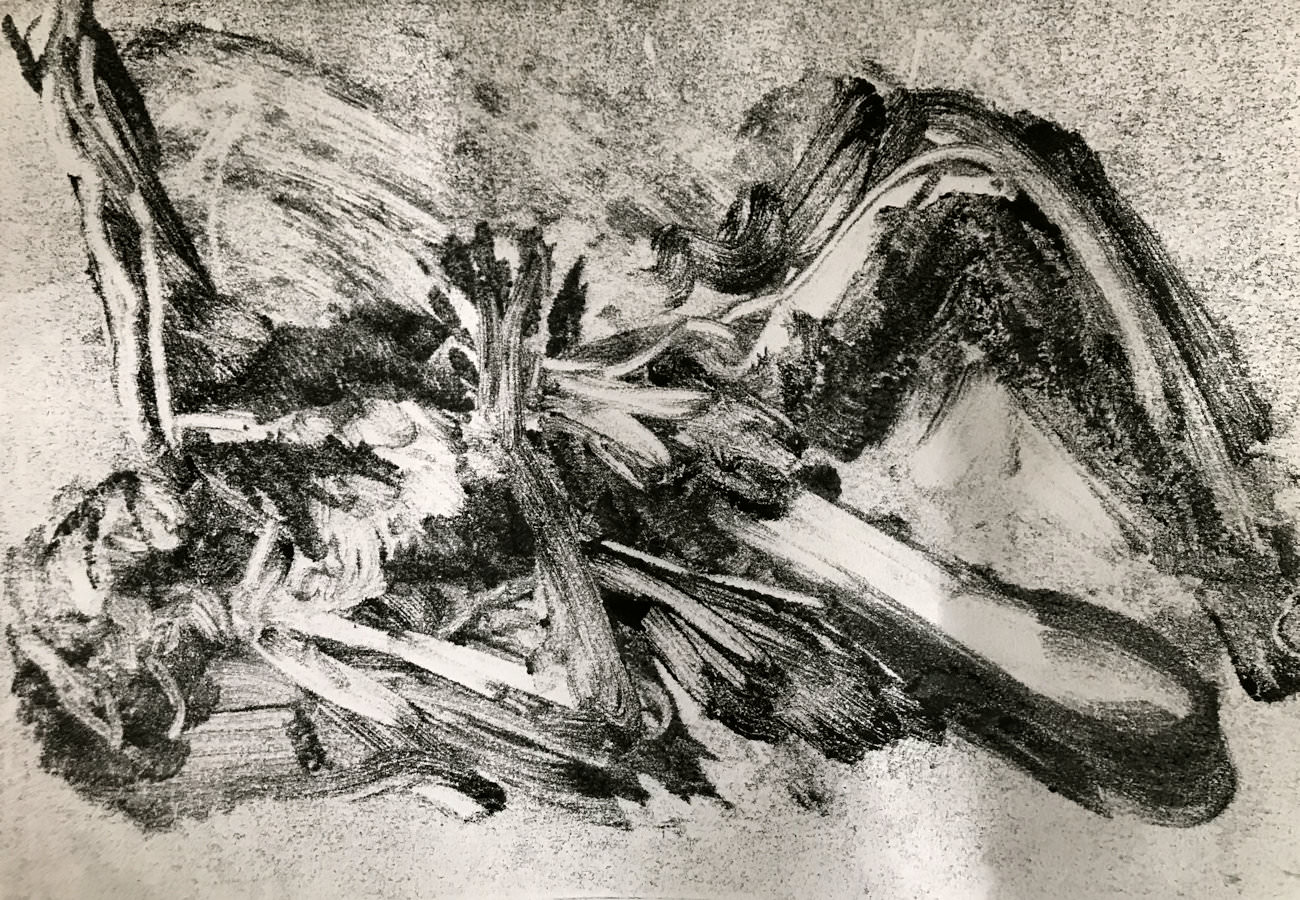


In most life drawing sessions there is a gap of just a few seconds between poses – as long as it takes the model to move, basically – but here it was five minutes each time, allowing artists to press their inking onto paper. After the fourth pose, we took a longer break so people could pop out for snacks. Upon resuming, we had 40 minutes left so I settled on the stool again for a single pose that would take us to our 1pm finish.


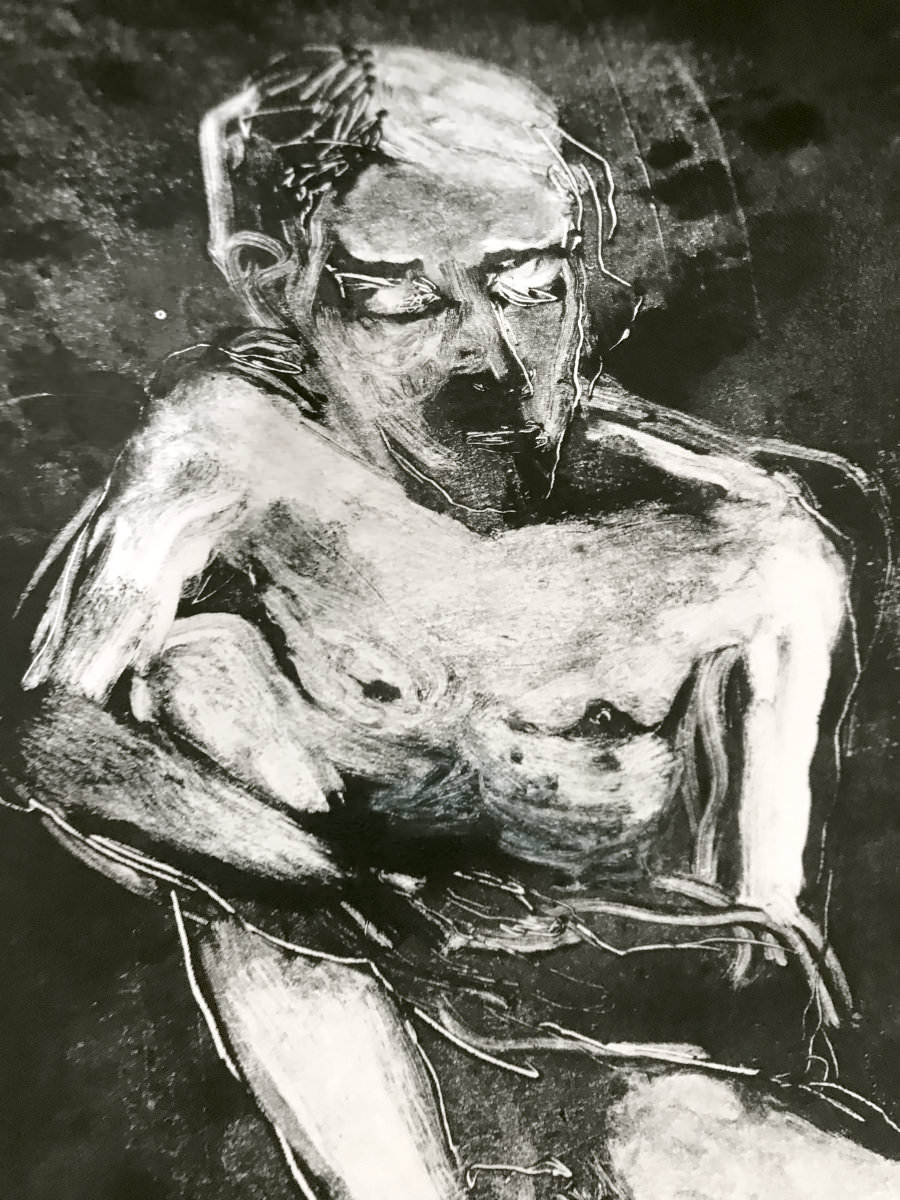
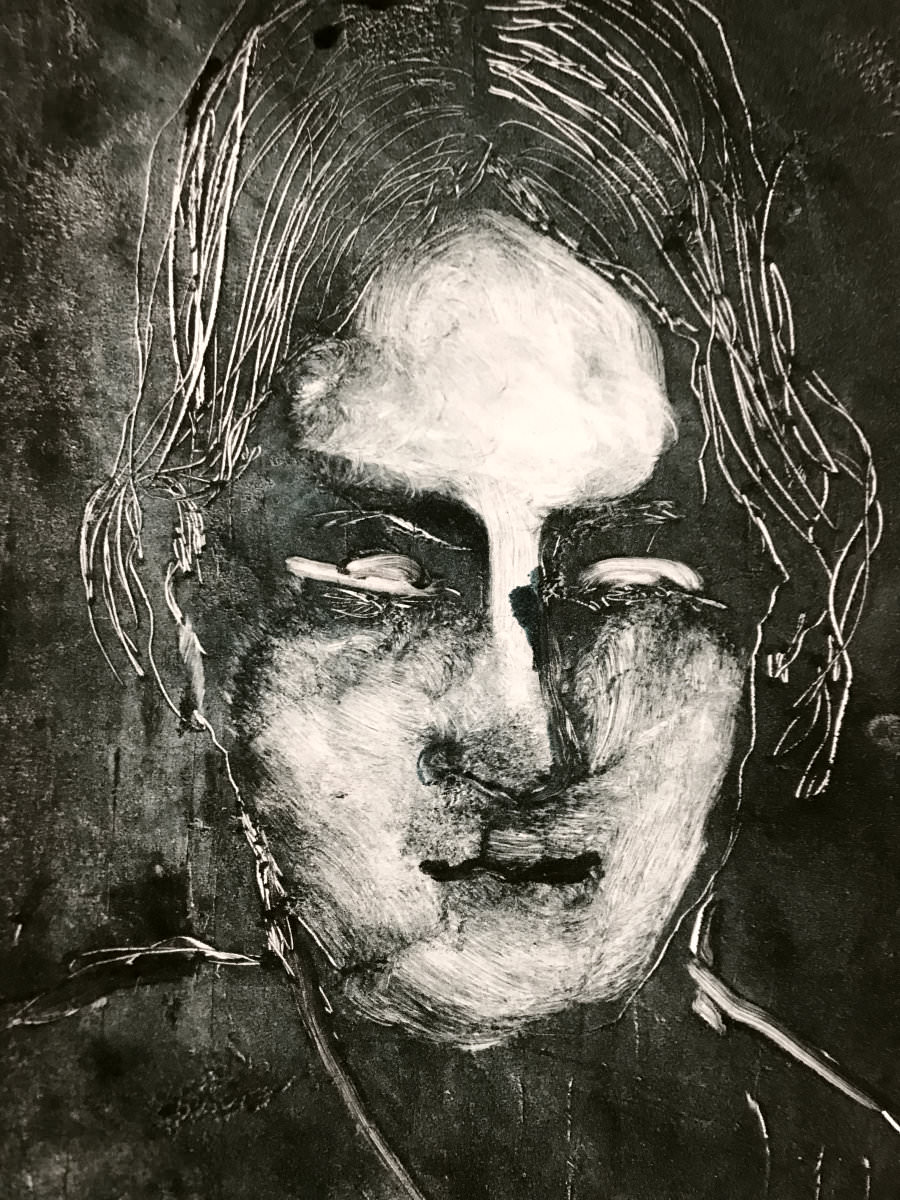
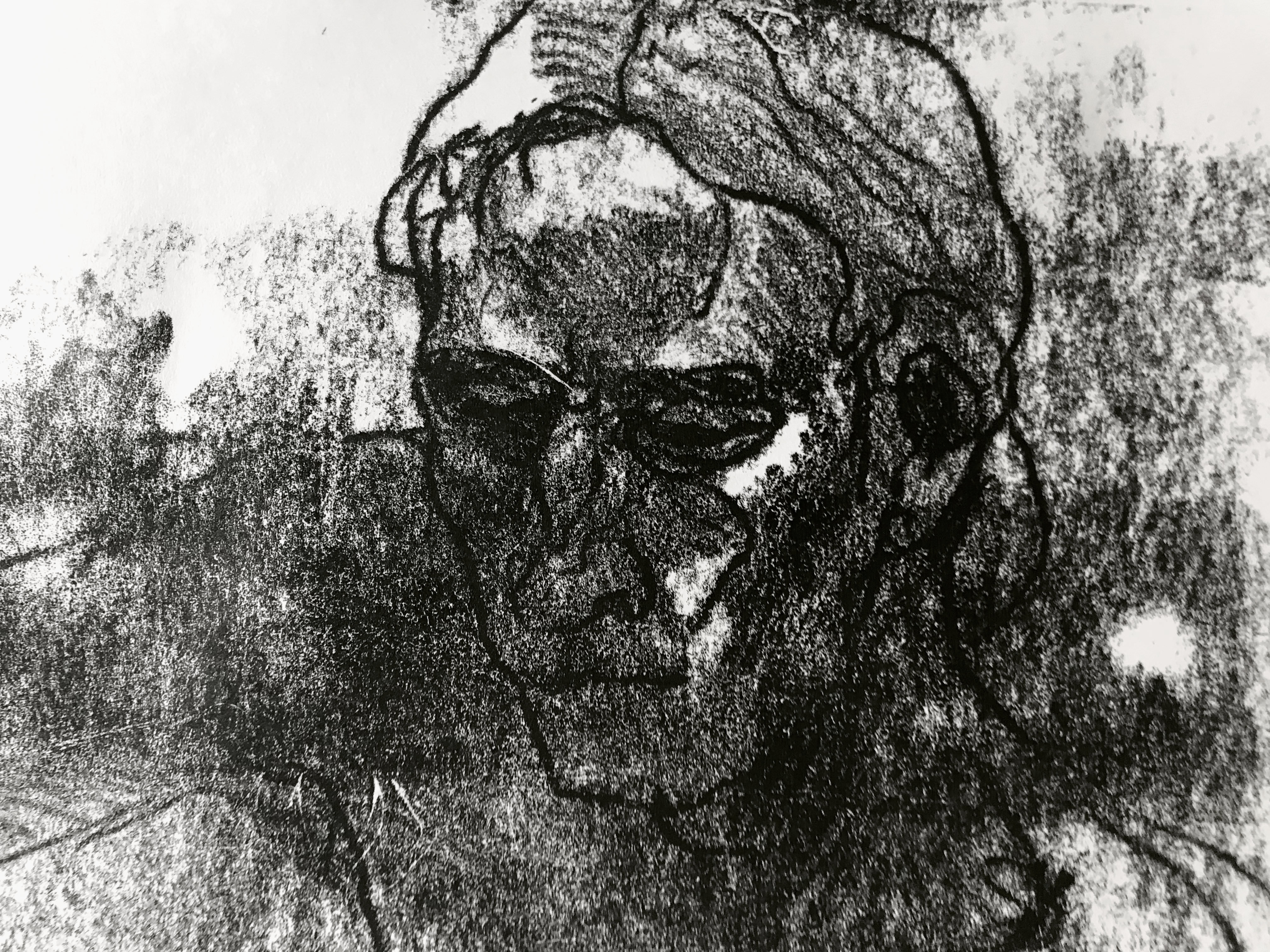


I felt 40 minutes offered the artists more time to experiment with detail, if they wished, so I folded my arms in to make a loop around one knee. Anyone who wanted to study the fiddly connections of limbs could do so, whilst an interesting (hopefully) silhouette with many negative spaces remained for those focused on outline. The diverse set of resulting artworks seemed to vindicate that choice. In all, a fascinating experience.
After a quiet week with zero life modelling, this Saturday morning return to Lochabar Hall was just what I needed. The pose times here are ideal for me; lots of quick work to get us started, then a mid-length piece and finally one long pose to the end. In fact my spirits were sufficiently upbeat that not even portentous utterances like “I’m afraid the council hasn’t switched on the radiators yet” could render them low.


Daybreak had been a drizzly and none-too-warm affair, but I was furnished with a pair of small heaters and the promise of a third if needed. I opened with six poses each of 5-minutes – standing, squatting, standing, sitting, standing, and standing – in a range of orientations, with nine artists at easels or holding sketchbooks, set as a semi-circle around me. The poses alone would have kept me tolerably warm, I think. Maybe.


For the mid-length pose I lay down with my body twisted and one arm pointed directly upwards for 20-minutes. This was the third successive booking in which I’ve used this pose. Each time doubts have been expressed at the outset, followed by admiration at the end. For me, however, it’s relatively effortless and sustainable. If I didn’t suspect it might be bad for my circulation, I would be happy to hold it for much longer.


With one pose and two hours remaining, I got into a comfortable position seated upon cushions and sheets on the floor. The third heater was brought into play and acquitted itself well for about quarter of an hour before fizzling out. Tea and chocolate biscuits at the break provided a more reliable tonic. I felt neither pain nor numbness, so I finished the session with high spirits intact. A fitting way to begin a fine weekend.

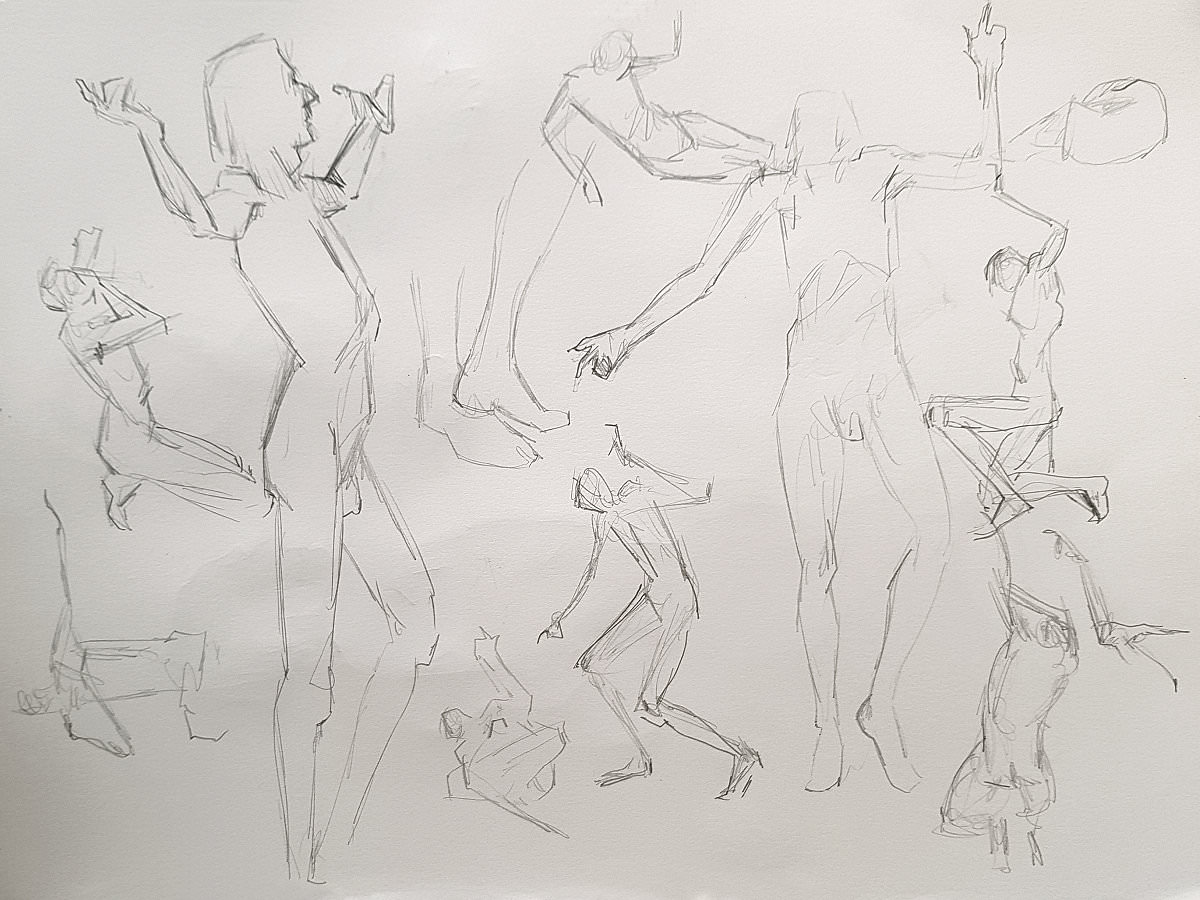
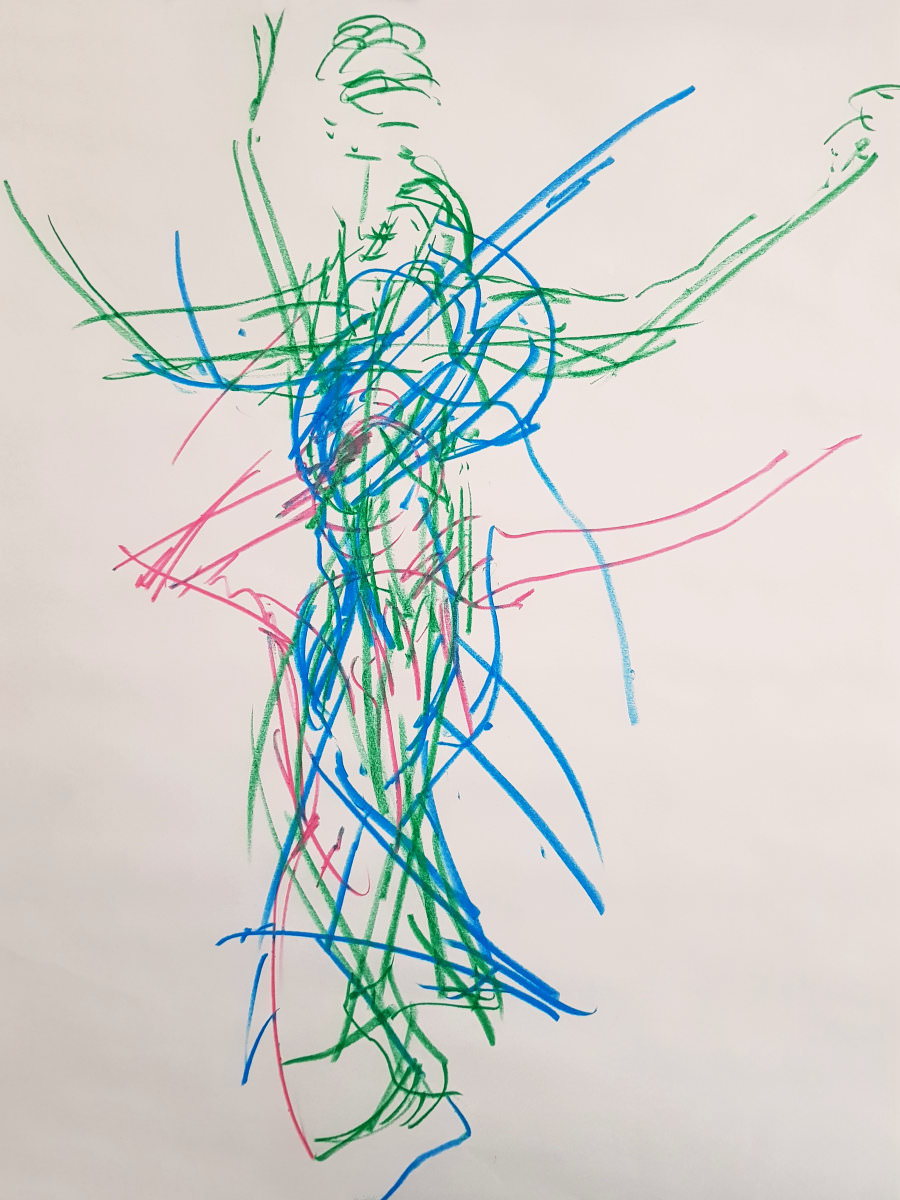
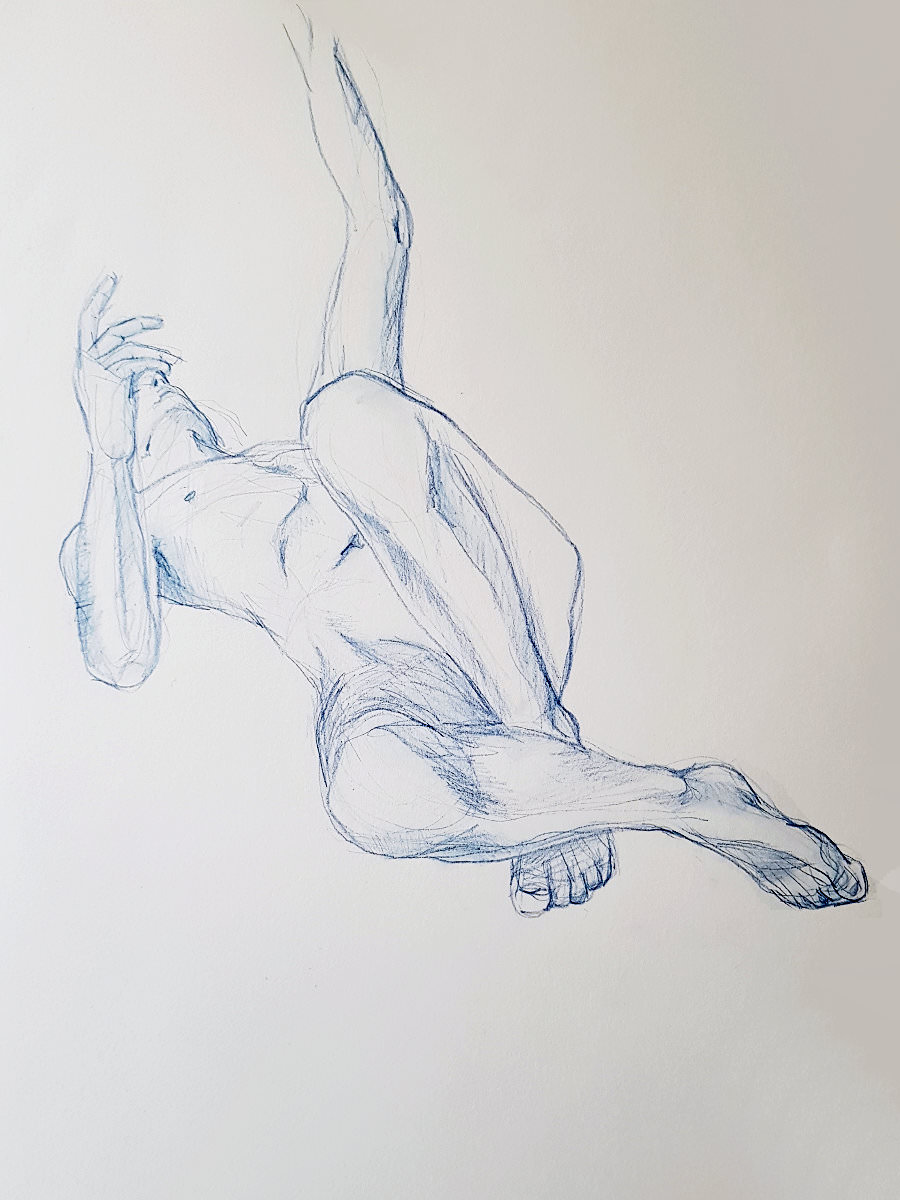
11:30am at The Dellow Centre for Life drawing Aldgate and Shoreditch: I began with a warm-up pose of 15-20 minutes, continued with a 3-to-3 sequence followed by two poses of 20-minutes up to a break, then saw off the session with a single pose of 45-minutes. That was the basic mechanics of it, and everything proceeded nicely, but really I shouldn’t have been there for 11:30am at all.
There are three sessions here at weekends: 11:30am Saturday, 11:30am Sunday and 2:30pm Sunday. Back on 30 July I’d been booked into the second Sunday slot for this weekend, but then on 30 September I was asked if I could shift over to the earlier one. My instinctive paranoid suspicion was that I’d been bumped to accommodate another model deemed sexier and more lucrative. The truth, however, was more curious…

Apparently several young women who attend as artists have said they are only willing to draw female models. Evidently their economic influence is enough to have resulted in male models being purged from the Sunday afternoon roster. I was resentful at first because the late change did rather screw up my intentions for the weekend, but I also feel for Tim, the group’s organiser – his would have been an awkward predicament.

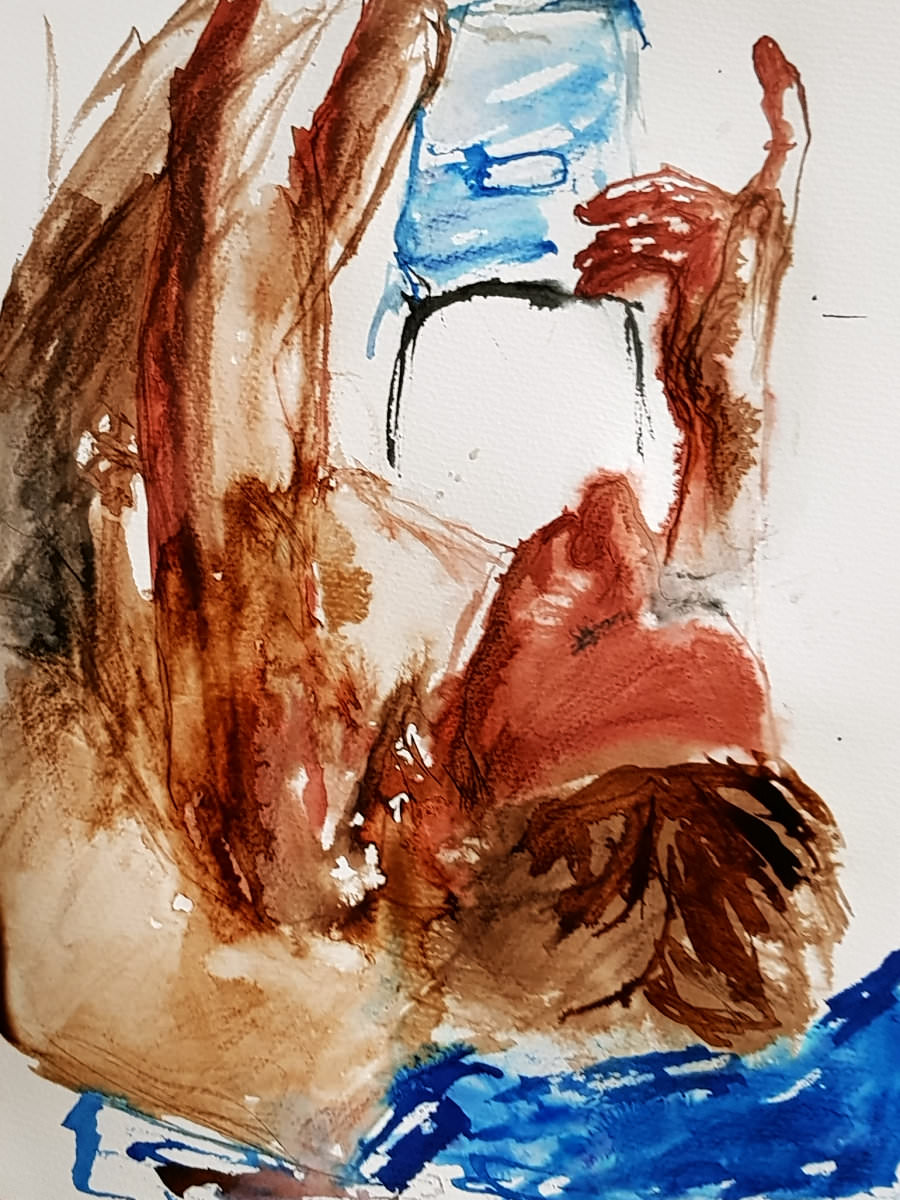
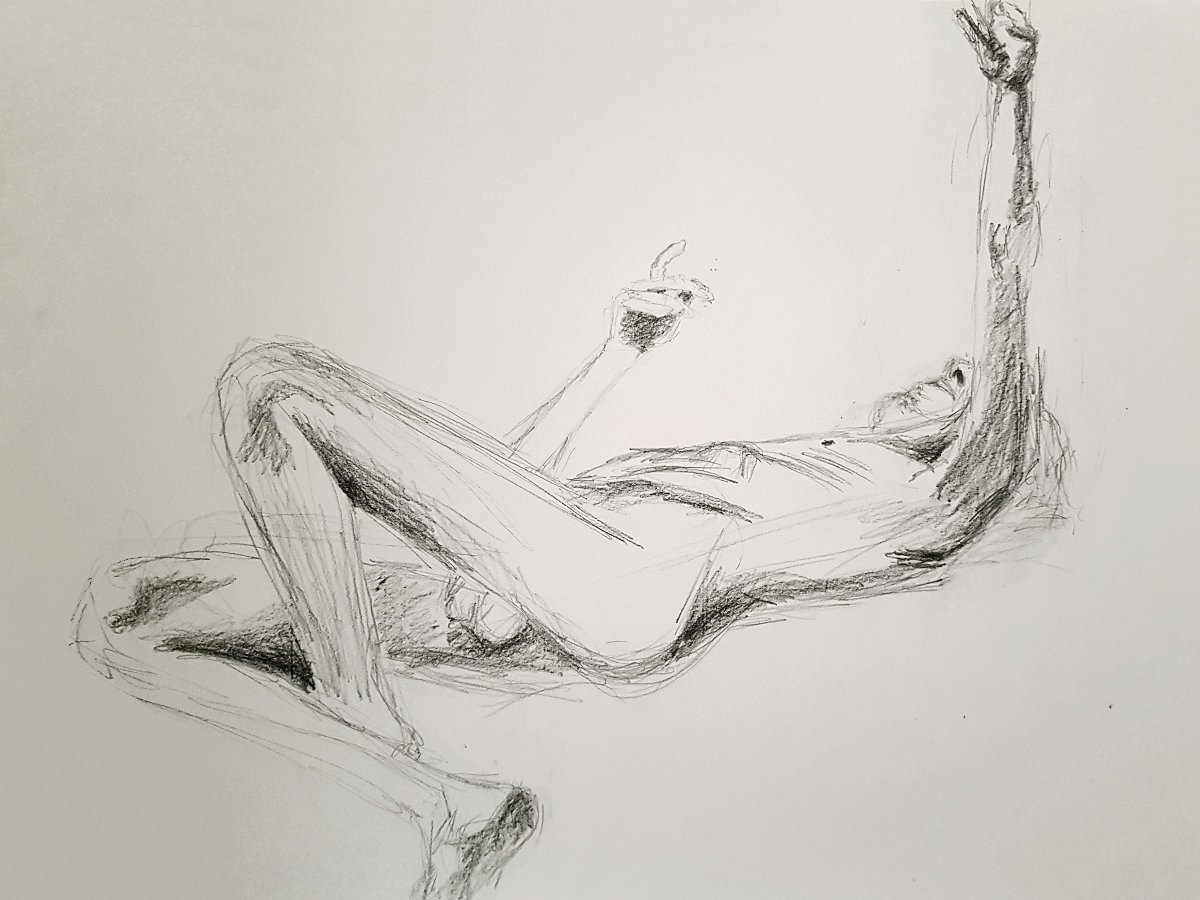
With new life drawing groups continually springing up around London, unintentionally creating increased competition for artists, it’s harder than ever for established groups to remain untouched and idealistically faithful to pure life drawing practice. There has been a ‘sexing-up’ across the scene in recent years, and now tough financial realities are clearly bringing other influences to bear.

I hope we never lose the essential honest wonder of life drawing: where an artist can attend a class that does not have to rely on the promise of glamour or novelty; where the unique human being they are invited to draw could be of any demographic and is guaranteed only to have a professional attitude; and where that artist can be inspired simply by the natural physicality and momentary expressiveness of each pose.
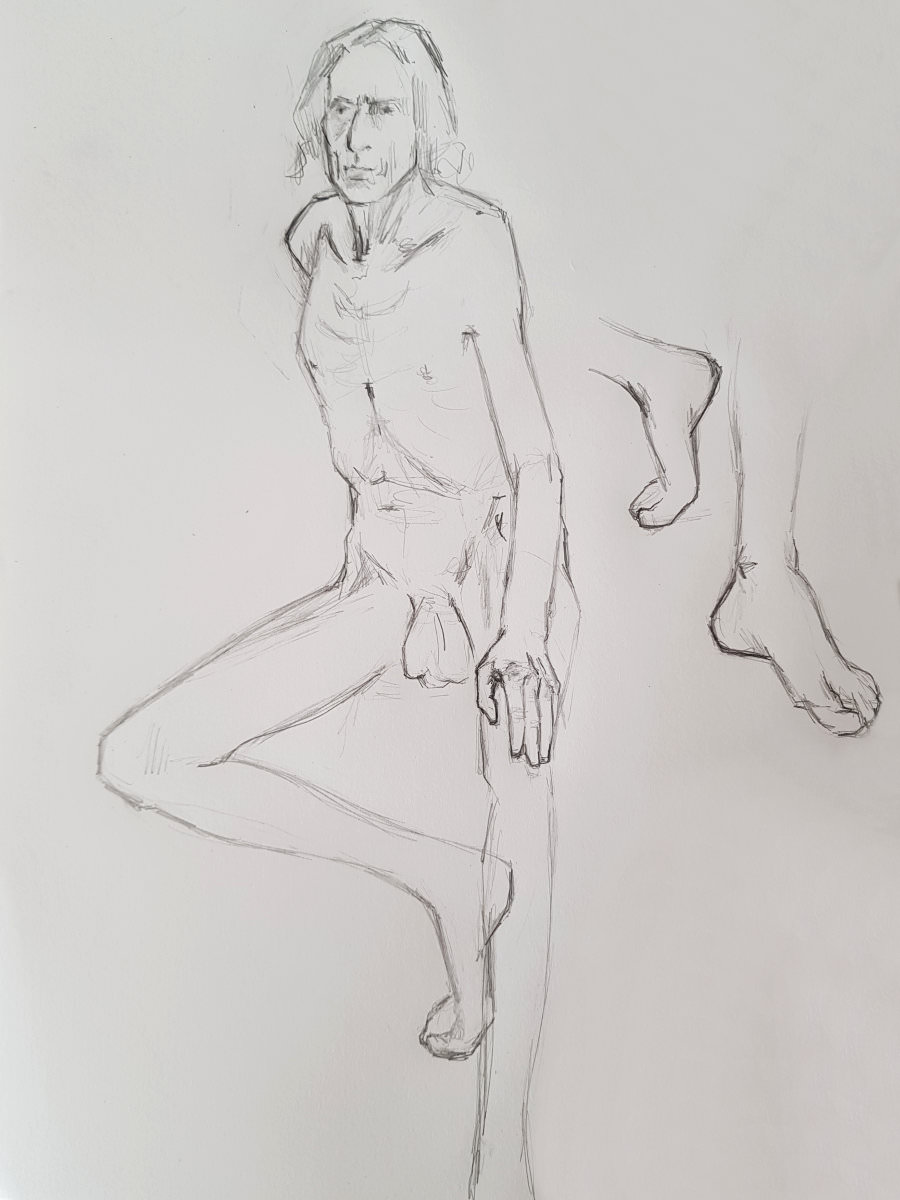

This group has been a positive presence for life drawing in east London for years and hopefully it will continue to flourish as such. I’ll be back here for the second Sunday in December… morning, of course. Oh, and the 3-to-3 sequence? 3-minutes, 2-minutes, 1-minute, 50-seconds, 40, 30, 15, 7 and 3-seconds. I opened by standing upright with arms outstretched, then gradually lowered and curled into a ball. My fall.
While I stood for the opening 15-minute pose, more and more people trickled into the room. Group organiser Adrian Dutton greeted each new arrival and got them settled with drawing materials. It looked likely to be another full house at the Garrett Centre. When a quarter of an hour had elapsed, we moved on to five 1-minute poses.
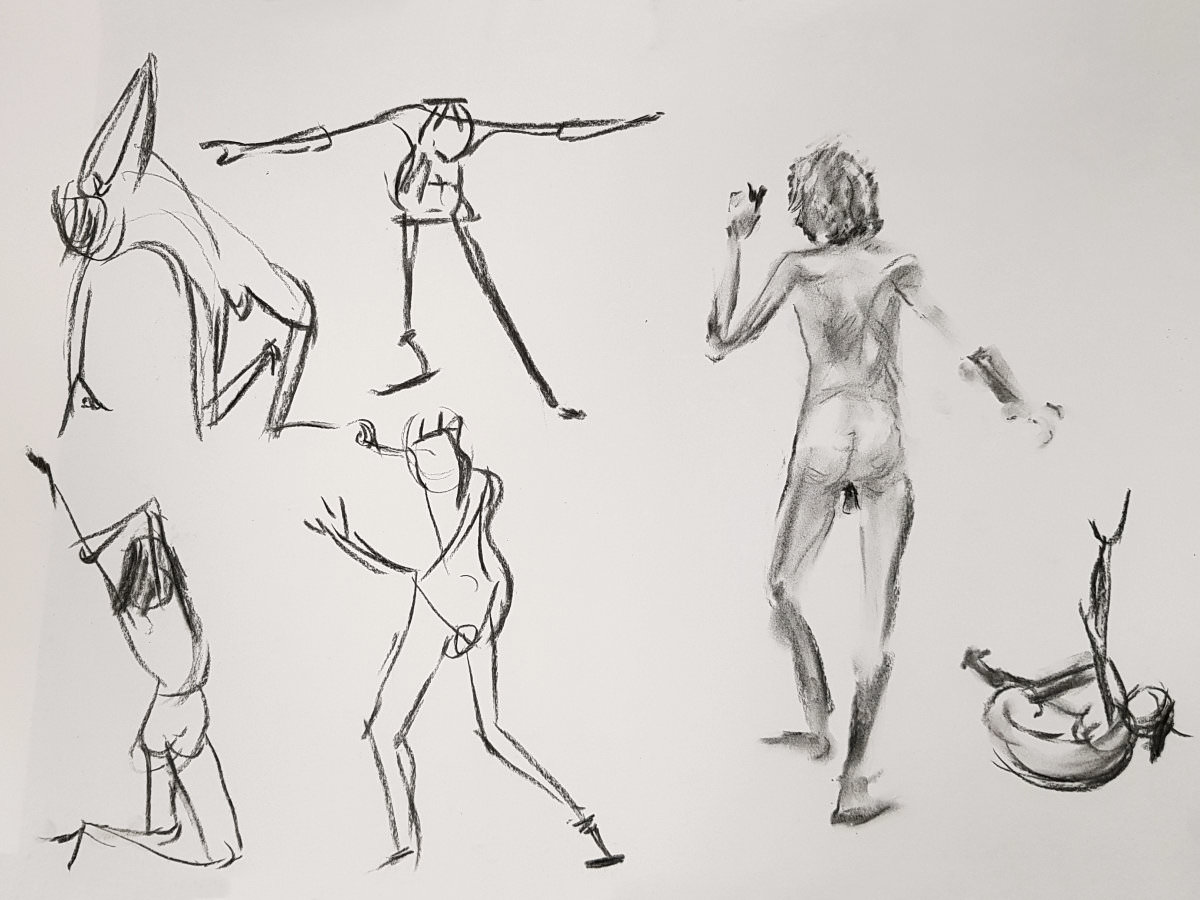
Our quick-fire work was followed by poses of 5, 10 and 20-minutes. For the middle of these, I stood with arms out at waist level. Once during a similar pose here, one artist embellished the scene by giving me a shopping bag to hold; this time a different artist gave me a ballroom dancing partner. I do love a bit of creative elaboration.


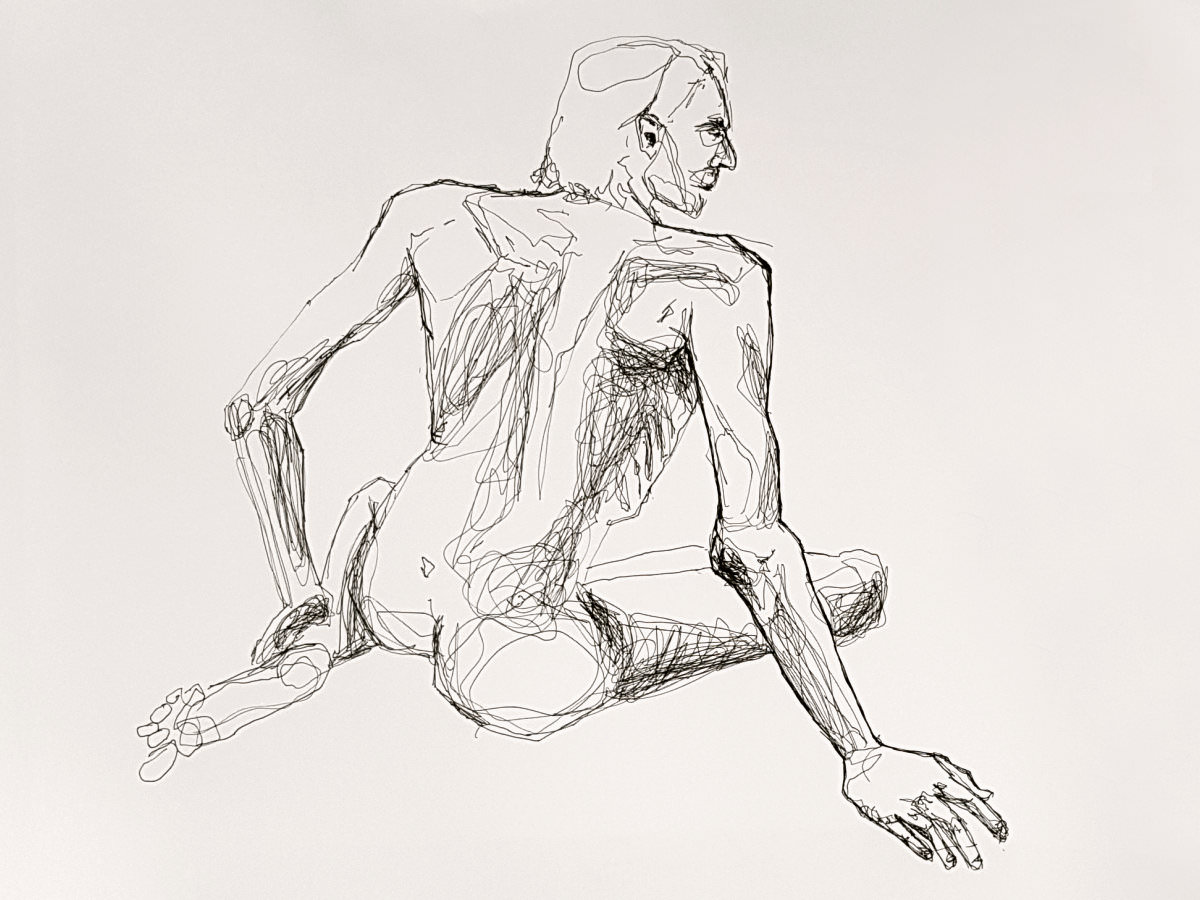
After an interval in which artists could help themselves to hot lentil dalh, biscuits, teas and wine, we resumed with a 10-minute pose and a real treat: Adrian embarked upon one of his meandering discourses on art and artists. It’s been such a long time since I last heard him do this, but I always find it a fascinating lyrical addition to life drawing.

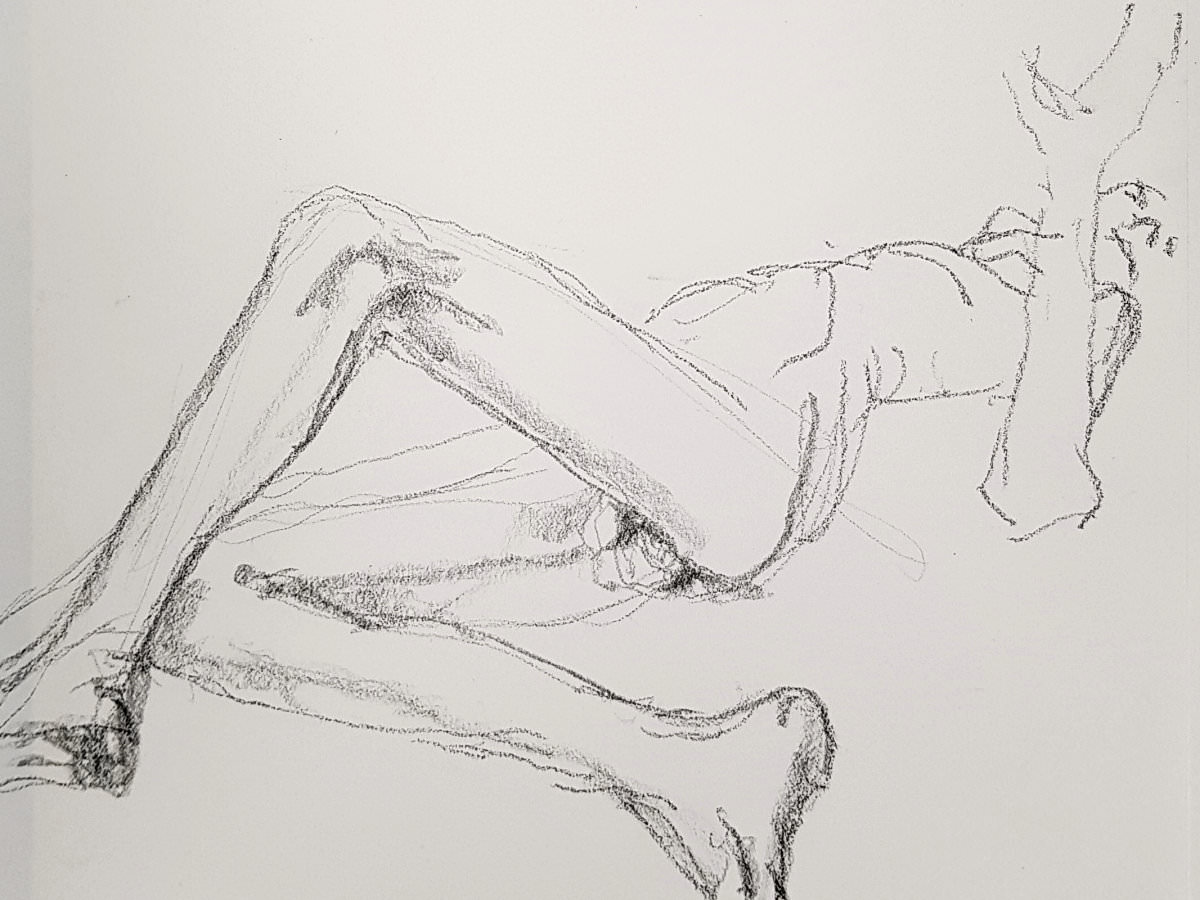

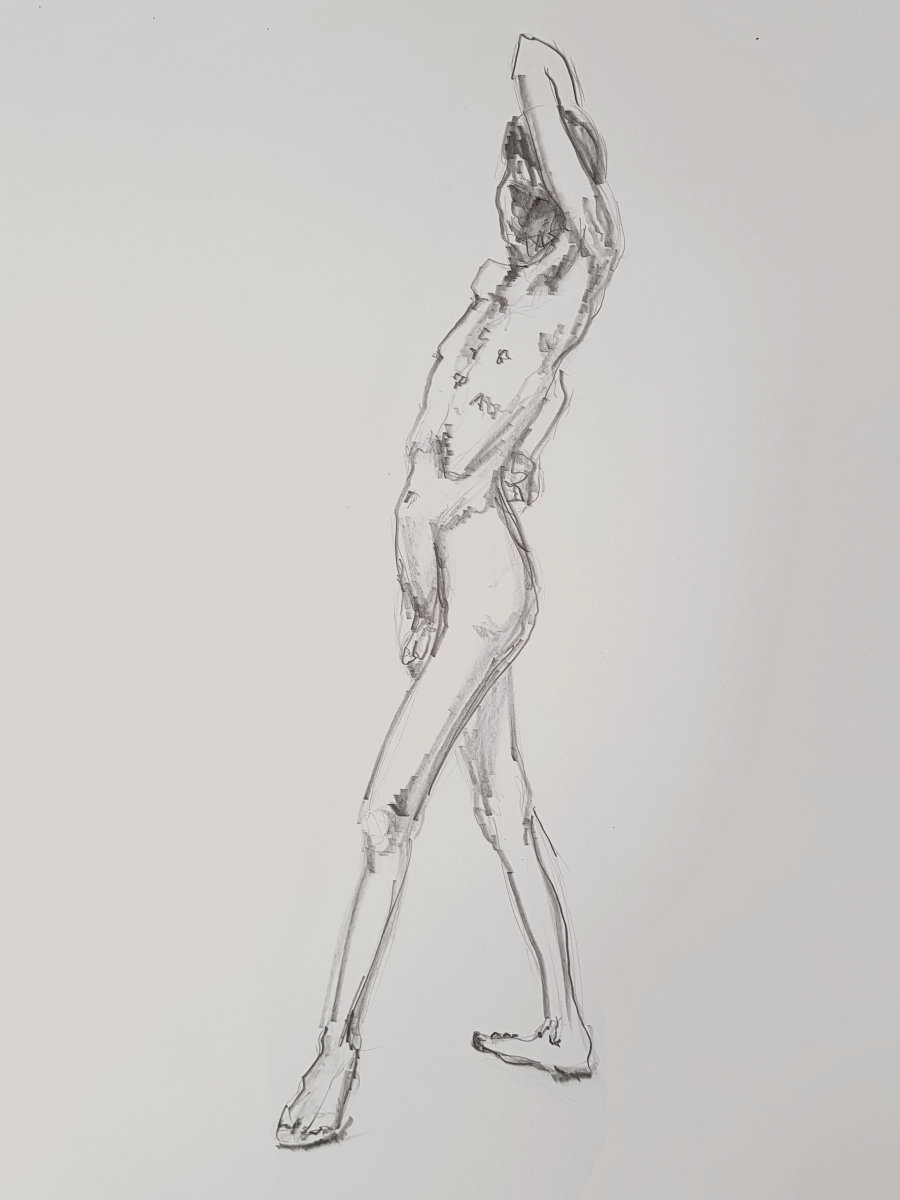


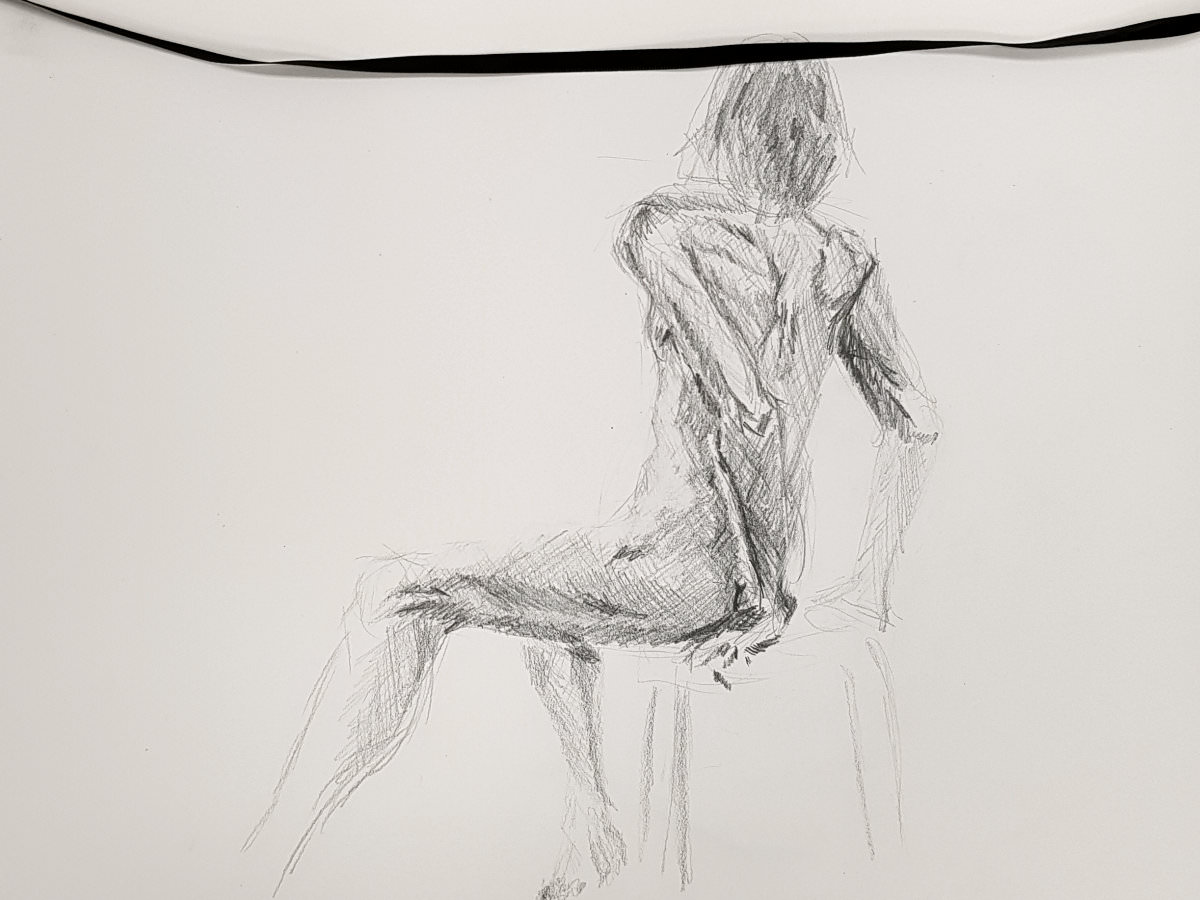

The session ended with poses of 15-minutes and 25-minutes. From reclining with one arm raised, I switched to standing with the other arm wrapped over my head and then saw out the evening seated on a stool with both arms reaching behind me. An ancient Honeywell heater, good spirits and a positive vibe in the room kept me warm.
First time life modelling at any adult college – in this case Brockley Adult Education Centre – there’s only one thing truly certain: paperwork. No doubt it’s required by law rather than something they do for fun, but it meant that when Esther and I arrived for this duo session we needed our passports, bank details, National Insurance numbers and had to complete two sets of forms. Only then could we navigate to the art room…
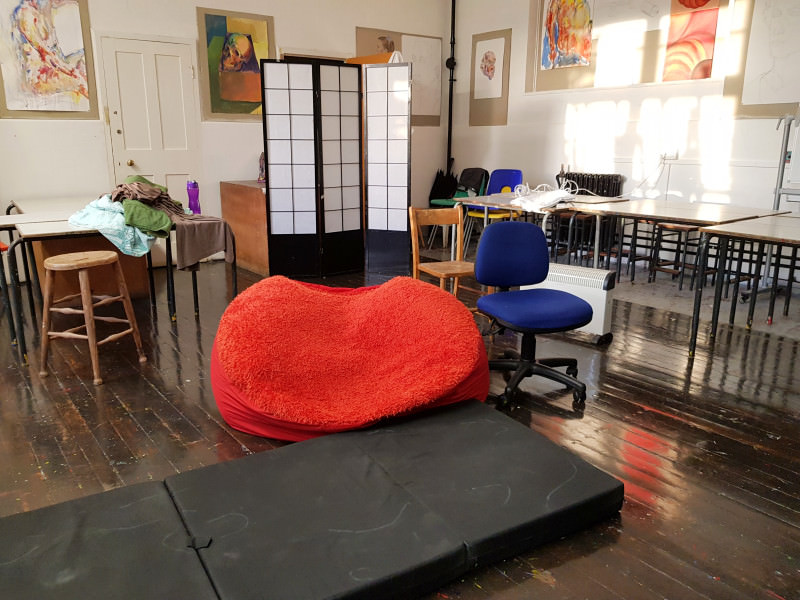
Awaiting us inside was tutor, Joanna McCormick. I’d previously posed for Jo’s group at Little Nan’s Bar in Deptford back in June, where one of the artists here today had also been drawing. In fact, only two artists would be drawing us at this session, which was a regrettably low number but it did give proceedings a more relaxed intimate feel. We began with five 1-minute poses, followed by 3, 5 and 10-minutes to a first break.
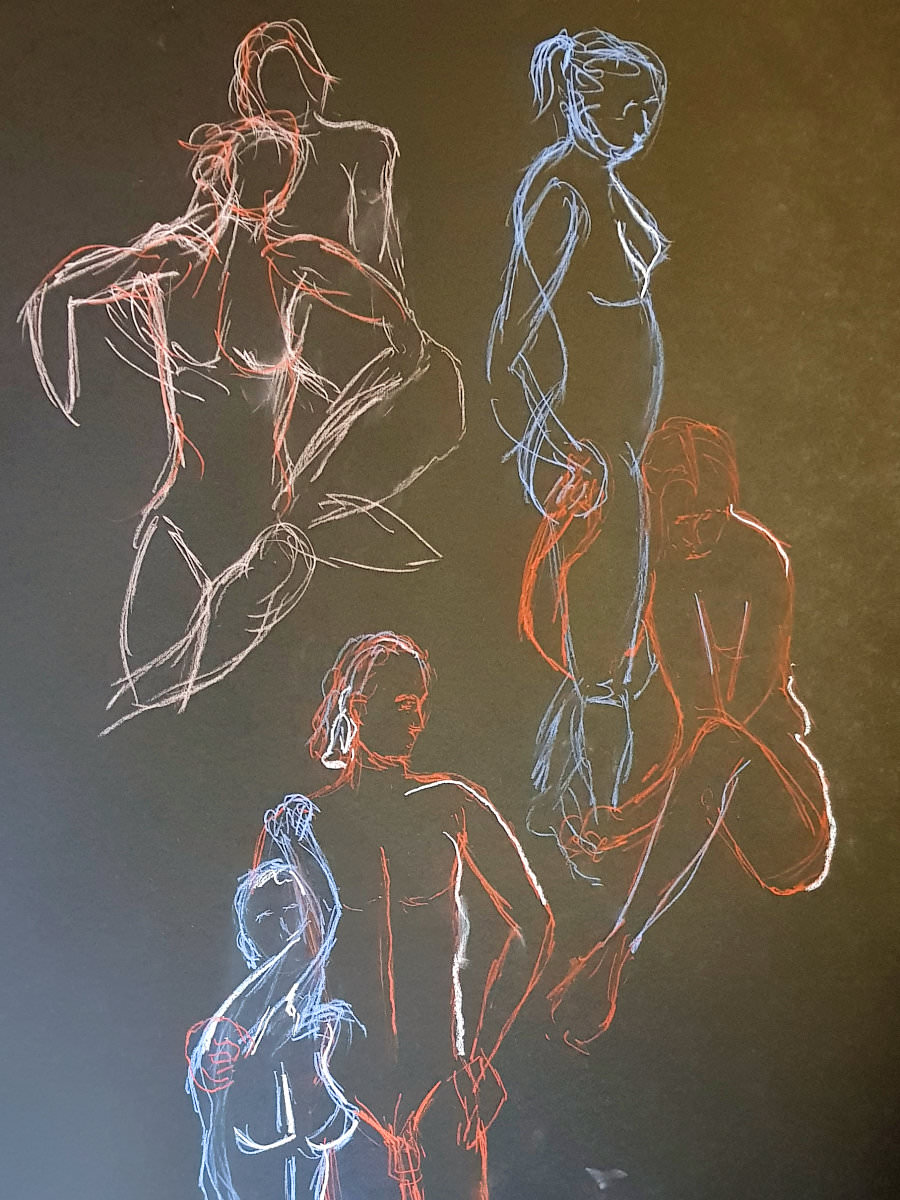
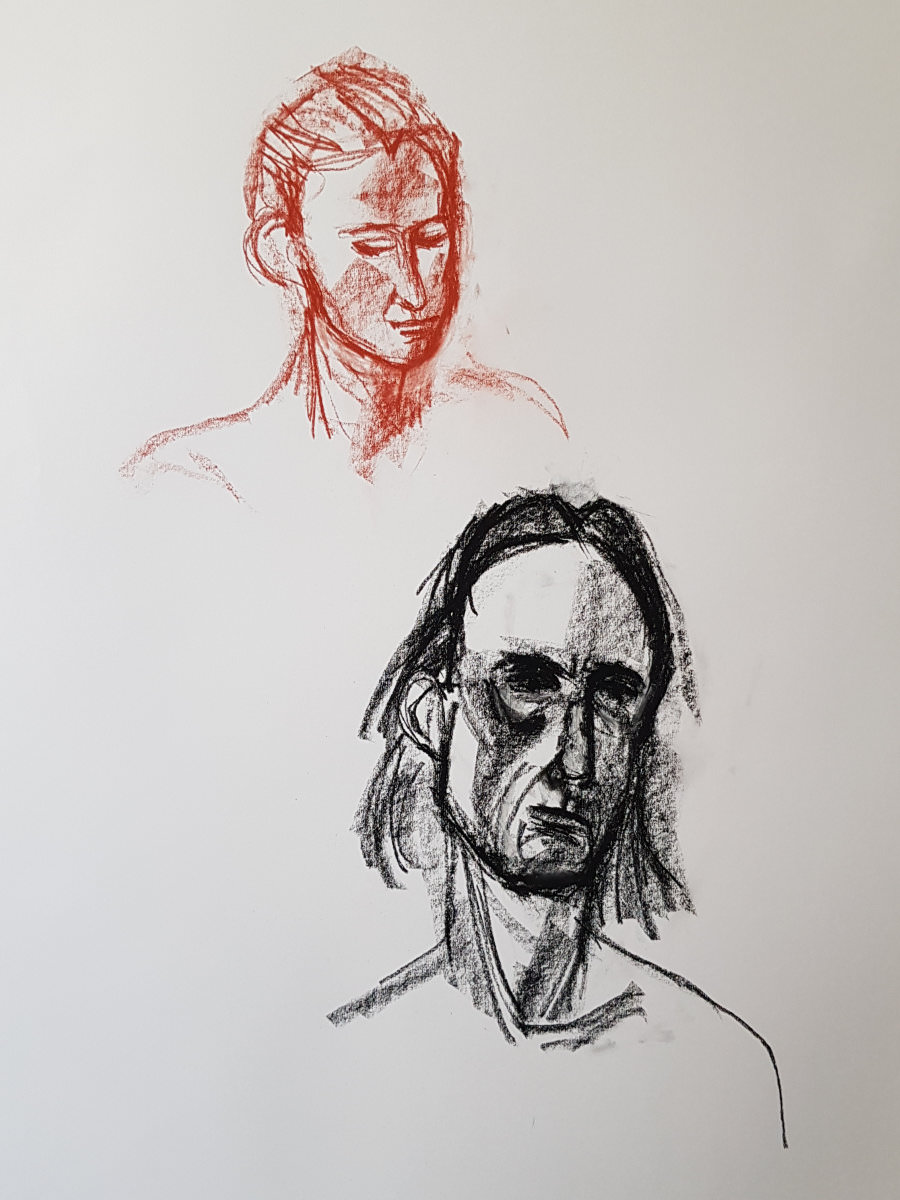
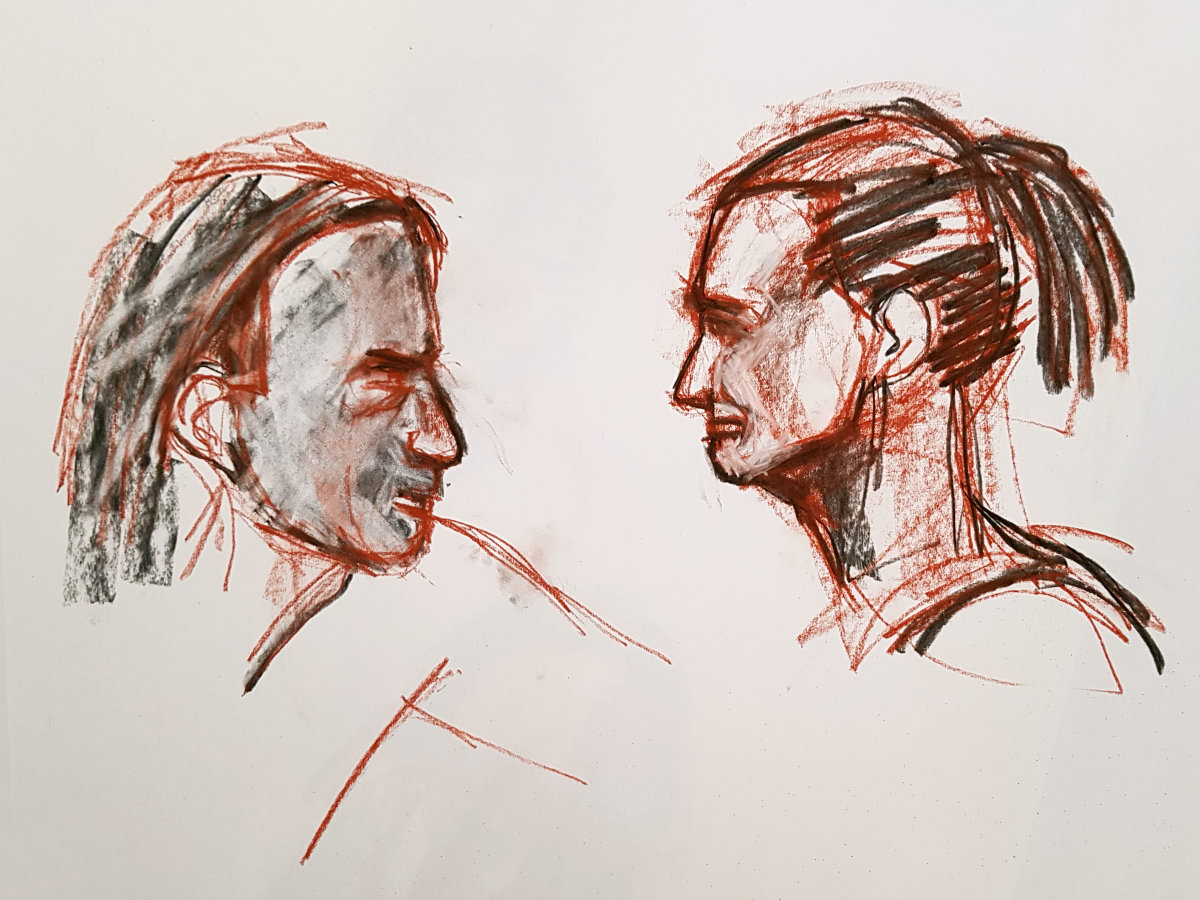
I’m never sure if it’s confidence, bravery, complacency or folly that motivates artists to attempt capturing two intertwined figures in just 60 seconds. Whatever the case here, it was done staggering well. The best I’ve ever seen for duo poses at such speed. We resumed with a 15-minute pose for which we were slightly apart, connected by gazing eyes and hand contact. A 45-minute reclining cuddle took us to the next break.
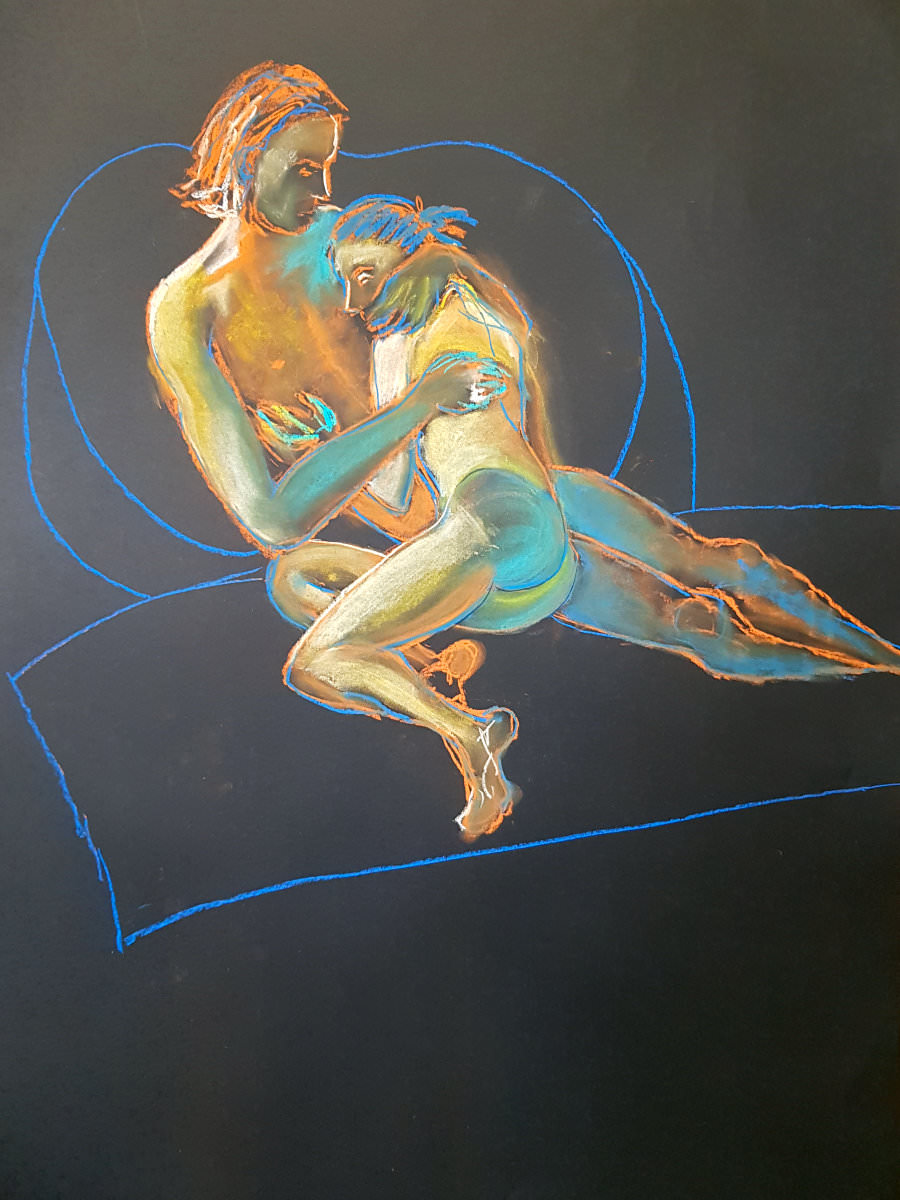
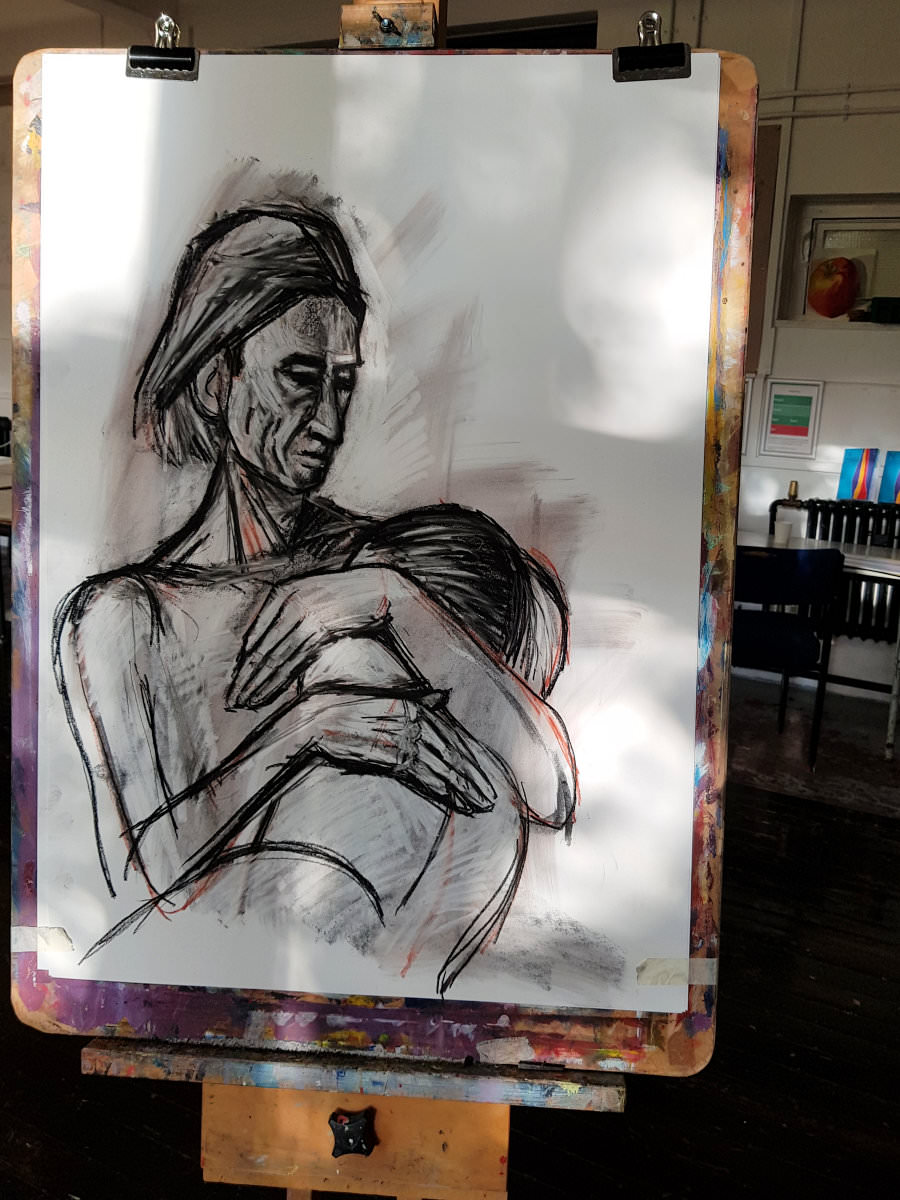
Whilst the artists popped out to get coffees, Jo handed Esther and me a third piece of paperwork; the first two had been registration for employment whereas this was a pay claim. I do wonder whether the cost of processing such bureaucracy might be greater than the value of any potential fraud it could prevent. But, whatever. For our last pose, Esther chose to recline gently downwards whilst I sat cradling her legs for 50-minutes.
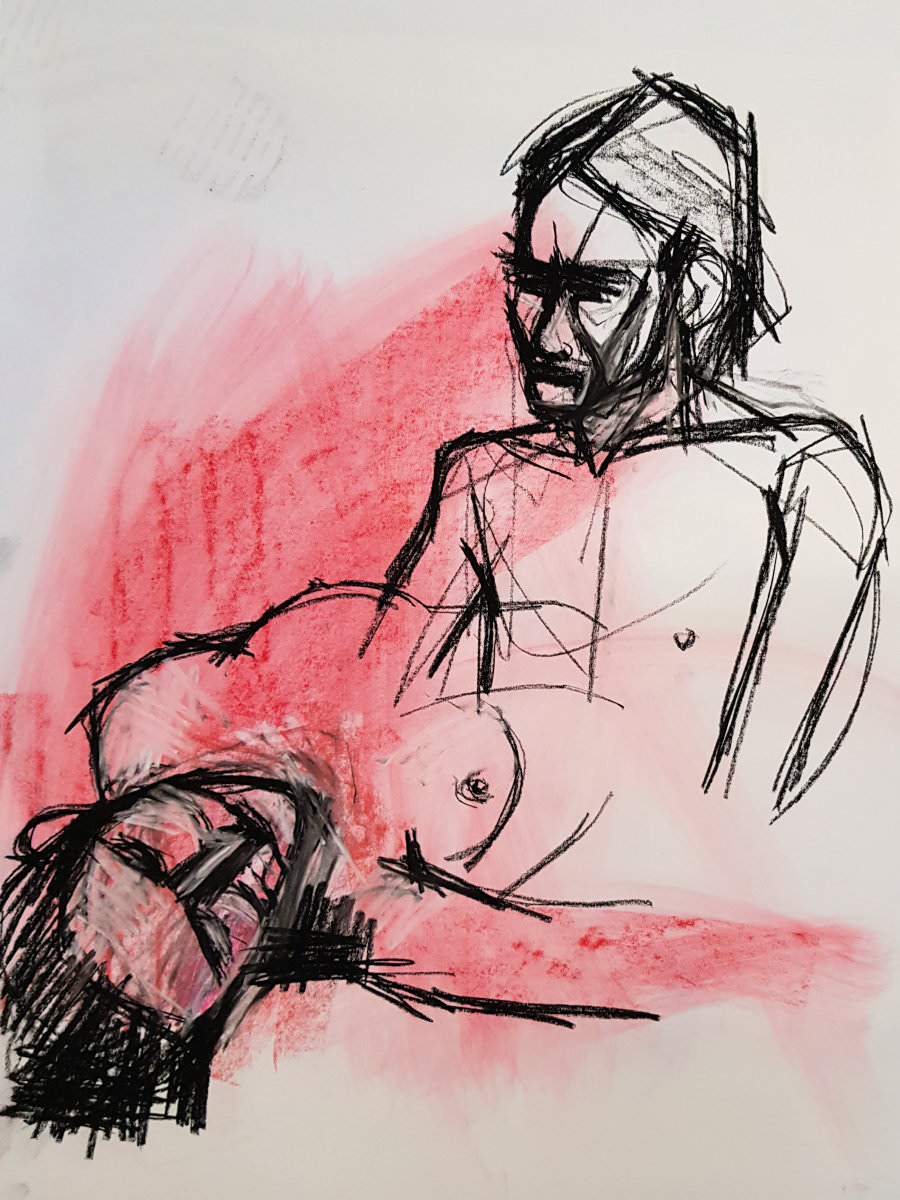
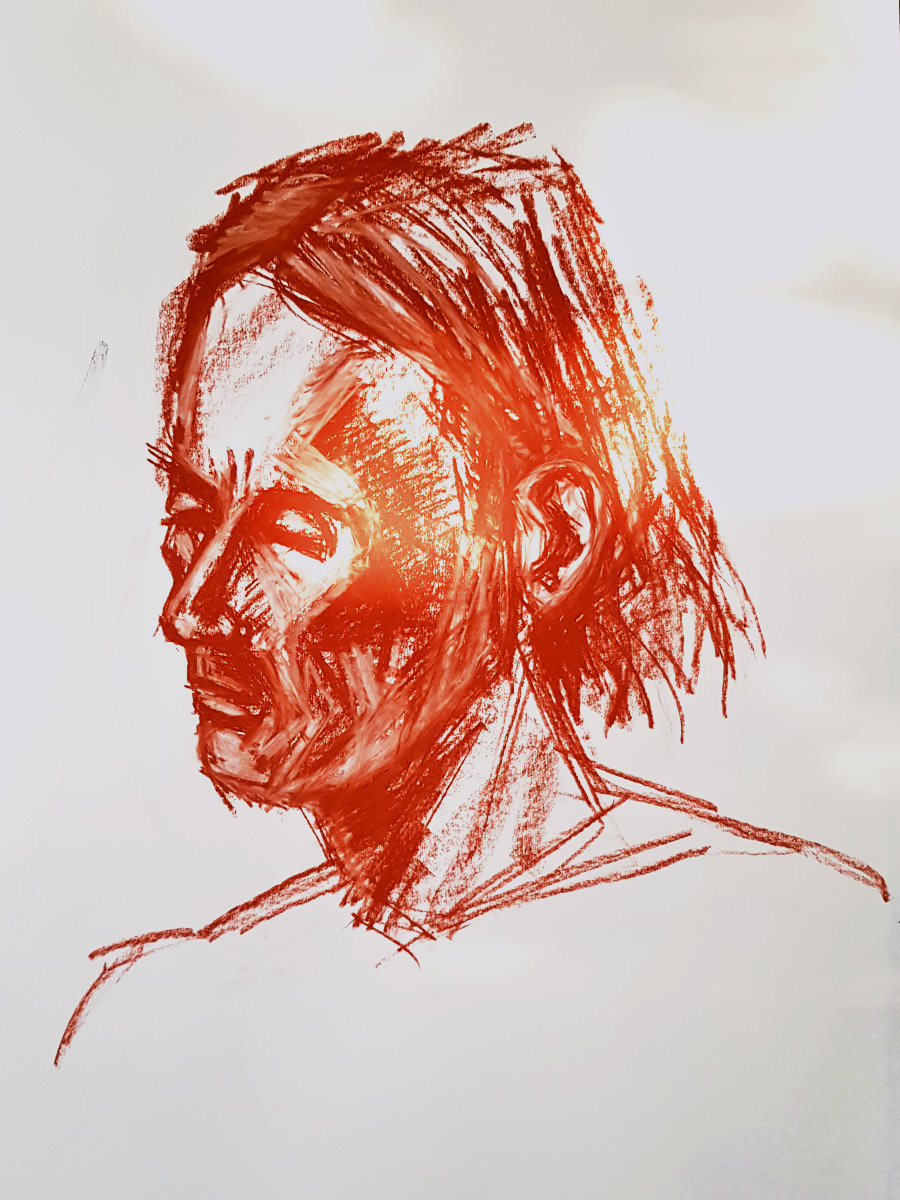
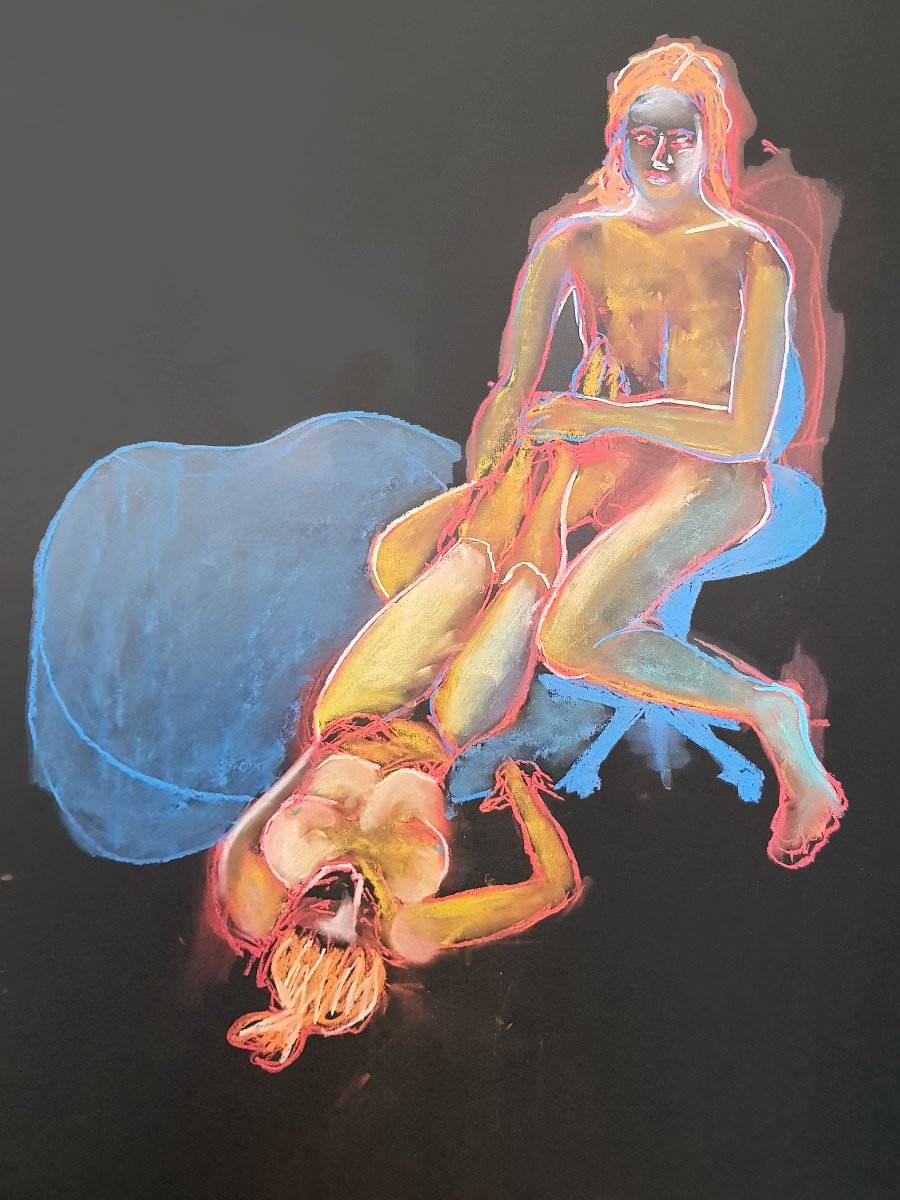
With early autumn sunshine streaming through the windows and good-natured spirits in the room, this was a very pleasant afternoon’s work. Unless more artists are found for the course, however, it seems doubtful that all our form-filling could lead to further duo bookings. And the punchline? Receiving emails six days later, informing us there was one more document that needed to be completed… Ah, but it was a lovely day.
 steve ritter