An undisputed highlight of the naked events calendar is the World Naked Bike Ride (WNBR). Thousands of people gather in scores of cities around the globe, stripping off and jumping on their bicycles to ‘protest oil dependency and celebrate the power and individuality of our bodies‘. The tenth annual London Naked Bike Ride took place on 8 June 2013. As in 2009, 2011 and 2012, I cast off my own clothes and saddled up.
New for 2013, five separate start points had been organised: three on the north side of the river, converging at Piccadilly Circus, and the other two joining at Forum Magnum Square near the southern end of Westminster Bridge. I chose the start at Marble Arch to meet with friends who intended being body painted there before the 3pm kick-off.
It was 2:15pm when I arrived at Marble Arch with my hired bike and WNBR seat cover. Crowds were already gathering. For every one naked cyclist there may have been two onlookers. Part of the reason for dividing the start was to thwart the irksome, intrusive, oily inadequates that gather solely to snatch photographs of those taking part. Marble Arch was always likely to get the worst of it, being near the finish at Wellington Arch.
After casting about for a while I asked Will Golden, WNBR steward extraordinaire, if he could point me in the right direction. Sure enough, in the secret location I found a small band of body painters, including Natansky who I’d first met at Guerilla Galleries’ ‘Art & Protest‘ exhibition, Esther who I’d met many times through Spirited Bodies, and Julian, a fellow life model and spirited body.
Not having time for body painting myself, I’d fastened a string of Nepalese prayer flags round my neck – the most colourful adornment I could lay my hands on before leaving the house. I hoped the peaceful, respectful nature of the ride would be in harmony with Buddhist ideals, and thus I would not be lynched by angry monks.

Esther and me, about to join the masses.
Having stripped naked at the body painting space, we made our way a short distance to the main Marble Arch gathering a little after 2:30pm. Very few others had started to undress at this time so we stayed out on the fringes. Nevertheless, we received some early attention from photographers.

Me, Esther and Julian lining up at the start, as snapped by our friend Camilla.
Of course, being naked in public we expect to be photographed. Riders photograph each other; wide-eyed passers-by spontaneously grab for their camera phones; and it’s a good thing because it helps to spread the protest message. It is the socially dysfunctional snappers – the furtive, or brazenly disrespectful – that are annoying. Thanks, therefore, out go to those who at least had the common courtesy to ask permission before taking pictures.
As 3pm neared, more riders shed their clothes and began shuffling towards Marble Arch itself. Esther, Julian, Natansky and I were towards the back of the field, and it seemed to take an age for us to make progress. Meanwhile, beyond our sight the stewards were doing sterling work to clear a path through the crowds.

And we’re off – underneath the arches to begin the 2013 London Naked Bike Ride.

Two colourful riders and a dog in a basket.
I’d brought with me a little plastic whistle that had been handed out before the previous year’s ride. Once we were through the archway and out on the open road it was time to cut loose, make some noise and have some fun. Or so it should have been. As ever the ride was more stop-start than free-wheeling on most of the route.

Esther and Julian, responsible cyclists, waiting at the traffic lights in Park Lane.
The four of us had it in mind to stick together but frequently we lost Natansky. She’d had the superb idea to take advantage of the photographers by demanding a pound towards Help for Heroes every time someone pointed a camera at her. She was often to be seen posing and then thrusting her collection bag towards the unwary.

A pause on Piccadilly.
From Park Lane we moved slowly along Piccadilly. This has always been one of my favourite streets on the route as the crowds are not too intense but are always good humoured, and the riders still have that first rush of excitement at being naked and free in the city – ecstatic at the sheer unreality of the situation.

Reaching the east end of Piccadilly, turning left around Piccadilly Circus.
At Piccadilly Circus the crowds are among the heaviest. A regular highlight of the ride is to burst out of Piccadilly and free-wheel around Eros. Not this time, however, as the mass of riders was still too tightly packed. Not until we turned down Haymarket could we find open road and joyously pick up speed.
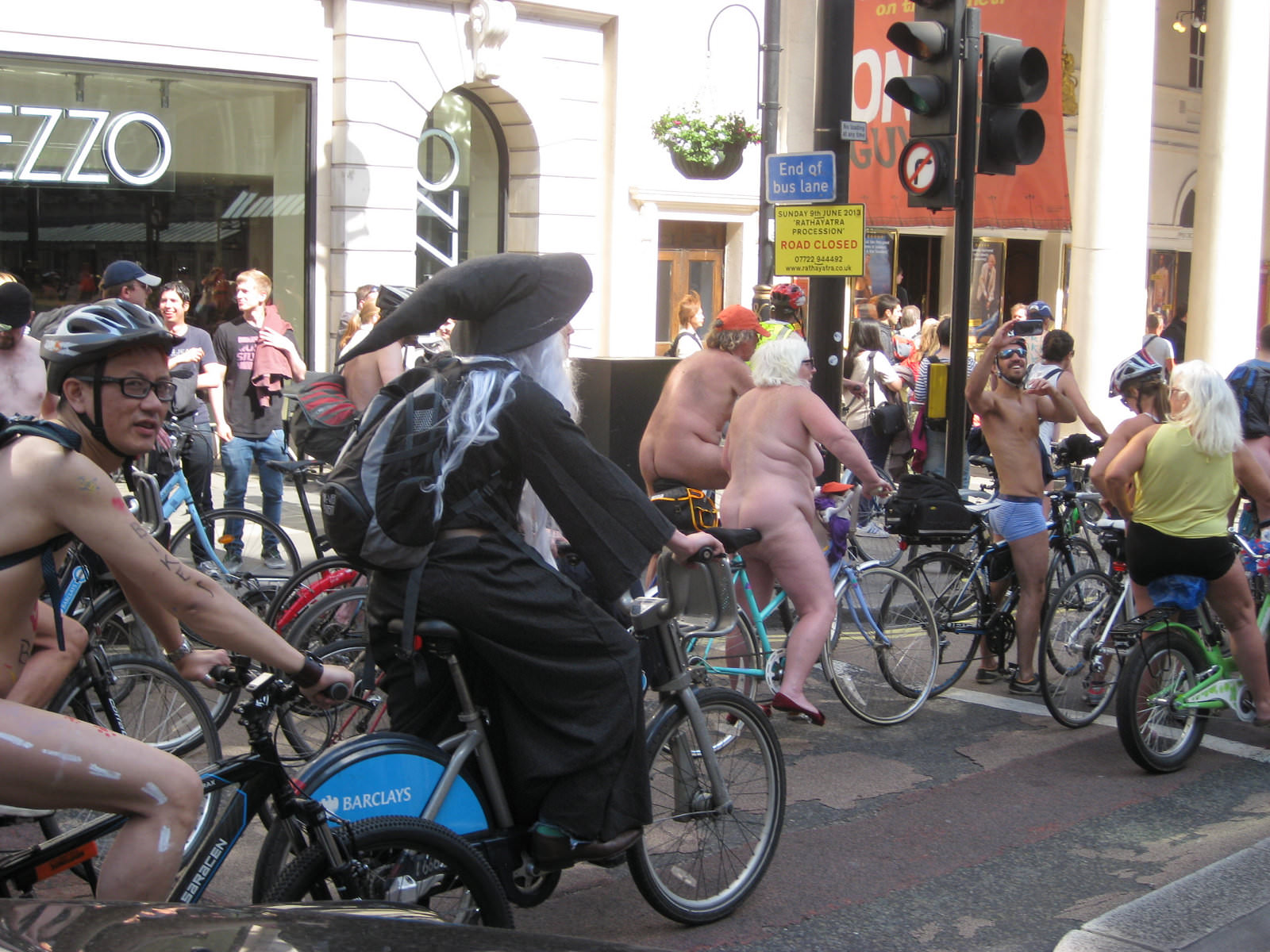
The wizard of Haymarket.
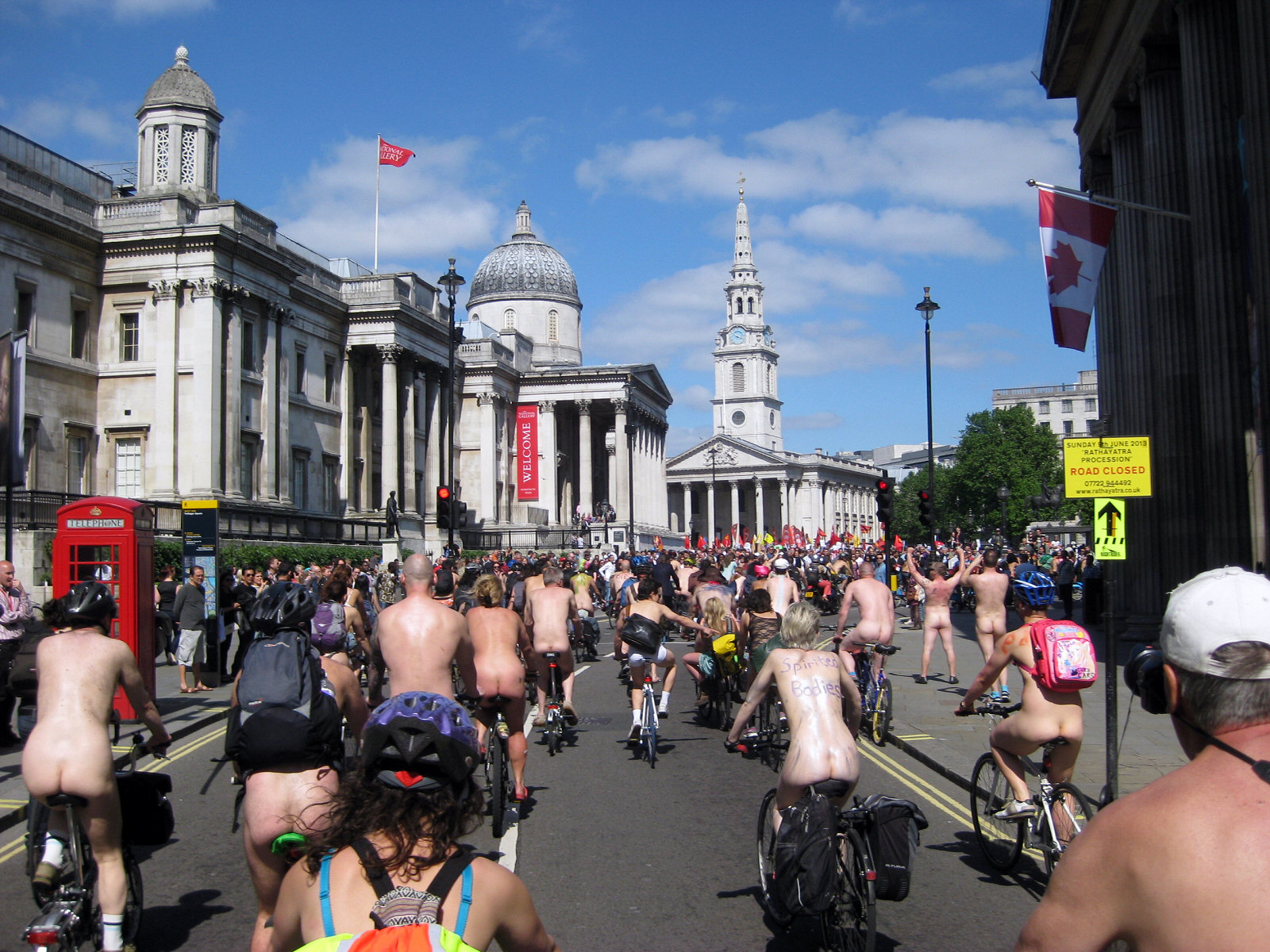
Art nudes Esther and Julian ride towards the National Gallery.
As Esther observed: “It’s an exhibitionists’ day out!” From Haymarket to Pall Mall, we pedalled towards the National Gallery and then curved south around Trafalgar Square to the accompaniment of African drums. Police watched us roll by with dispassionate detachment. Until 2009 they had provided crowd control for the event. Now they just let it happen.
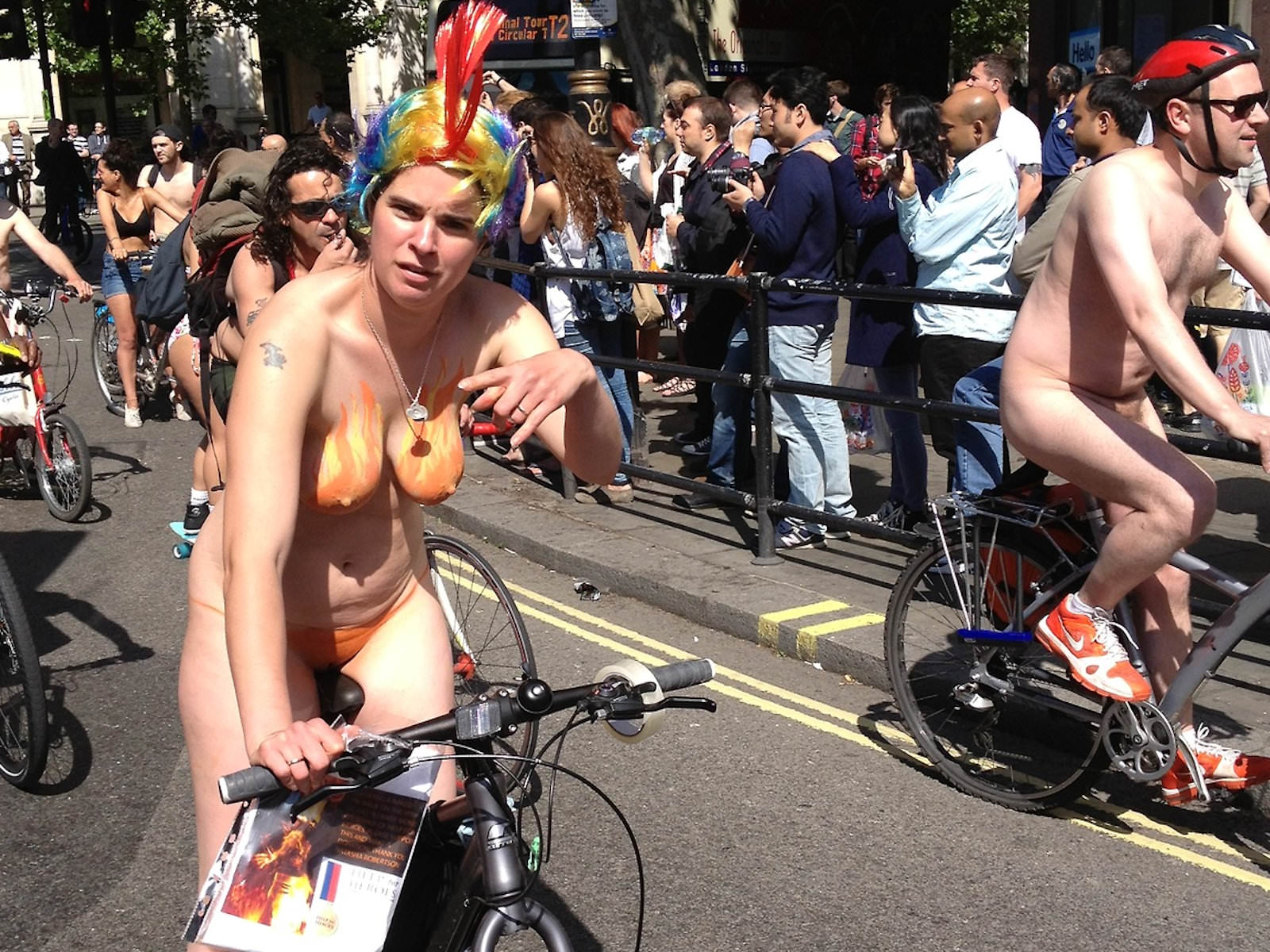
Natansky seeks payment from another awary photographer.

A very British day out.
We raced down Whitehall towards the Houses of Parliament, pausing only for photos in front of St Stephen’s tower, wherein Big Ben struck four. At the river we stopped on Westminster Bridge for more photographs. The ever-roving Natansky appeared just in time to strike her pose naked in front of the government.

Natansky, Esther and parliament – if this isn’t democracy, I don’t know what is.
On the south side of the river we dismounted at Forum Magnum Square and waited for riders from the last two start points to join us. Natansky managed to collect a few more pound coins before we were off again, east along York Road before turning north and crossing back over the river via Waterloo Bridge.
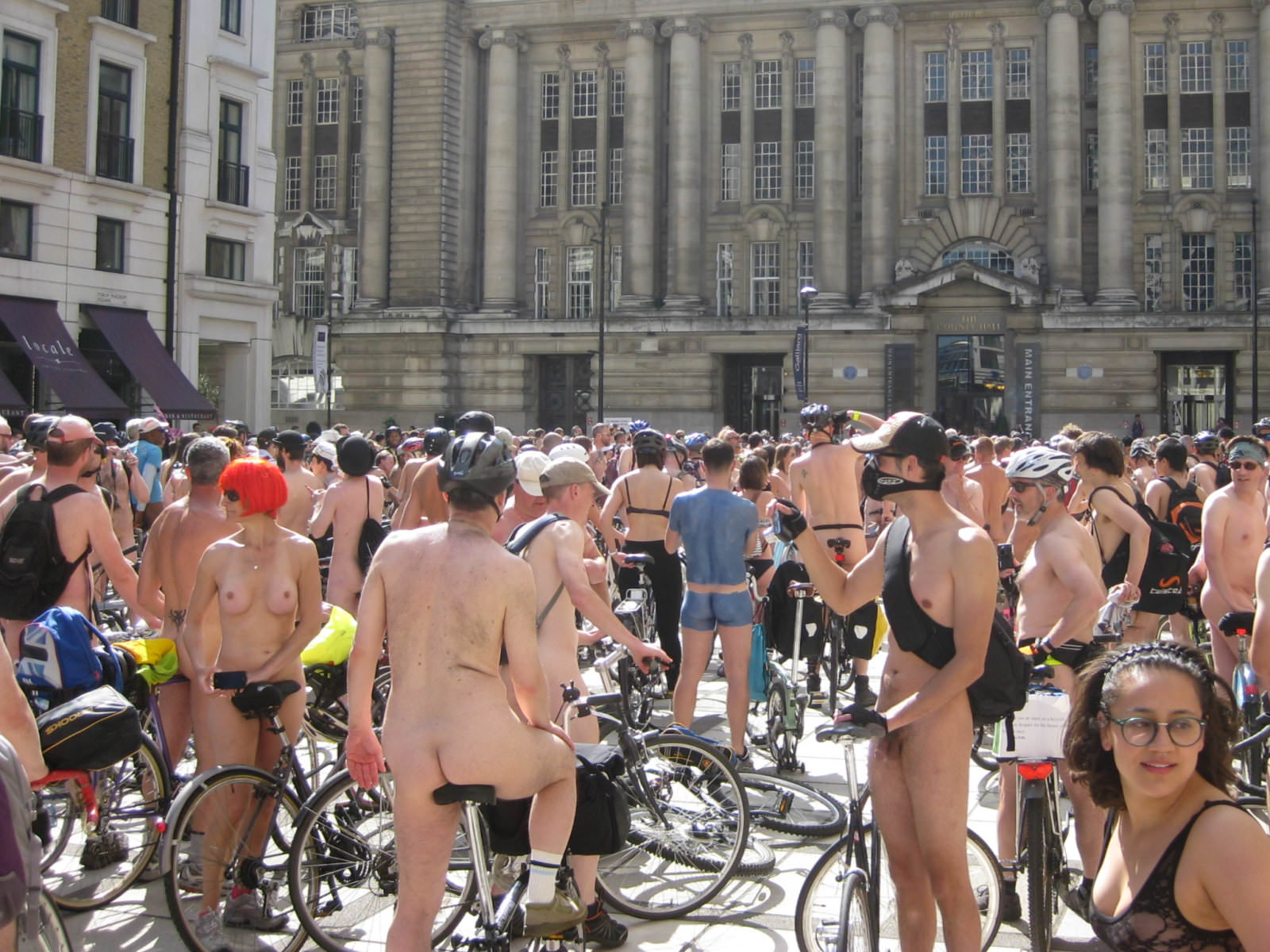
Coalescence at Forum Magnum Square.

Looking back at the south end of Waterloo Bridge.

Looking ahead at the north end of Waterloo Bridge.
At this point I had expected us to go east towards St. Paul’s Cathedral but instead we carried on in the direction of Lincoln’s Inn Fields, where we would take a longer break. On the way there, during another stop for traffic, Julian and I found ourselves next to a chap who offered us strawberries from a punnet. Simple pleasures – thank you, sir.

Arrival at Lincoln’s Inn Fields – © Nathan Raupach.
The Lincoln’s Inn stop allowed us to dismount, stretch, chat with friends, take a toilet break and generally chill out. The most extraordinary thing – which I only appreciate now with hindsight – is that by this point I was totally oblivious to the fact we were all naked. Indeed, I really don’t know if I stopped taking it for granted until we returned to riding through the cheering masses.

All stop at the Fields.
The London crowds were magnificent. Their response was uplifting throughout: cheers, applause, whooping, laughing, the merry incredulity of the unprepared, many snapping souvenir photos for their friends back home who might never otherwise believe what had occurred this day. For three hours the sun was out and life was good.

Blowing my whistle on the way to Covent Garden.
Around Covent Garden the crowds were at their most dense. Progress wasn’t helped by a barrier across road at the west end of Russell Street. Julian went to the aid of one of our senior fellow riders who had fallen off his bike on the cobbles directly in front of us. All the time, the herd inched slowly forward either side.

Natansky, decorated with mohican and firebird motif, amid the throng in Russell Street.

Passage through Covent Garden.
Another traditional highlight is leaving Covent Garden and turning onto Charing Cross Road, where the crowds are invariably deep and in the very best humour. We pushed onwards, returning to Trafalgar Square, then racing under Admiralty Arch and bursting through to the magnificently wide traffic-free space of The Mall.

Julian and Natansky make haste along The Mall towards Buckingham Palace.
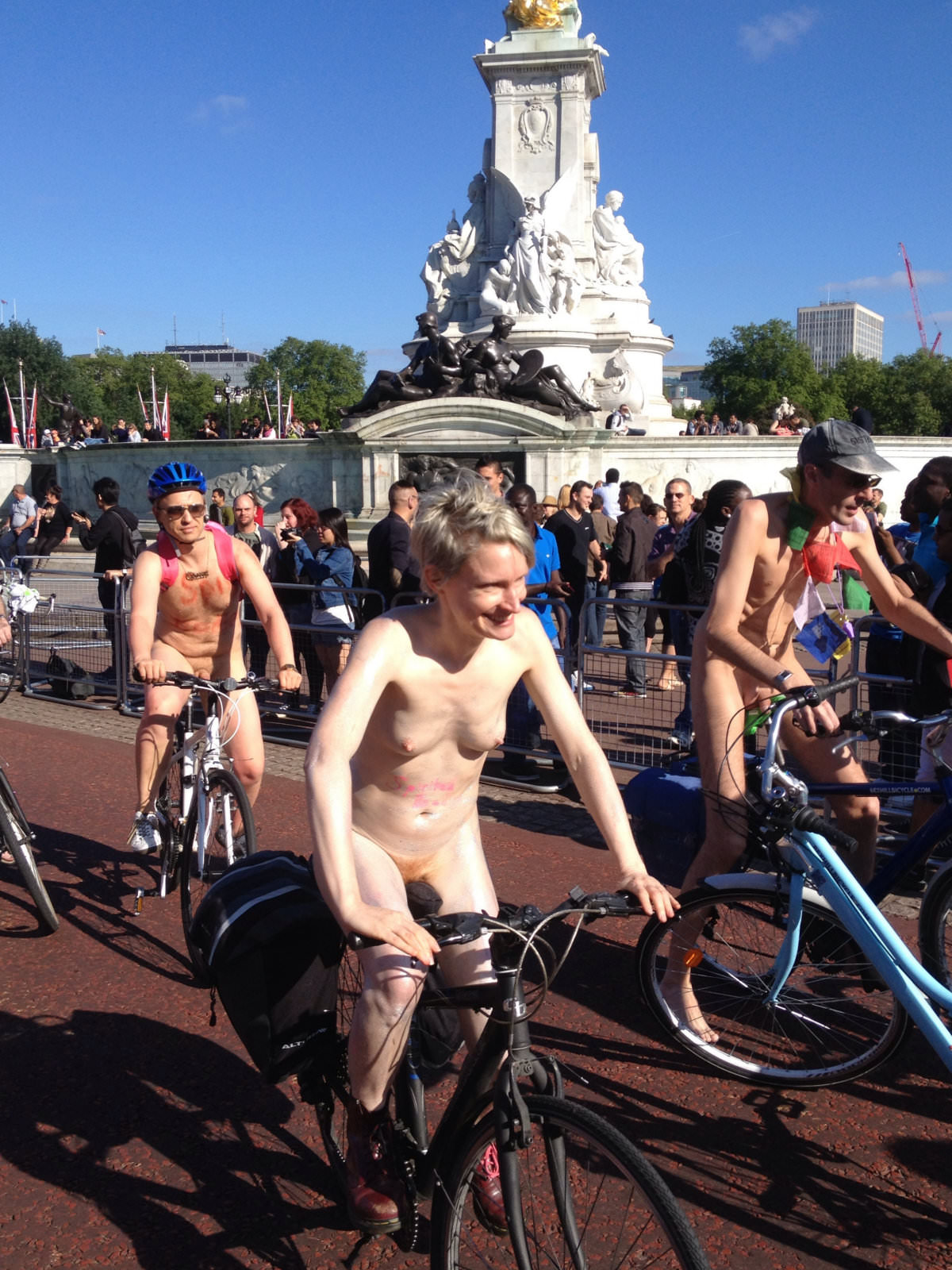
Esther at Victorial Memorial.
We stopped in front of Buckingham Palace for more photographs. Nearby was a rider wearing a Prince Harry mask, who we’d first met back at Marble Arch. He obliged us with a few photos in royal company, after which we lined up for a group shot, starker in front of the residence of Her Majesty, Queen Elizabeth II. That this could even be possible is grounds for a little national pride.
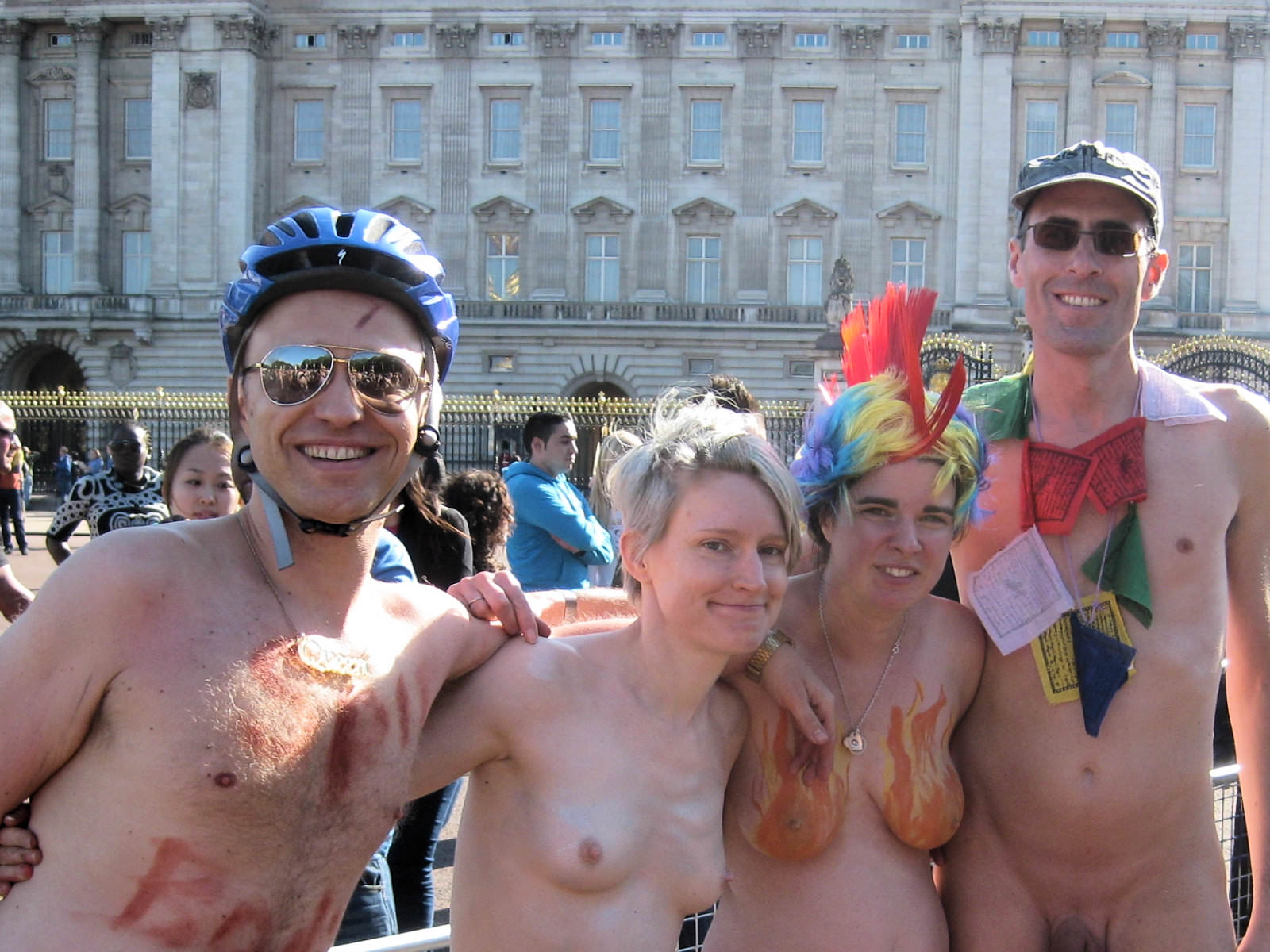
Julian, Esther, Natansky and me – buck naked at Buck House.
At last we reached the final leg of our journey: up Constitution Hill to the finishing line beneath Wellington Arch. It was 5:40pm when we arrived, just ten minutes behind schedule – a tribute to the planning of the organisers. We posed for one last group picture and instantly drew another tiresome hoard of opportunist photographers.

The finishing line ahead at Wellington Arch.
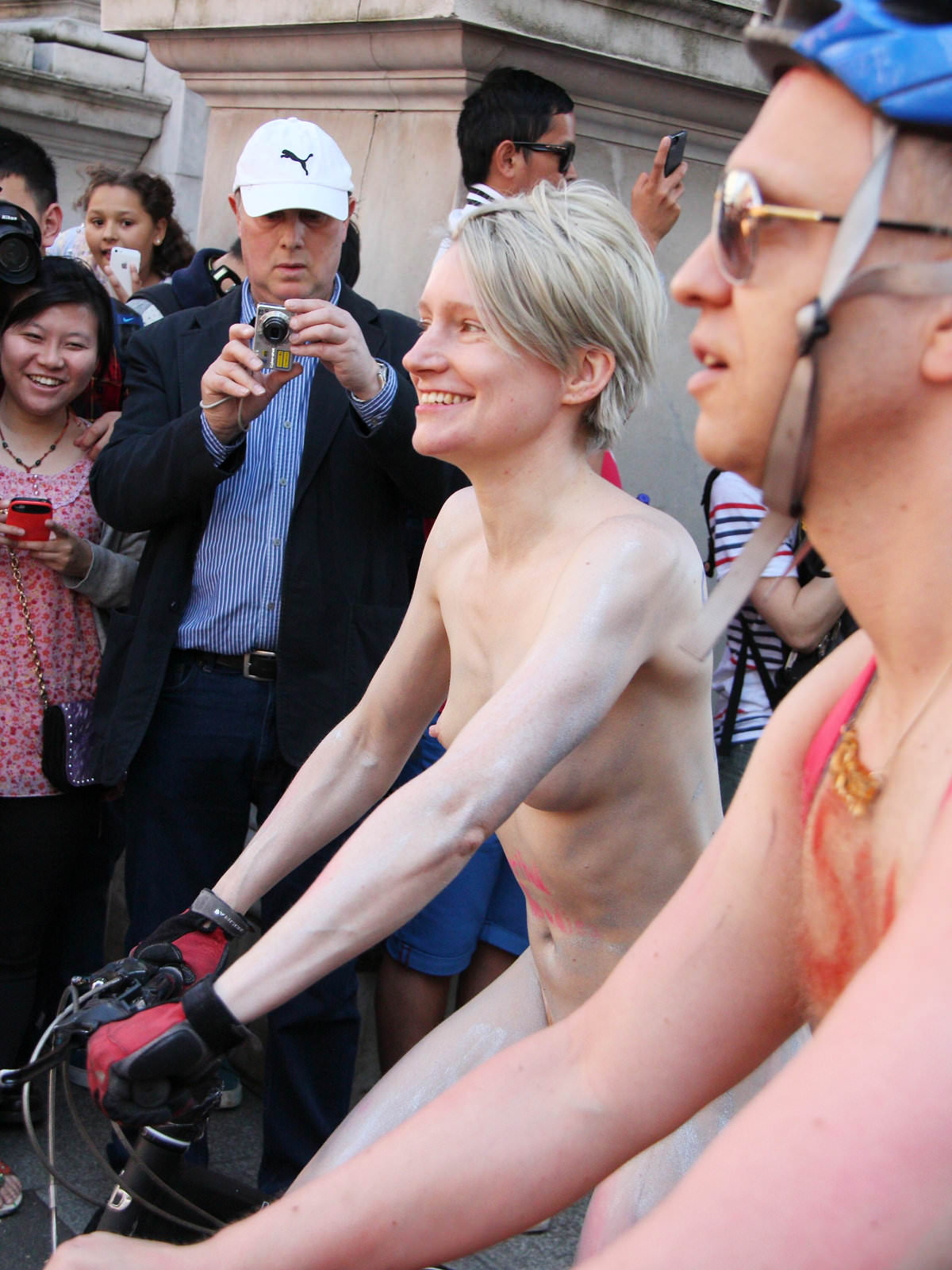
And through, journey done – © Funk Dooby.
While dressing we met Adrian and Chas, familiar faces from performance art events. It was a pity not to have spotted them during the ride itself. We never did see our mutual friend Cy, and he too failed to see and recognise us but at least he captured us on his fine “rider’s eye” video.
The weather had been kind, the crowds magnificent and the company fantastic. It is said that between 1,300 and 1,400 took part in the ride. If true, it would have been the biggest ride ever in London. It was a joy to be part of it.
Star jumps? You want us to do star jumps? Very well then. At one minute to seven in the morning – as fading grey clouds parted graciously to afford fresh spring sunlight a glimpse of Clacton’s sands – I stood alongside seventy-seven other men and women, each of us wearing naught but a dressing gown… and we did star jumps.
Two years before, at the sands west of Llangennith in south Wales a world record had been set for the most skinny dippers on a beach at one time. Such was the success of the first Marie Curie Cancer Care ‘Midsummer Skinny Dip‘ that it was destined to be repeated in Wales the following year.
In 2013, the event expanded to new locations the length and breadth of Great Britain: to Dorset in the south, Wales in the west, East Lothian in the north, and Essex in the east. As Essex is my homeland, the cause was a good one and bare-skin volunteers were needed, inevitably I signed-up.
Only after committing to the event was the time and place disclosed to participants: Sunday 2 June at the West Beach, Clacton-on-Sea; registration from 5:45 to 6:45am; skinny dip at 7am; breakfast from 7:15 to 10am. I travelled up to Clacton the afternoon before and, after enjoying a leisurely evening by the sea, retired early to the Grosvenor House Hotel in readiness for the next day.
In the diffuse pale glow of a brightening dawn I passed by Clacton’s deserted pier and arrived on site to find blue and white striped windbreaks lined end-to-end, marking the area set aside for skinny dippers. Very few people were about, and all appeared to be involved in the event, either organising, supporting or waiting to participate. I wandered into the café at the rear of the beach to register.
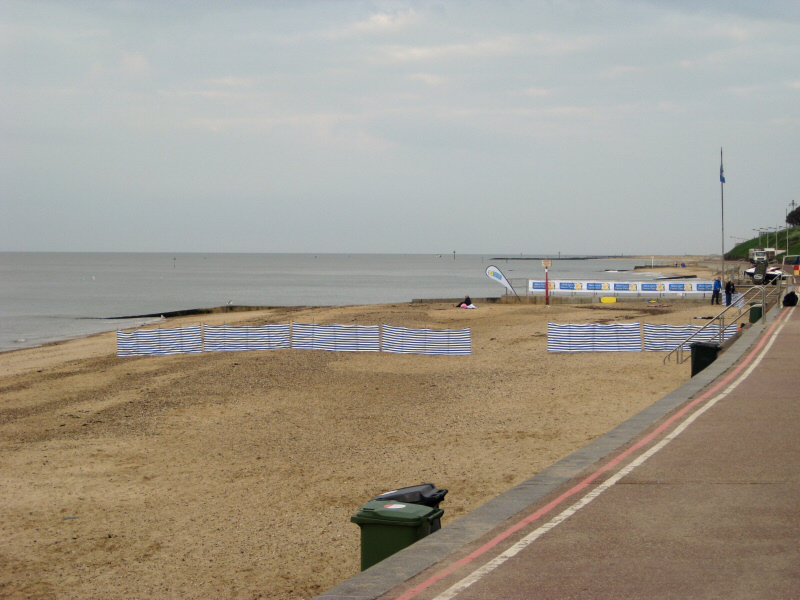
Number ’53’ was written on the inside of my left wrist in thick black marker pen. I was given a clear plastic bag bearing a sticker with the same number for my clothes. After queuing for a Styrofoam mug of hot tea I wandered outside to watch the preparations. Health and safety was evidently a serious matter, although some of the warning signs seemed almost comically contrived for a skinny dip.
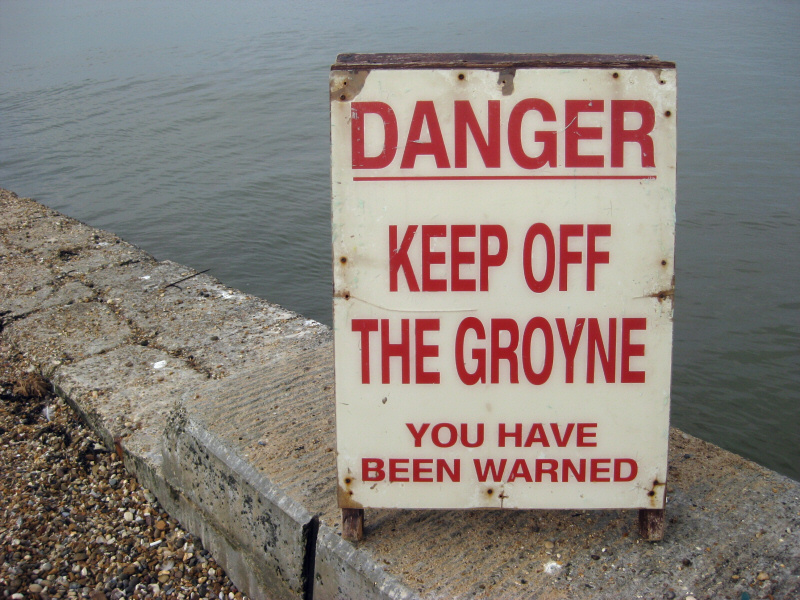
As the hour approached, the assembled would-be dippers moved down to the beach. We spread out, eyed the chill waters and then turned back to face the voice that had begun bellowing a welcome and instructions. Personally I’ve stripped too many times in public to feel any nerves or excitement, but I could certainly enjoy these moments. Even when the warm-up exercises began.
First we were asked to jog on the spot – pick those knees up! The vigorous picking up of knees whilst wearing nothing but a light dressing gown briefly threatened to reveal more than was intended at this stage. We warmed our ankles, our calves, twisted our bodies, did our star jumps, pushed and pulled arms, and at last were deemed ready.
We turned to face the North Sea, got naked and sprinted into the water…

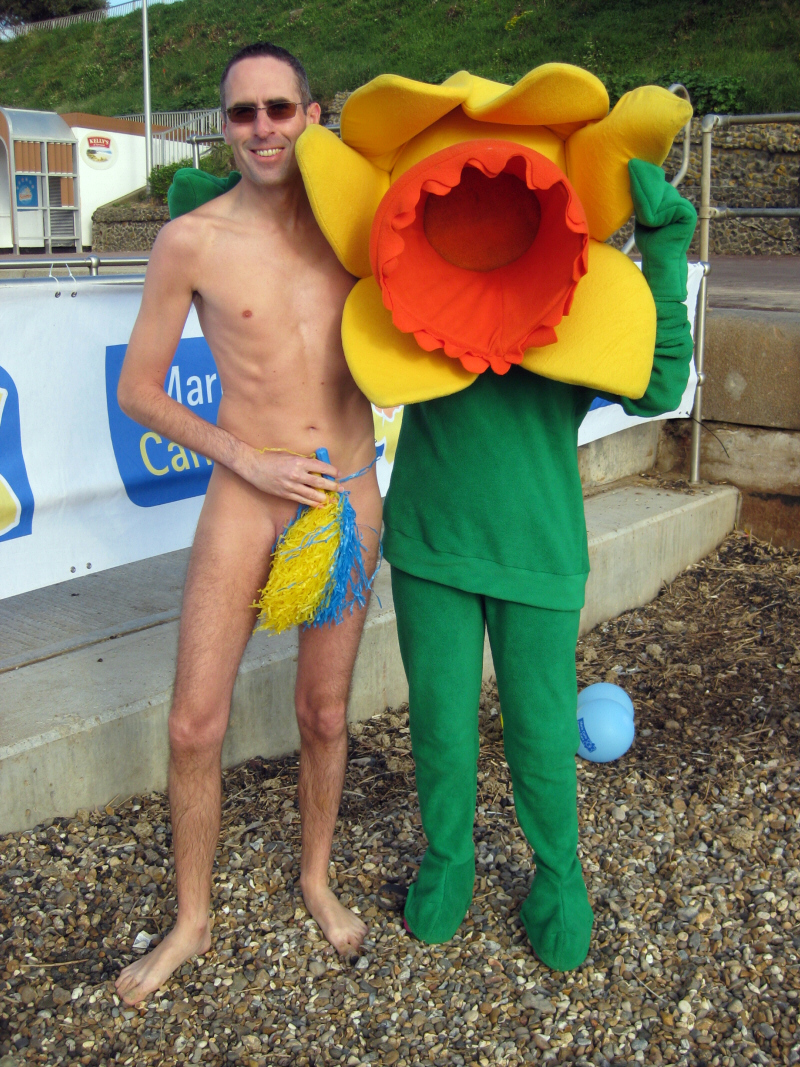
Marie Curie Cancer Care’s daffodil mascot, Daffy, cheered us on our way. I had run in as far as waist-deep before suddenly I realised: ‘bloody hell, this is chilly.‘ A few brave souls fully immersed themselves, others turned tail and ran out again as soon as was decently permissible, but all were laughing and smiling. This was our moment.
The dip probably didn’t last much longer than five minutes. Returning from the water, I dried off, wrapped my towel round my waist and joined the queue waiting for a souvenir photograph with Daffy. Proof if it were needed – I was there.
Upon dressing, all that remained was to take breakfast back at the café. More tea and a warm butty on the steps outside. The last clouds had vanished and I had not noticed the going of them. It was still early, still quiet, and the tiny number of distant gawpers had long since dispersed. It was simply a pleasant English morning by the seaside.
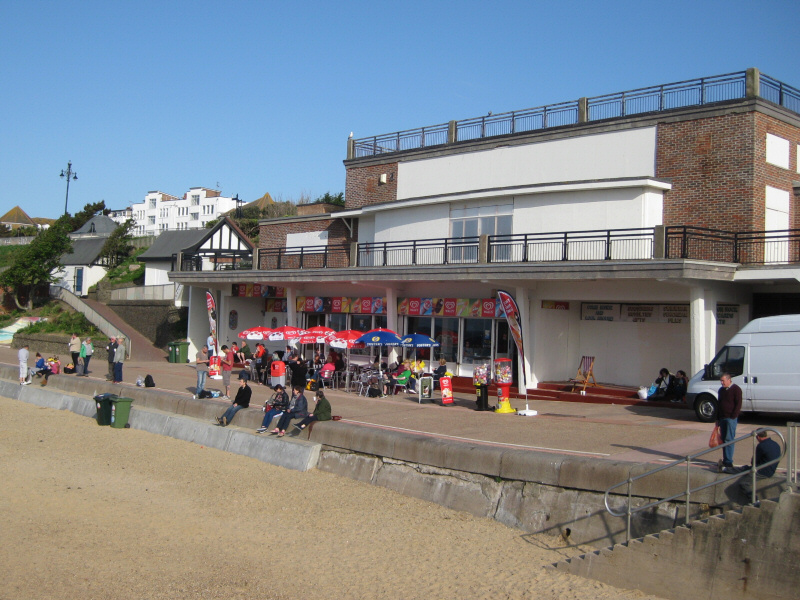
There was time yet for a second breakfast at my hotel. Scrambled eggs on toast with yoghurt, orange juice, even more tea and still the whole day ahead of me. I went back to the pier, passed the West Beach, walked on to the Martello tower and farther down towards Jaywick. Dog-walkers and joggers replaced naked people as Clacton’s prime visible presence. They’d missed a treat.
The Marie Curie Cancer Care Skinny Dip 2013 had been brief but joyous. Money had been raised, publicity generated and a good time had by all. Same time next year?
Another poor spring heralds an ominously late summer. On a Wednesday evening in Wanstead, however, it was warm enough to life model with the windows thrown open at the top floor of Wanstead House. First fresh air whilst modelling this year.
I had been drafted in to cover for a late cancellation. The requirement was for a ten minute pose standing; a twenty minute pose standing; a half-hour pose seated; a break for half an hour; and finally a half-hour pose reclining.

I took the opportunity to try of couple of new poses. Some went well, others will need refinement. The seated pose, for example – leaning forwards with my weight crushing down to one foot – resulted in that foot losing its feeling after just five minutes.
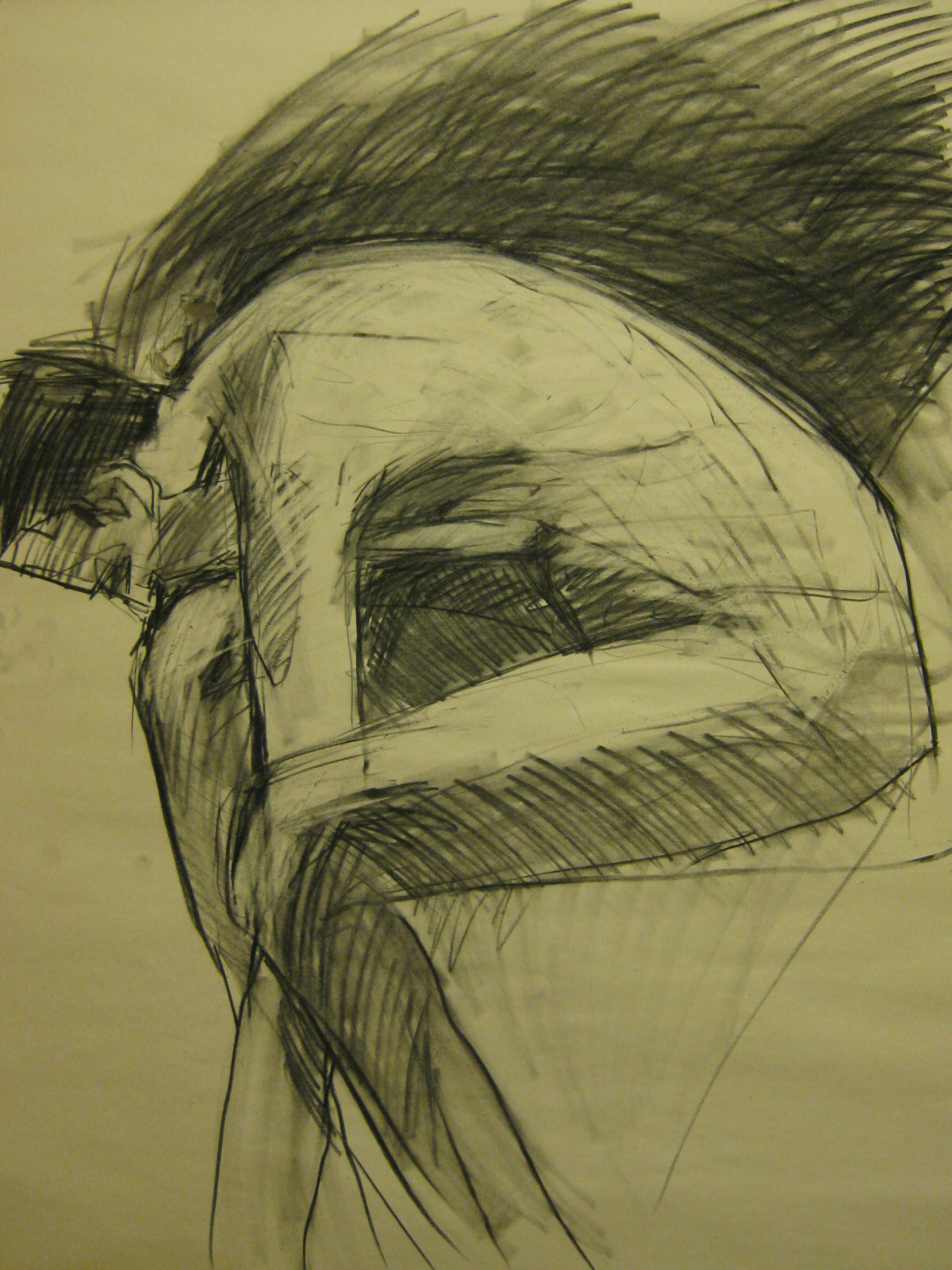
I stuck with it, of course, making subtle adjustments to minimise muscle fibrillation. It was fortunate the group disappeared for their break immediately after the pose ended as I was unable to stand for the next five minutes. So, that one needs refining!
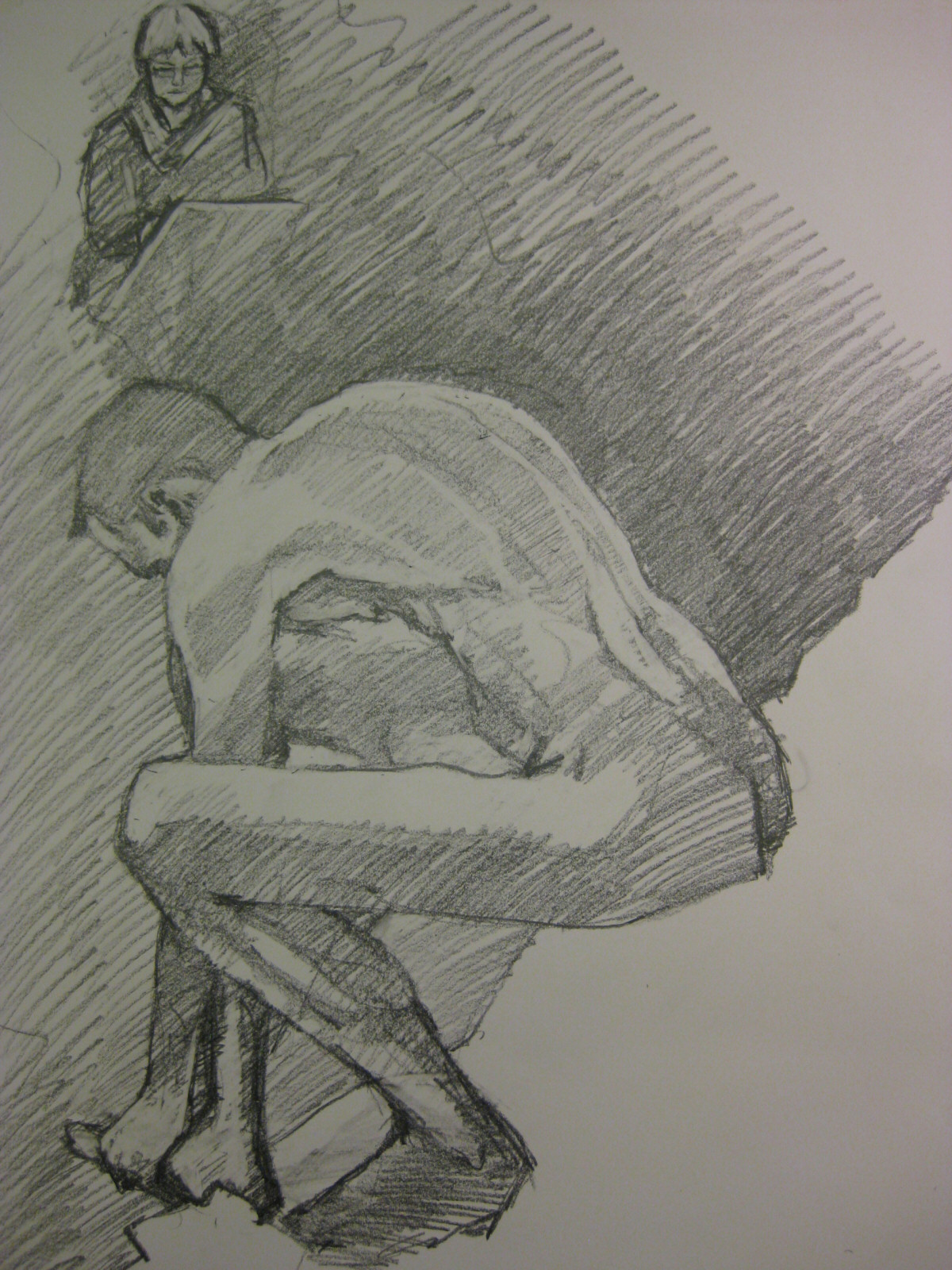
By contrast after the break I curled into a foetal position and lost all track of time as I lay suspended between sleep and wakefulness. Those who’ve not tried life modelling may be surprised at the extent to which this apparently static occupation can be a physical rollercoaster. Of course, that’s part of what makes it so interesting.
A January lunchtime meal for life models in Whitstable brought many introductions. It was a chance to meet Sharon Smithers, life model and event organiser, who has done so much to bring models together on Facebook and in the real world. It was a first visit to Whitstable itself, a town blessed with numerous small galleries and shops devoted to local arts and handicrafts. And, serendipitously, it was an introduction to fellow life model Hope and the name Dunstan Perera.
Dunstan’s name was brought to the table by Jill, another life model and one who had modelled regularly for his photographic work. He was looking to broaden the range of models with whom he worked so we were encouraged to give him a call; at the age of 79, he freely admits a lack of inclination towards starting up on the Internet. After a lapse of a few weeks I telephoned him and we had a good conversation, the upshot of which was he asked me to post him a few photos and we would take it from there.
When next we spoke he had received the photos, was very positive about working with me, but said he would like to pair me with a female model as there were a number of particular poses from art history that he would like to recreate. A few more weeks elapsed before he decided that, of our several mutual friends and acquaintances, he would like me work with Hope. A date was agreed that suited all three of us.
So, my second meeting with Hope was on a train at London Bridge station bound for south London. I had with me my lightweight dressing gown (which was never needed) and Hope had brought a long plain skirt and plain top at Dunstan’s request. Spirits were high as we looked forward to an assignment that would be new to us both. The twenty minute walk from the station to Dunstan’s flat was bright with fresh Spring sunshine, and we arrived in good time and good heart.
Dr Dunstan Perera is a genuine character in the nicest sense. He has lived a full and fascinating life. Fate and photography have taken him around the world from Sri Lanka to Hollywood, with many stops in between, before setting him down in Charlton. He has created his own unique ‘Creart’ printing process. Samples of his photography and print work have been uploaded to Flickr. Now he greeted warmly a pair of keen, if slightly uncertain, life models.
His modest flat is a wall-to-wall, floor-to-ceiling temple to the art he creates or that inspires him. We removed some of his pictures from a small patch of wall and pinned a sheet a yellow material against it. This would be our backdrop. Dunstan wound 35mm film in his camera and set up his tripod and lighting. A small table bearing a bowl of fruit was set upon the floor. We were ready to begin.
Dunstan showed us a leaflet reproduction of Picasso’s ‘Harlequin and his Companion‘, which hangs at the State Pushkin Museum in Moscow. This would be our first pose while we were still clothed.
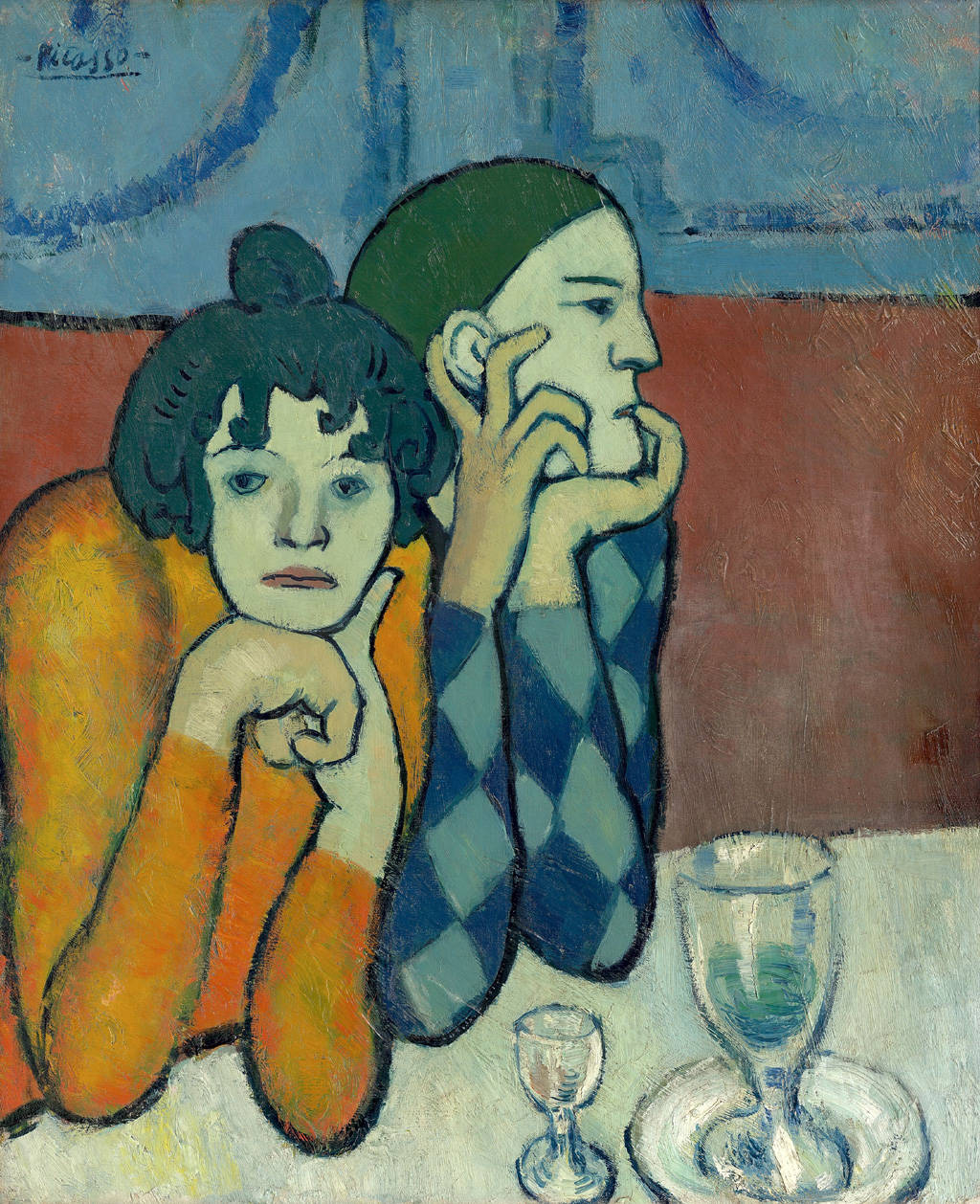
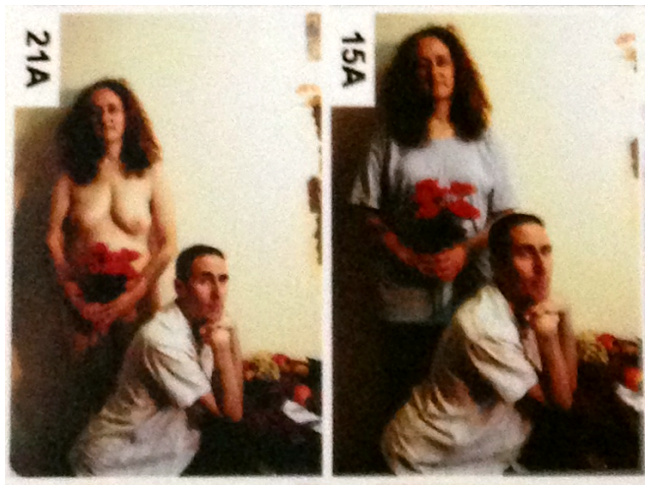
I knelt on the floor and manoeuvred my arms to mirror those of the Harlequin. Hope knelt beside me; Dunstan started snapping. Fine, fine. We adjusted our gazes to different points: ahead, to the camera , to one side. Snap, snap, fine. Then matters turned surreal. I stayed kneeling at the table while Hope stripped naked and stood behind me holding a flower above my head. Snap, snap, snap. And then held a tiny watering can above the flower. Snap, snap.
Creaking to my feet, I removed the table and stripped naked myself. We were about to enter the classical period so a length of ivy was fixed around head. Eye masks for each of us added a touch of the Venetian exotic, and an ‘anatomically accurate’ doll baby was also produced, much to Hope’s delight.
I sat on my haunches with knuckles to the floor, mimicking a Minotaur pose from one of Dunstan’s innumerable art books. Next I was to raise one edge of the backdrop as though revealing something unknown behind. Snap, Snap.
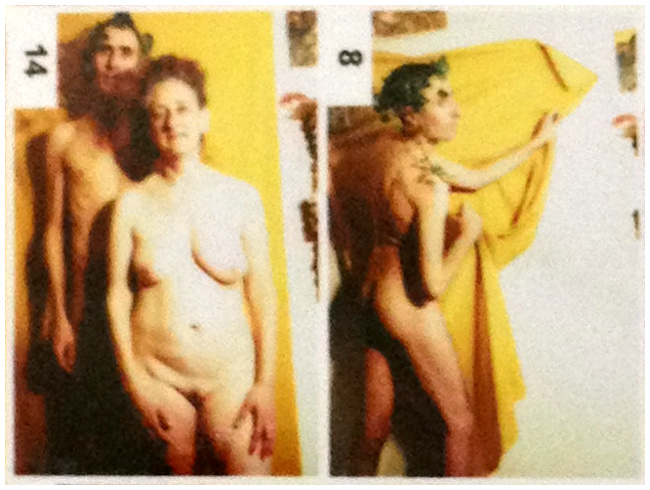
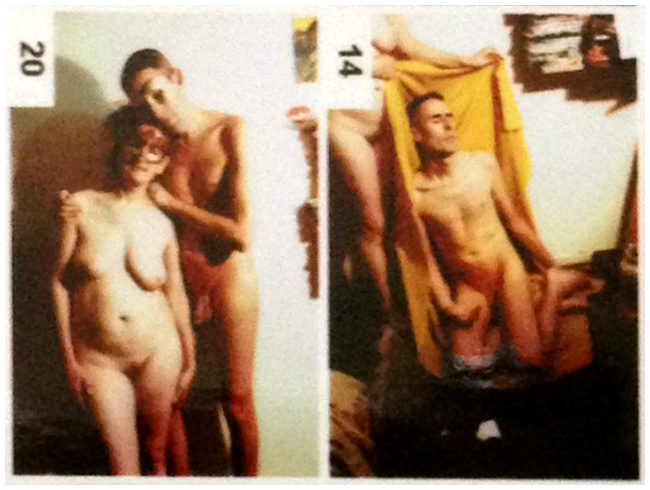
We then studied an image of two figures in a marble sculpture and set to recreating it. Hope held the yellow material, with one arm at her waist and the other curving above her head; I had a length of blue material tied like a sarong around my own waist, with one hand resting on Hope’s arm and the other reaching behind her back. Dunstan snapped away, shifting his tripod and regularly changing the film in his camera.
Shedding our covers once more, Hope stood holding the top edge of the yellow material while I sat on the lower half, eyes closed, curled against Hope’s legs in a pose reminiscent of ‘deposition of Christ’ tableaux in Renaissance art. Then it was Hope’s turn on the floor, sitting cross-legged holding out a cup while I returned to my haunches with one arm crooked to support an urn as if pouring wine.
Taking to our feet we both stood facing forward, with me half-body behind Hope. Then we faced each other in a kind of half-embrace, holding hands at our sides angled to the camera. Finally, Hope stood against the wall facing forward while I stood in profile with the shadow of my face falling across Hope’s face. Snap, snap, and that’s a wrap. We were done, dressed, and everyone was happy.
We weren’t quite finished, though. The three of us left the flat taking the doll baby, a small plastic pram and a little furry rocking horse as props to set about recreating our own mini tableau from Eisenstein’s ‘Battleship Potemkin‘ on an outside stairwell.
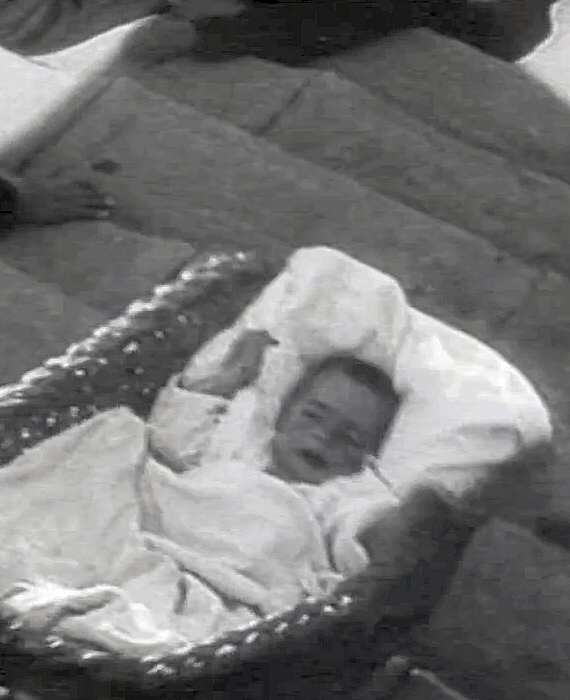
Hope and I clung together making hammy expressions of horror as we looked down at the baby, pram and horse strewn on steps beneath us, while Dunstan snapped from below and cheerfully fielded the enquiries of his curious neighbours.

It had been a memorable experience in great company; sometimes improbable, other times imaginative, occasionally bizarre, but always enjoyable. Dunstan was certainly upbeat about the session and expressed enthusiasm to work with us again. We’ll be looking forward to it.
On Wednesday evening I returned to Wanstead House to model for Patrick’s midweek group. It was a two-hour session, seven artists attending, with Patrick providing words of guidance from time to time. The programme of poses was: five minutes standing; 10 minutes standing; 15 minutes standing; 30 minutes seated; then a break, followed by 45 minutes reclining. All together a good mix.
I enjoy working for groups that have an element of tuition or some supportive chatter between artists. Primarily because it helps to speed the passage of time, providing a distraction from any physical discomfort that might set in, and rendering unnecessary any contrived mental exercises.
It’s also quite fascinating. I can put myself out of body, imagining how my pose might appear from the direction of each conversation and which lines or spaces might serve as the artists’ primary reference points.
Occasionally there is an unintended comic element. During one pose an artist said, “his head is too bulbous…” During the next another said, “his head is too narrow…”
I hoped they were referring to their compositions rather than some bizarre real-life cranial fluctuation I might have been experiencing.
The group as a whole had a pleasant vibe making it an enjoyable session in which to pose. A few works from the evening are copied below.
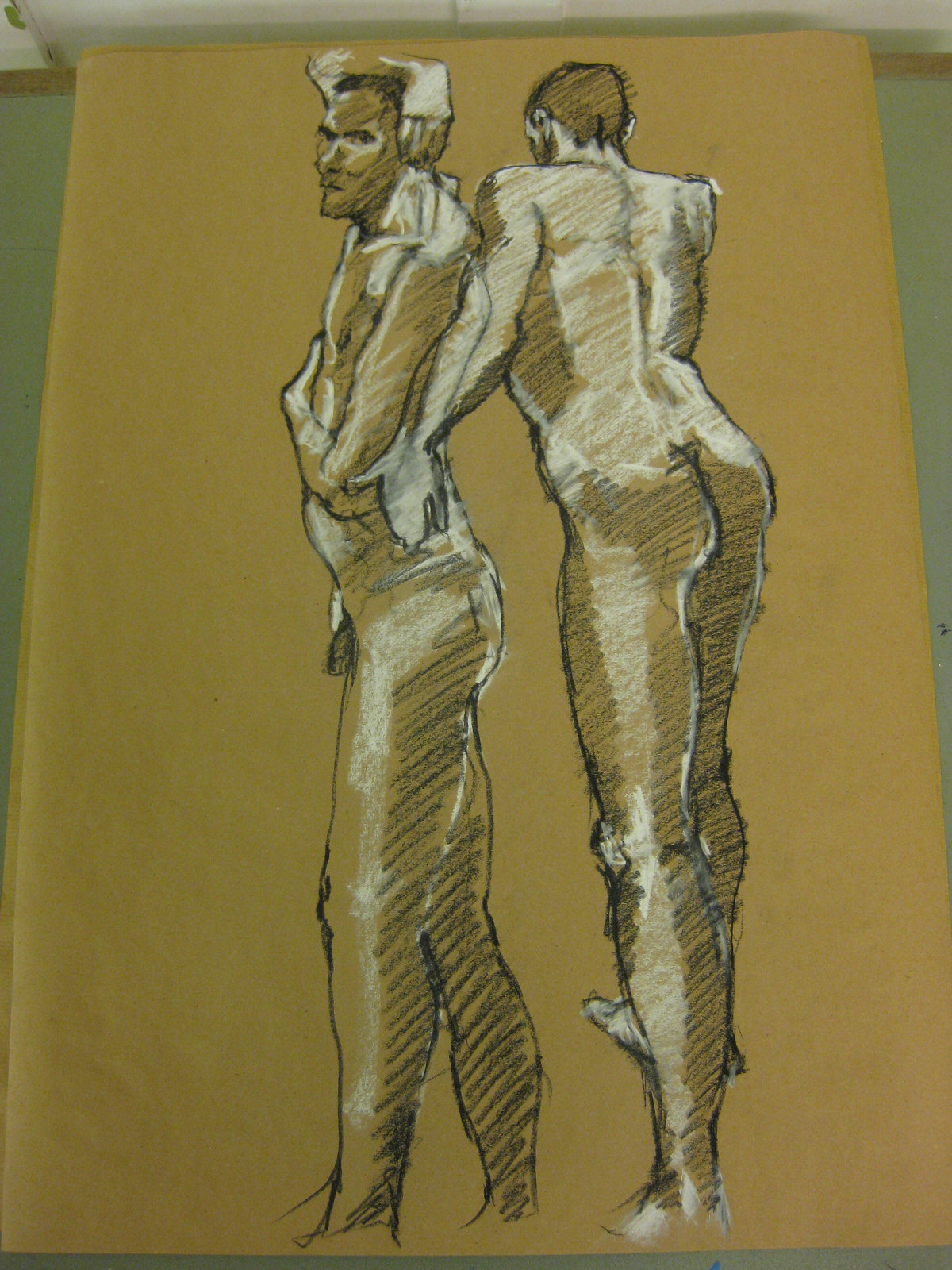
Five minute standing pose and 10 minute standing pose
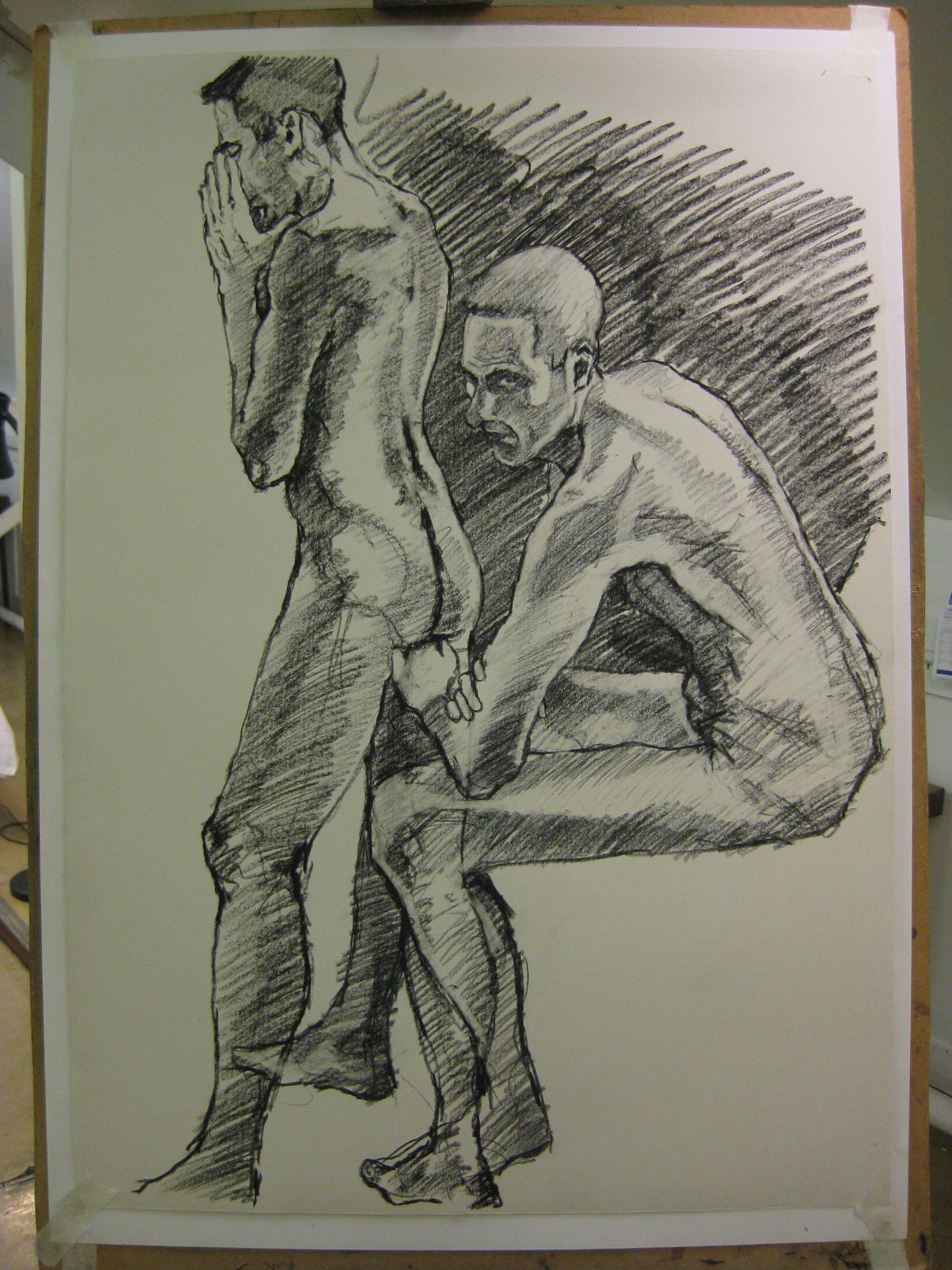
15 minute standing pose and 30 minute seated pose

30-45 minute reclining pose
Guerilla Galleries broke new ground in January by staging a clothing-optional private view of their ‘100% Nude‘ exhibition at London’s Daniel Libeskind Space (check the review). Three months later they were back, bringing with them ‘Art & Protest‘. This too broke new ground by offering a clothing-optional private view for an exhibition that did not have a nude theme. A mainstreaming of freedom? Now that would be radical.
The benefit of arranging two such events within a matter of months is that only a slight polish and a sprinkling of new talent is needed to keep the whole experience feeling fresh and absorbing. This latest view, like the exhibition as a whole, was impeccably well organised from start to finish.

Nicholas Baldion’s homages to the miners’ strike of the 1980s
Once more Tony André was present to greet his guests at the door. I was astonished and flattered to find he remembered me from January. The man truly has an eye for every detail. An assistant then checked my free ticket and invited a discreet donation. It was heartening to see the glass collection box looking very well fed.
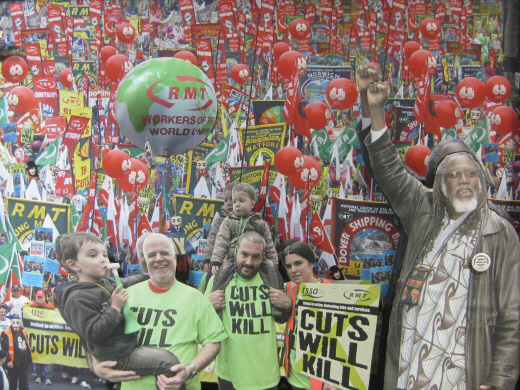
Natansky, ‘Cuts will kill’, 2013
There were two notable refinements since January: first, that everyone on duty wore a red neckerchief, whether clothed or unclothed, making it easier to tell who was part of the team; second, there was a very strict line on no cameras or camera phones being allowed before 7:30pm.
Unchanged, however, was the complementary wine that flowed generously throughout the evening. Art appreciation can be thirsty work.

Michaela Mysakova / Michelle Roth, ‘Are we free?’, 2013
With clothes removed and glass well charged I made my way around the art space. In the first room mellow music played as accompaniment to the Michaela Mysakova / Michelle Roth video installation and artwork, ‘Are we free?‘ This was the least obvious protest piece on display but by far the most mesmerising. When I’d seen all the other works this was the one to which I returned and stood transfixed before for the longest period, while music and movement looped and looped.
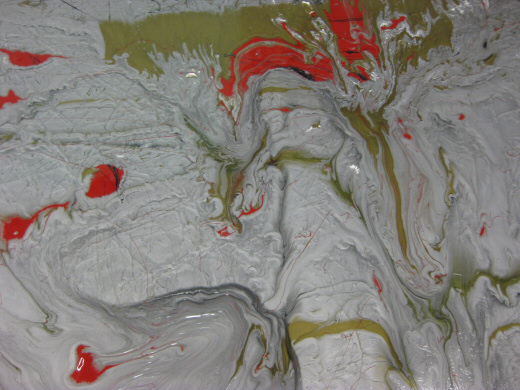
Michaela Mysakova / Michelle Roth, ‘Are we free?’ (detail), 2013
Elsewhere artists interpreted the protest theme in one of four ways: scenes of protest; figures of oppression; anger and alienation; or protest statements. Nicholas Baldion recalled the miners’ strikes of the Thatcher era, capturing the mood and personality of workers, forces, negotiators and oppressors alike. Natansky presented strikes in the modern era with ‘Cuts will kill‘, where smiles replace grimaces but lives and livelihoods are still at stake.

iCON, ‘Mario Stop & Search’, 2013
Politicians are the fair target for most protests. iCON directed his firmly at the face of David Cameron, but also injected some sardonic humour into proceedings with ‘Mario Stop & Search‘. I’ve always believed the use of humour is the most memorable way to make a protest point beyond desperate acts of self-immolation and fatal sacrifice.
Different works were eye-catching in different ways. Angela Chalmers‘ ‘Head 1,2,3,4‘ presented four stunningly distorted faces, each hollering its protest in silence. If I had bought just one piece of art at this exhibition it would have been one of these.

Angela Chalmers, ‘Head 1’, 2013
It was great to see Pílar Camíno Alcón (Piluca) return with new works. Faced with the nigh impossible task of presenting an image even stronger than her magnificent self-portrait from the ‘100% Nude‘ exhibition, she rose to the challenge with portraits of inspirational protest figures. These included a personalised reworking of J. Howard Miller’s iconic ‘We Can Do It!‘ poster. If anyone can do it, Piluca can do it.
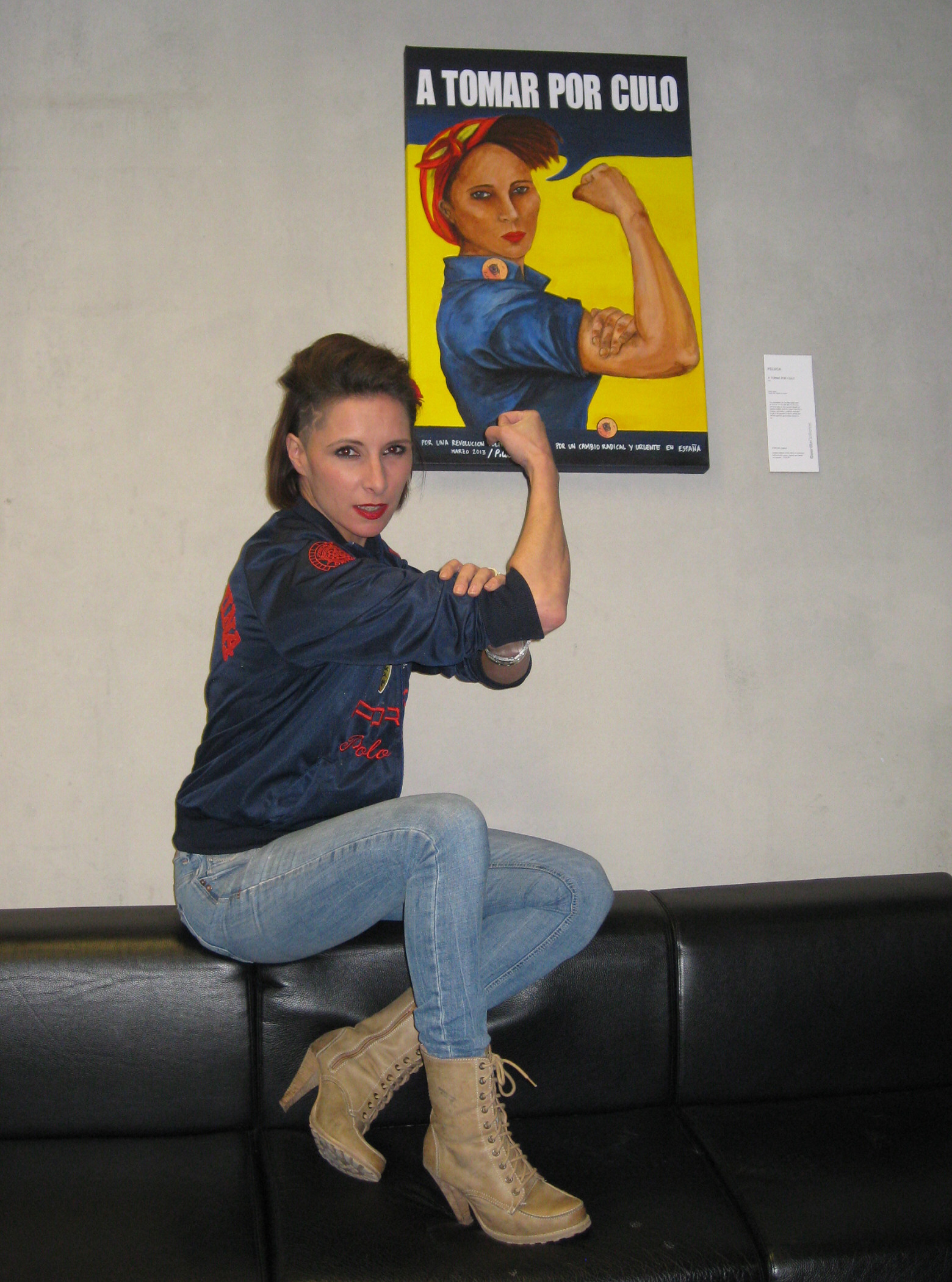
Piluca sends a direct message… although not an exact translation of ‘we can do it!’
At ‘100% Nude‘ Piluca had posed nude alongside her self-portrait; at ‘Art & Protest‘ the central nude figure was Natansky. Throughout the two hours of the exhibition she was in the main hall being body-painted into the illusionary outfit she had worn at last year’s London Naked Bike Ride – a pro-cycling protest against oil dependency that I too had ridden with on three occasions. When I asked her permission to photograph ‘Cuts will kill‘ she not only consented but offered to pose naked next to it – you don’t get that kind of response too often from artists.

Natansky the artist / Natansky the art
Like Natansky and many others, I remained naked throughout the two hour viewing. There didn’t seem to be quite as many visitors taking the no-clothes option this time, which was a shame, even though all one hundred event tickets had been snapped up. Perhaps some got cold feet. Well, actually we all had very cold feet…
For me the novelty of my own nudity at an art exhibition came and went very quickly, but the event itself remains quite unlike any other. It has to be experienced to be fully understood. Hopefully this won’t have been the last chance for art lovers in London to discover the experience for themselves.
Featured artists included Nicholas Baldion, Miguel Ivorra, Pouka, Binty Bint, Carl Hoare, Randolph Hoyte, Caroline Truss, Angela Chalmers, Michaela Mysakova, Piluca, Reza Moradi, iCON, Keeley Wynn, Charlotte Ratcliffe, Gee Street Artist, Ashley Reaks, Tisna Westerhof, Katerina Konstantara, Dr Bingo Bongo, Natansky, Paula O’Connell, Gareth Morgan, Irene Godfrey, Dan Fox, David Folan, Sarah Wyld, Marta Lapillo and Ben Mellor.
The Telegraph Hill Festival in south London packs in more than 130 events over two weeks and three weekends. Now in its nineteenth year, it’s all about creativity and involvement – the work of the community to benefit the community. As a part of this year’s festival, Spirited Bodies had been invited to stage a multi-model life drawing event at Café Fed. It came as pleasant surprise when, with six days to go, I received an email inviting me to participate too.
Come the day, I travelled to the venue direct from work, catching a train from London Blackfriars to Nunhead, arriving at Café Fed half an hour before the planned start time. There would be eleven models participating so we had been asked to turn up a little early to allow time for coordinating poses.
Esther and Lucy – Spirited Bodies’ twin engines – were already in action, projecting serenity whilst juggling the innumerable inescapable responsibilities that come with organising such events. Esther was arranging artists, marshalling models and preparing the platform on which we would pose. Lucy was bookkeeping, catering, blacking-out windows and generally hammering down any potential problem before it could arise.
Once the majority of models had arrived Esther explained the plan. We were to combine in three tableaux: the first would imagine a 1920s cocktail party; the second would be a protest rally; the third would be a sauna. These creations would last 30 minutes, 30 minutes and 60 minutes respectively. We should connect with one another and present good poses for the artists who would encircle us.
We practised all three arrangements with the models choosing their individual stances and Esther directing refinements to make the whole piece work better from the artists’ perspective. Once satisfied we withdrew to an adjoining room to change into our various gowns and robes.
Seven o’clock was show time. With the minute hand teetering upright, ever more artists arrived and set about preparing their space with cacophonous grace. It was a pleasure to see regular artist and frequent model Rodger amongst them. Happiness increased further with the arrival of poet, life model and all-round bringer of joy, Ursula; the final piece in our jigsaw of bodies.
We disrobed and took our positions for the cocktail party theme. Our platform comprised two tables pulled end-to-end and covered by a white duvet, with pillows piled around on the floor. I perched on one table corner, leaning forward as if in conversation with Ursula who mirrored the pose from the opposite end.
It was all laughs as we settled into position, yet when the pose formally commenced I realised I could be looking into Ursula’s eyes for a full half-hour. Shared nudity in front of friends and strangers can pass without a glimmer of embarrassment but to hold a stare in the direction of another’s eyes for even a minute can be awkward. I quickly found an alternative gaze point over Ursula’s left shoulder.
Halfway through, my attention shift from eyes to legs – specifically my own right leg, which was curled under the weight of my body and rapidly losing all feeling. By the time the pose was complete the leg was entirely numb, hanging dead to the foot. As if by design, to maintain our symmetry, Ursula’s left leg had gone the same way.
For the protest pose a volunteer was needed to stand on the table and look ‘dynamic’. I stepped up and, being rather tall, it was suggested I steady myself with one hand on the ceiling. Having once before held a half-hour pose with one arm outstretched and no adverse effects I was keen to give it a try. Alas, it proved a test too far.
Four times during the thirty minutes I had to drop the arm and shake it out for a few seconds. On the last occasion I feared I wasn’t going to be able to raise it again but somehow got through to the end. For about ten minutes after completing the pose my muscles told my brain the arm was six inches lower than where my eyes reported it to be. Very strange. Esther congratulated me on discovering what it’s like to take ketamine. I doubted I would try it again in a hurry.
Having achieved a dead right leg in the first pose and a dead left arm in the second, I thought it best simply to curl up in an isolated corner for the last hour. I wasn’t truly connecting with the other models but I was filling a gap that would otherwise have disadvantaged one row of artists. The pose was gentle and the hour breezed by.
When Esther called time our bodies reanimated and rose as if in accompaniment to the contented hubbub of artists packing away. Our work as models wasn’t quite over, however, as one of our number – Sophie – asked if we might kindly reprise the poses for photographs to support her third-year university project on visual anthropology. Having regained use of my arm, I climbed the table and grabbed that ceiling for one last time.
Upon retiring to the side room to get dressed, we shared with Sophie our views on life modelling. It’s always fascinating to hear other models’ motivations and experiences. One unshakable truth I have learned is that there is no life model stereotype. We are united by a dedication to the discipline, but otherwise are a broad cross-section of humanity with the full gamut of personal philosophies, sensibilities and backgrounds.
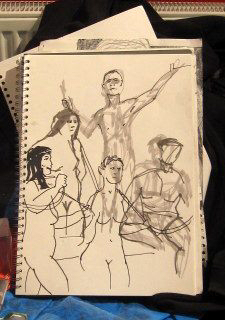
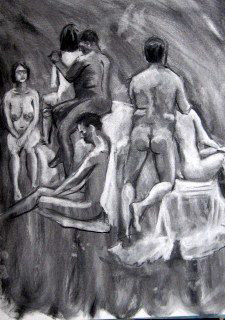
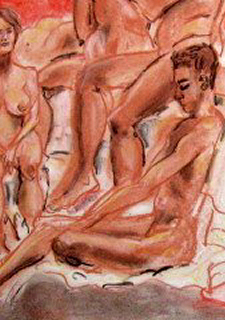
Here are a few artists’ works from the evening, lifted with kind permission from the Spirited Bodies Facebook page.



 steve ritter